The Magnolia Firehouse: A Residential Adaptive Reuse Project

Originally constructed in the 1920s, the Magnolia Firehouse located in Oakland, California was operational until the 1960s. When modern fire engines could no longer fit within the building, the structure was no longer feasible for its original use. “The structure found interim use as a neighborhood church while much of the original historic character suffered the effects of neglect,” according to Baran Studio Architecture.

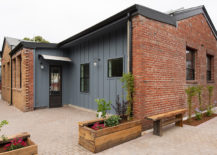
When tasked with restoring the building the company started with a focus on the exterior condition of the building, “repairing the dark iron-spot face brick at the building corners, removing non-historic elements such as window screens, replacing glazing and deteriorated windows, and finally providing two new carriage doors at the front of building to match the former apparatus bay doors.”
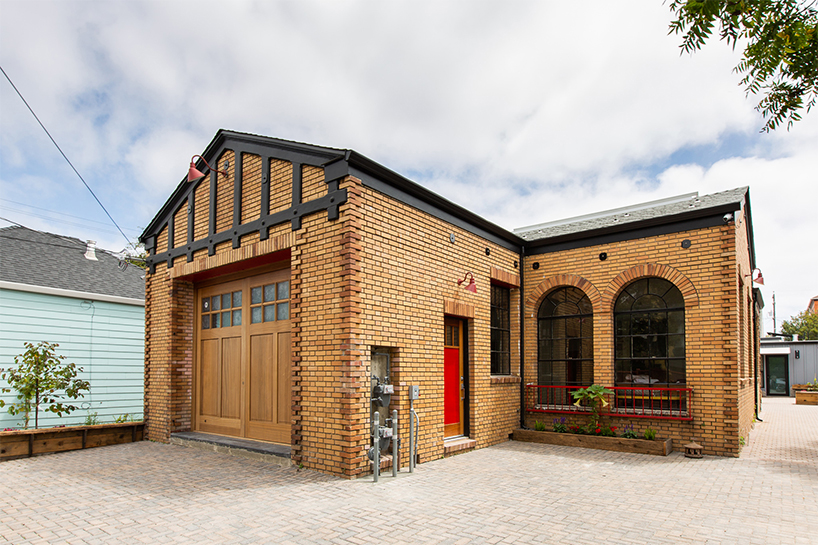
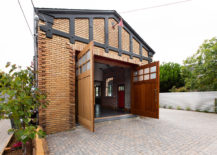
The structure’s exterior brick facade was in need of a facelift after years of neglect. [From: Benedicte Lassalle]


Inside the historic building, new concrete shear walls were constructed to help protect the structure from earthquakes.

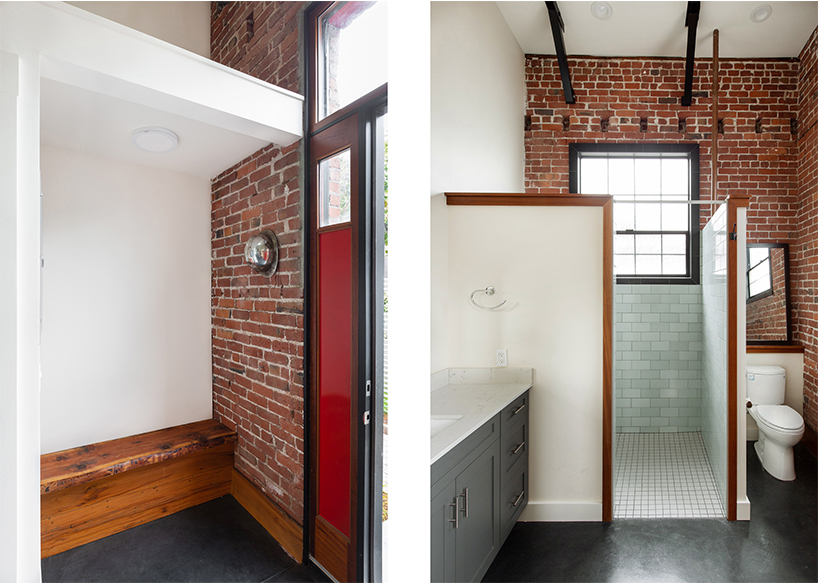
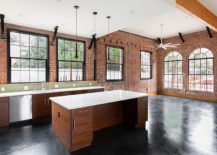
The home’s exposed interior bricks are met with a splash of modern touches that complement the environment. [From: Benedicte Lassalle]
The openness of the home extends into the bathroom which carries over the exposed brick. [From: Benedicte Lassalle]

The firm also created a new arrangement of spaces that provide for a well-appointed two-bedroom configuration with “two large interconnected livings spaces with ample natural light from the historic window openings.”

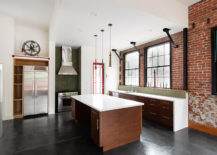
The industrial feel of the kitchen and dining area provide a contrast to other parts of the home. [From: Benedicte Lassalle]
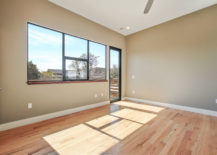
Light is again a focal point of the home’s well-appointed master bedroom which opens up onto the second floor patio. [From: Benedicte Lassalle]

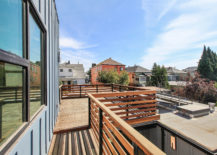
Heading outside on the second floor of the Magnolia Firehouse residents are met with a patio that provides plenty of space for entertaining and relaxation.

Plenty of room for entertaining and relaxing. [From: Benedicte Lassalle]

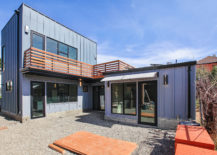
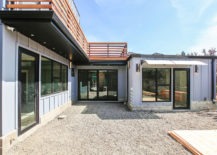
On the ground level, the home’s backyard exterior leaves behind the brick facade for a more subtle look that once again showcases the home’s stunning use of windows to provide ample natural light.

The backyard view from the Magnolia Firehouse residential adaptive reuse project. [From: Benedicte Lassalle]
Combining the old with the new. [From: Benedicte Lassalle]

Completed in 2019, the home is located at 3320 Magnolia in Oakland, California and features 3,571 gross square feet.

You can learn more about this and other projects from Baran Studio Architecture HERE.

You’re reading The Magnolia Firehouse: A Residential Adaptive Reuse Project, originally posted on Decoist. If you enjoyed this post, be sure to follow Decoist on Twitter, Facebook and Pinterest.

Similar Posts

  • Villa Kivi

    VILLA KIVI Villa Kivi is a new generation log home on a tiny island in Finnish archipelago designed for himself by Finnish designer Vertti Kivi. Polar Life Haus, a Finnish wooden house manufacturer, was quick to pick it up for their collection. ‘The whole development process of the house was guided by our goal to bring the interior of the house together with the spectacular surroundings. We wanted to be part of sunset, snowstorm and even autumn storm on his tiny island in Finnish archipelago’, tells designer Vertti Kivi, the head of dSign Vertti Kivi & Co. ‘The starting point was a clear glass cube but we ended up creating glass walls reaching from the floor level up to the ceiling only to three sides of the structure. The north side with its separate sleeping rooms and bathroom is constructed of massive black wood beams that are in clear contrast to the glass and create feeling of cosyness and safety. Large terraces in one level create a sense of continuity between inside and outside. The floor plan is defined by Scandinavian clearness. The heart of the villa is the kitchen, located next to the entrance, and from there you can see the entire open interior and the surrounding sea. We like to think the kitchen island is like a DJ’s desk – the atmosphere of the whole interior space is created right there with the remote controlled lighting system. To guarantee the privacy of the bedrooms, they are located in the outermost corners of the villa, separate from each other. They too have one wall completely made of glass. An extra attention is paid on the details of the villa. Not a single molding can be found in the entire building. The doors have a hidden frame and they too reach from the floor to the ceiling. Drama and strong feeling are created by massive wooden surfaces and their color choices – snow white lacquer on the floor creates a contrast to the dark walls. To make the battened external walls coal black, we developed a special technique based on hundreds of years old Japanese traditions. In the evening, the atmosphere changes with different lighting schemes that can be timed to be in sync with nature. The end result is a clean-lined building in Scandinavian style which can be adapted to different needs and locations. It has a strong Finnish presence.

  • How To: Lighting Solutions for Small Kitchens

    The kitchen is a place where you need an even layer of functional and aesthetic lighting that combines the best of both aspects. This becomes even more essential in the small kitchen where lighting can make or break the overall look of the space. In the tiny kitchen every inch of space matters. Saving space […]

    You’re reading How To: Lighting Solutions for Small Kitchens, originally posted on Decoist. If you enjoyed this post, be sure to follow Decoist on Twitter, Facebook and Pinterest.