|

wearable bandage with solar cell can detect how long the user has been sunbathing

Researchers create attachable device for sun exposure

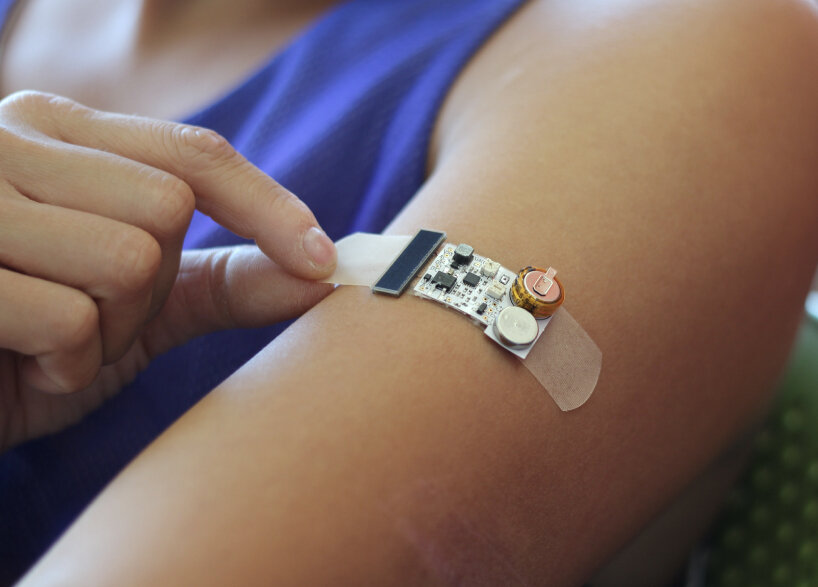
Researchers from Carnegie Mellon University and the University of California develop Hapt-Aids, a wearable bandage with a solar cell that can detect how long the user has been exposed to the sun. A device for health and activity monitoring, the attachable system is created to be small, light, and self-powered. It does not need charging, batteries, or wireless connections, as the system turns human activity into energy and uses that energy to send signals to the user. Current wearable devices like smartwatches can track activity, steps, or exercise, but they need charging, updates, and wireless connections and use sensors, processors, and digital systems that can make them complex and expensive. Hapt-Aids, on the other hand, are designed to be simple, low-cost, and maintenance-free. 

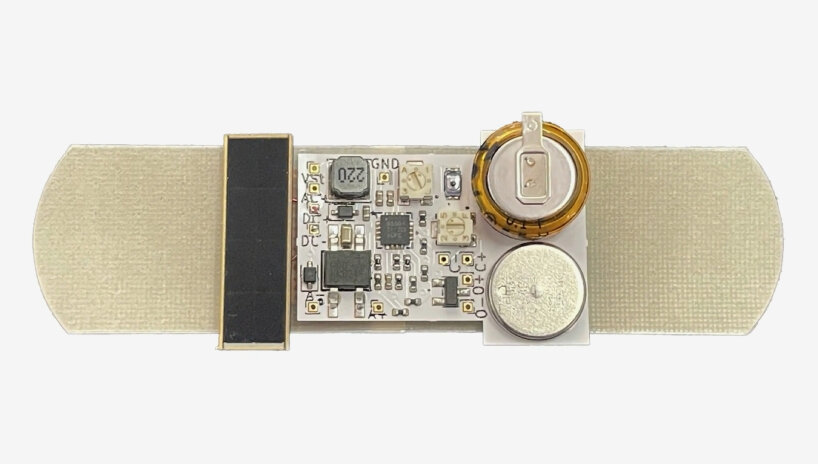
Once a user wears one, it works automatically without further action. It can be attached to the skin like a bandage or sticker, and collects energy from human movement or from the environment, such as sunlight or body motion. The energy is stored in a small capacitor, and when the stored energy reaches a set level, the device releases it through a small vibration motor. This vibration tells the user that a certain activity level, like walking distance or sun exposure, has been reached. The design doesn’t use digital sensors or microcontrollers. Instead, the amount of harvested energy is used as a direct measure of activity so the more the user moves or is exposed to energy, the more energy the device collects. Because it is based on energy harvesting, it does not need an external power source, meaning that the system is built using analog circuits that use little power.
wearable bandage solar cell
all images courtesy of the researchers Vivian Shen, Xiaoying Yang, Chris Harrison, Yang Zhang

Energy harvester for the wearable bandage with solar cell

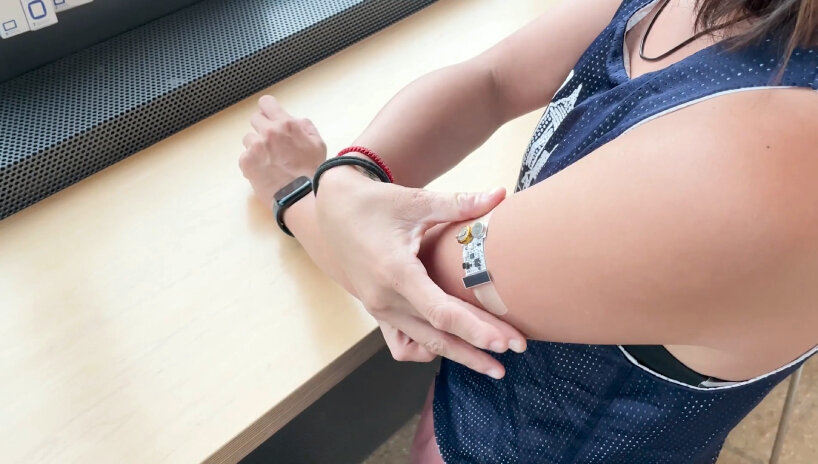
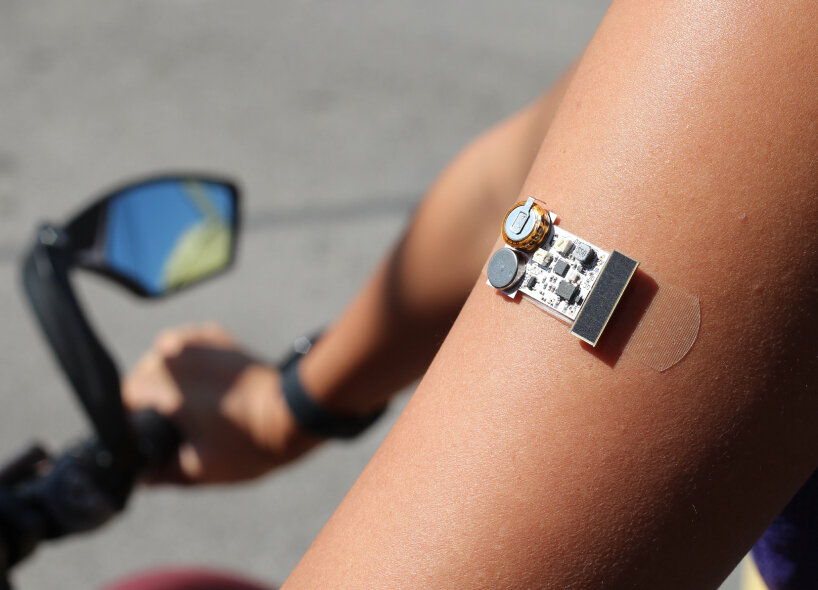
The wearable bandage with a solar cell includes an energy harvester, a capacitor for energy storage, and a haptic actuator for vibration. The type of energy harvester changes depending on the activity. For example, a solar cell can collect sunlight for monitoring sun exposure to let the user know how long they have been in the sun, while a piezoelectric film can collect energy from body movement or muscle motion. When the capacitor reaches its threshold, it releases stored energy to the actuator, which vibrates to notify the user. The vibration system allows the user to receive feedback without looking at the device as well as allows them to wear it under their clothes.

In testing, the researchers from the two universities created four prototype versions of Hapt-Aids. Each one focused on different activities such as movement, exposure, or contact. The study documents the tests in the lab and user studies, which confirmed that the device can store enough energy to work effectively and deliver noticeable vibration signals. The device’s design allows users to adjust when it vibrates using the small knob on the wearable bandage with a solar cell. This lets the user set their own target, such as how long they want to stay in the sun or how much they want to walk. When the target is reached, the Hapt-Aid vibrates. So far, the researchers see their device used for various health applications, like a patch on the arm that can track sunlight exposure to avoid skin damage. There’s no news yet on the commercial availability of Hapt-Aids.
wearable bandage solar cell
researchers from Carnegie Mellon University and the University of California develop Hapt-Aids
wearable bandage solar cell
it is a wearable bandage with a solar cell that can detect how long the user has been exposed to the sun
wearable bandage solar cell
the attachable system is created to be small, light, and self-powered

project info:

name: Hapt-Aids: Self-Powered, On-Body Haptics for Activity Monitoring

institutions: Carnegie Mellon University, University of California | @carnegiemellon, @uofcalifornia

researchers: Vivian Shen, Xiaoying Yang, Chris Harrison, Yang Zhang

study: here

Similar Posts

  • L7 Home

    Architects: Augusto Fernández Mas (K+A Diseño),
    Mauricio Miranda (MM Desarrollos),
    Mariel Esquivel and Cesar Cardoso. Construction: K+A Diseño Main Purveyors: MicMac, Solesdi y Venster. Interior decoration: TAI Arquitectura de Interiores Photography: Onnis Luque The linear black cabin was designed by the collaboration between Augusto Fernández Mas and Mauricio Miranda as a country house for a client with three specific demands: simple layout, low maintenance, and living quarters and public areas in one floor. RA.L7 is located within Rancho Avandaro Country Club in the outskirts of Valle de Bravo, an hour and a halve drive from Mexico City. It is a project that portrays a strong character form the outside but at the same time invites passersby to enter. In the inside, it offers a warm cabin like feeling that through its simplicity and windows facing the golf course, guides the view to the outside. The lower concrete volume ads a sense of solidity and stability to the house, and its layout divided by a garage open on both sides provides an invitation to enter. [
    The project uses the topography of the terrain to its advantage, thus generating two volumes: the upper one which encloses the living and general public areas and the bottom one encompassing the garage, technical and service areas. The outside materials are Japanese style burnt wood (Shou-sugi-ban), Canadian darkened wood, concrete, and ceramic tiles (roof) that in turn evidence the simple lines of the design. The choice of materials demands close to null maintenance.
    The west façade, which faces the street, has dark wood symmetric divisions over the main interior hallway, creating privacy at an angle and almost unrestricted view when perpendicular to them. The purpose is to allow light into the house and permit the views to the equestrian club on the other side of the street while maintaining limited exposure to passersby’s. The east façade faces the golf course, thus there is an honest openness through all glass façade with sliding window doors and complemented with a glass-roofed terrace. In attention to the requested simplicity in the layout, the linear internal distribution has four rooms laid in a sequential manner culminating with living—room, dining-room and kitchen. One dramatic hallways communicates all areas in a straight line, adding to the simplicity of the design layout. With over 650 square meters of inside space, only one internal staircase was employed to communicate with the service areas and garage. There are two accesses to the house without stairs for the owner to comfortably access. In total, the terrain is 2,200 square meters of which ___ square meters were used for the house.
    There is a comforting feeling of warmth inside, but the same time opens up to go and enjoy the outside. It is to be lived inside wanting to be outside and, once outside, feeling invited to be protected inside. The linear and simple geometry of the house is soothed by the layout of the wood beams on the ceiling and the elegant and at the same time rough aspect of the wood floor and wood paneling on the walls. RA.L7 house is one of two recent projects done by the collaboration of Augusto Fernandez and Mauricio Miranda in Rancho Avandaro. Augusto Fernandez, through its K+A Diseño firm, is an active architect and constructor in Valle de Bravo with several country homes competed in the last years. Photography is by Onnis Luque.

  • Wedding Arch Design Reaches New Heights

    For an unforgettable backdrop that can set the tone for your ceremony and reception, consider incorporating a wedding arch into your big day. Not only does it serve as beautiful décor that can double as a photo backdrop, it can frame you and your beloved as you take your vows. Wedding arches can even be […]

    You’re reading Wedding Arch Design Reaches New Heights, originally posted on Decoist. If you enjoyed this post, be sure to follow Decoist on Twitter, Facebook and Pinterest.