| |

World’s First Robot and AI Museum Opens in Seoul

Seoul Robotics and AI MuseumSeoul Robotics and AI Museum

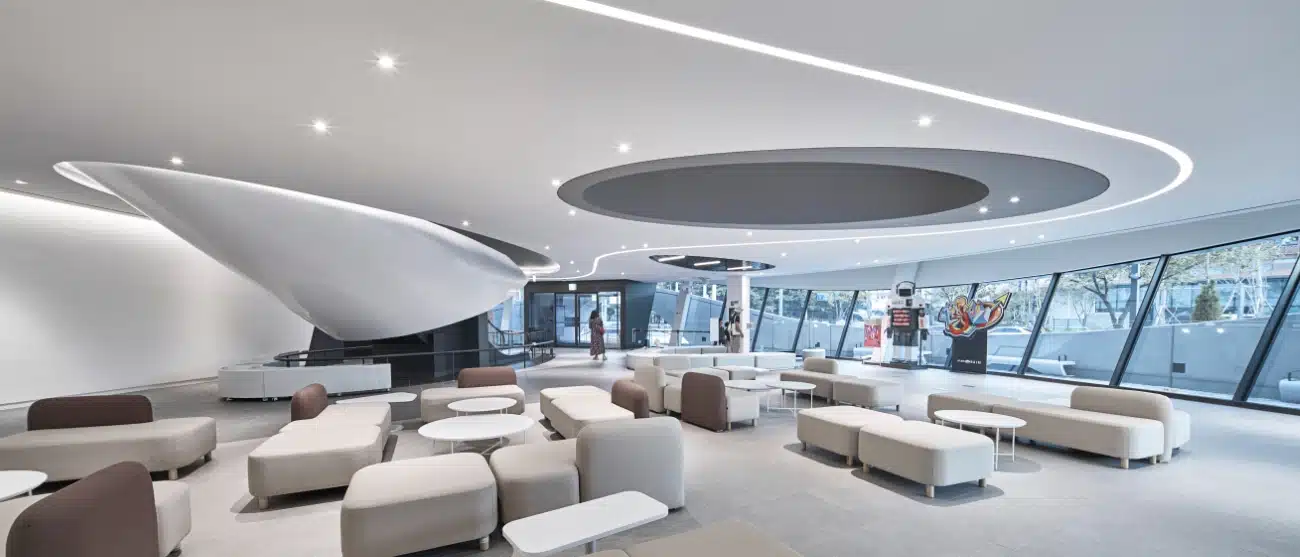
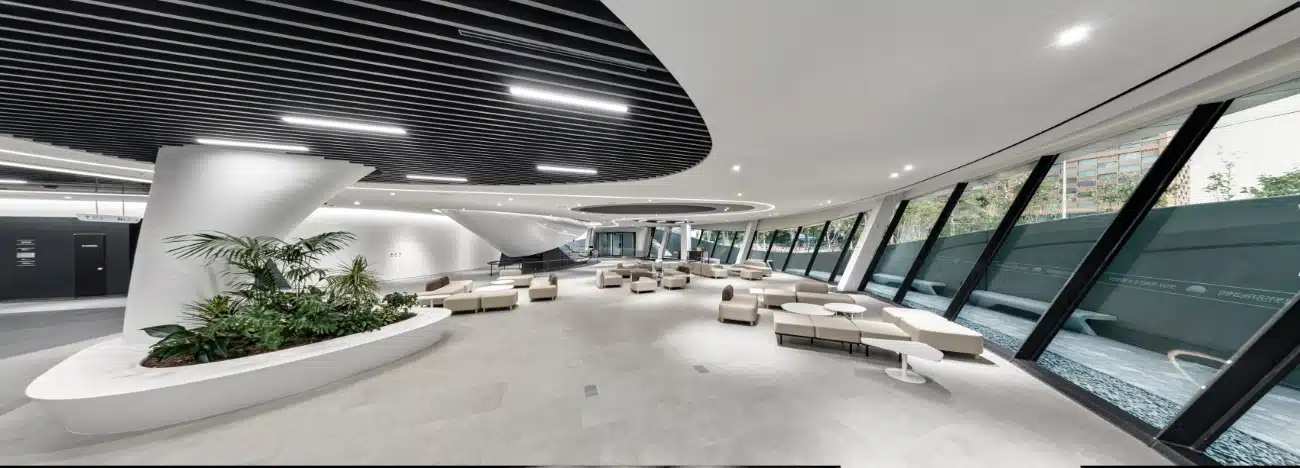
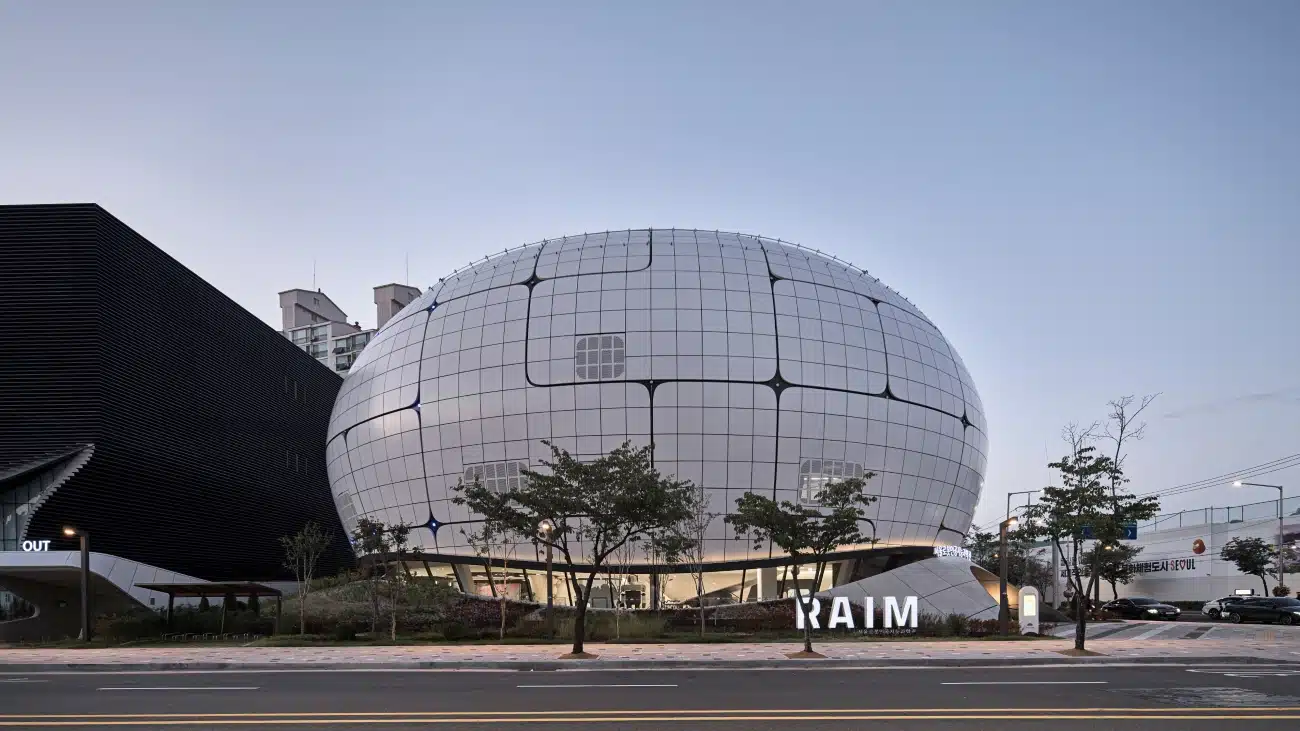
The world’s first Robot & AI Museum (RAIM) opened in South Korea. Located in Seoul, the futuristic building was designed by Melike Altınışık Architects and takes on a spherical, non-directional form intended to “reflect the fluidity and dynamism of the AI and robotics fields.” Stretching nearly 80,000 square feet, the expansive museum is a celebration of science, technology, and innovation.

By integrating smart technology into the design, Melike Altınışık Architects has ensured that the architecture isn’t simply a container but an active participant in the museum. Part of the technological narrative that it presents, cutting-edge techniques such as Building Information Modeling (BIM), Off-Site Construction (OSC) techniques, laser CNC machining, and robot welding were all used in its construction.

“From the foundation to the finishing touches, smart systems are woven into every aspect of the building’s design and operation,” Altınışık tells Dezeen. “It’s like the building itself is alive, interacting with visitors to enhance their experience at every turn.”

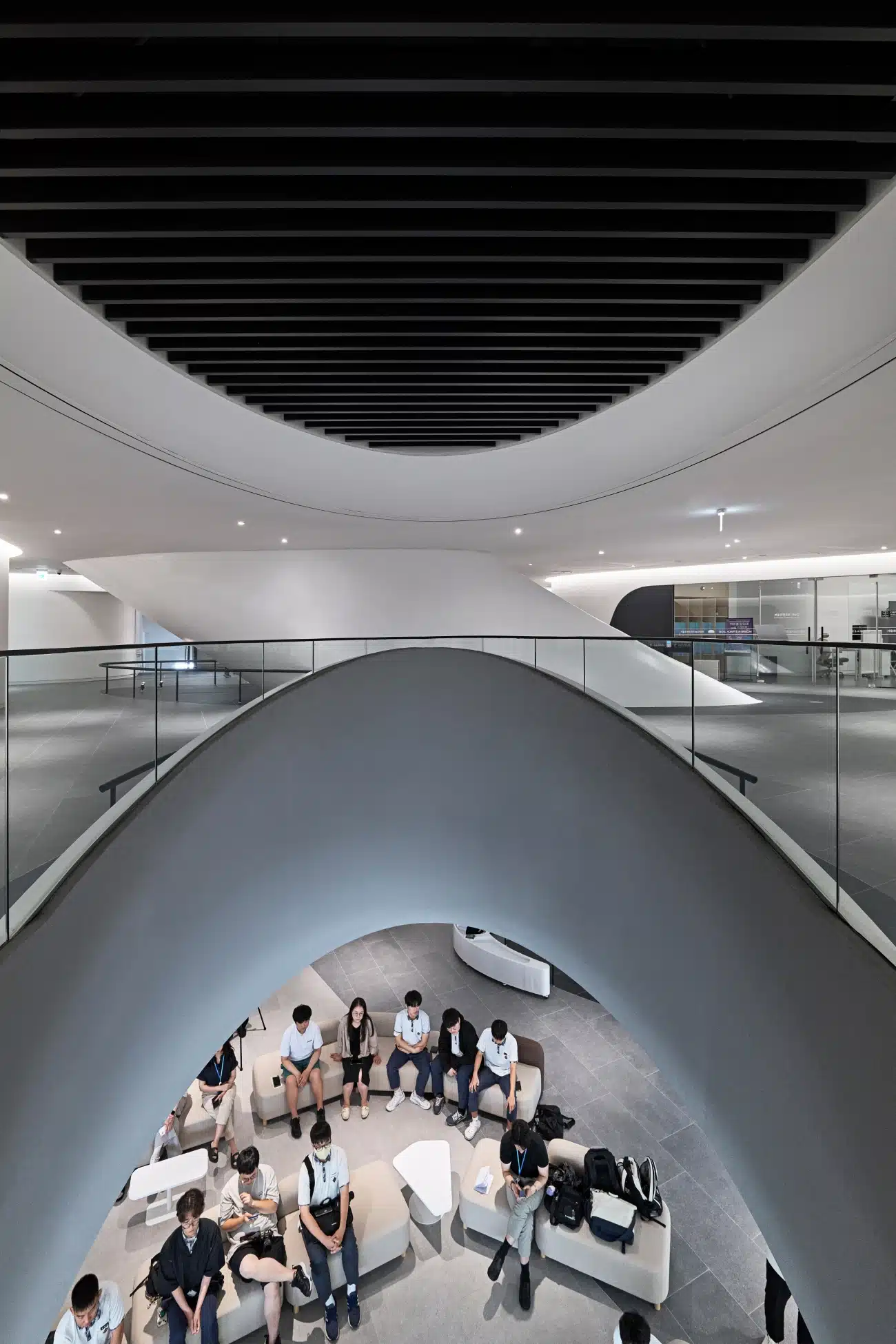
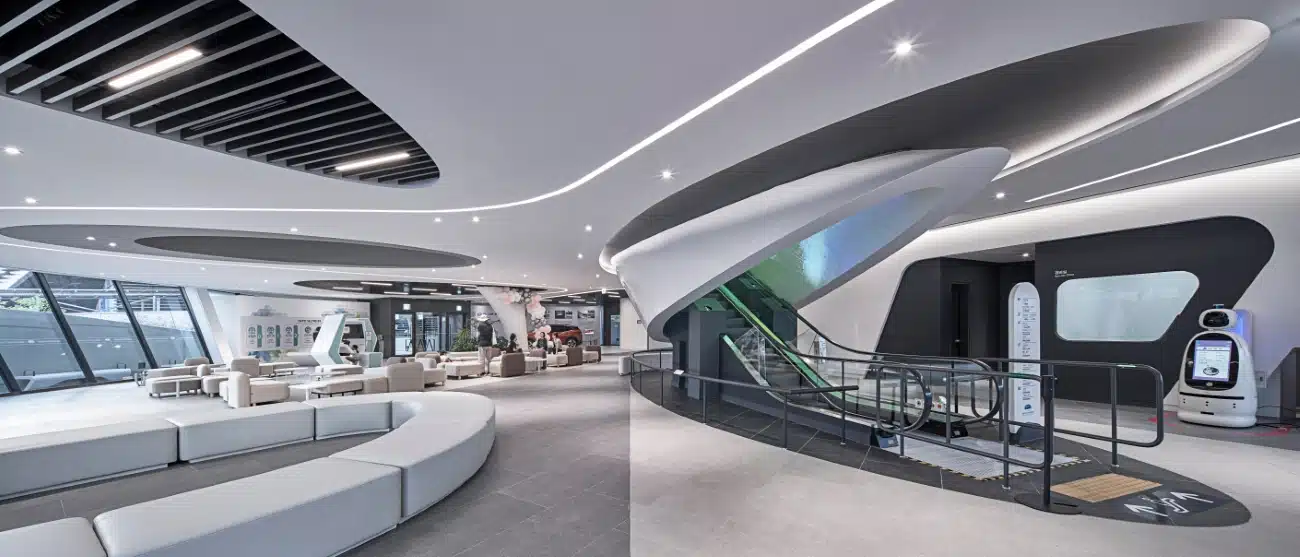
Inside the museum, visitors are greeted by robots and invited into a ground level with reception areas, a café, and a museum shop. A vertical exhibition tunnel moves visitors from the ground floor to the upper exhibition levels for permanent and temporary displays. Designed to take guests on a narrative of scientific and technological progress, the interior’s clean lines and open spaces are what one would expect from the futuristic museum.

Altınışık hopes that RAIM is just the start of several technology museums that could spread across the city, with this site remaining the central hub.

“Now, picture this: one day, RAIM will have siblings! Imagine RAIMs popping up all over the city, chatting with each other like nodes in a futuristic network,” she shares. “And it all starts here—with our design serving as the mothership, the original monitoring center that kicks off a new era of connected, interactive museums.”

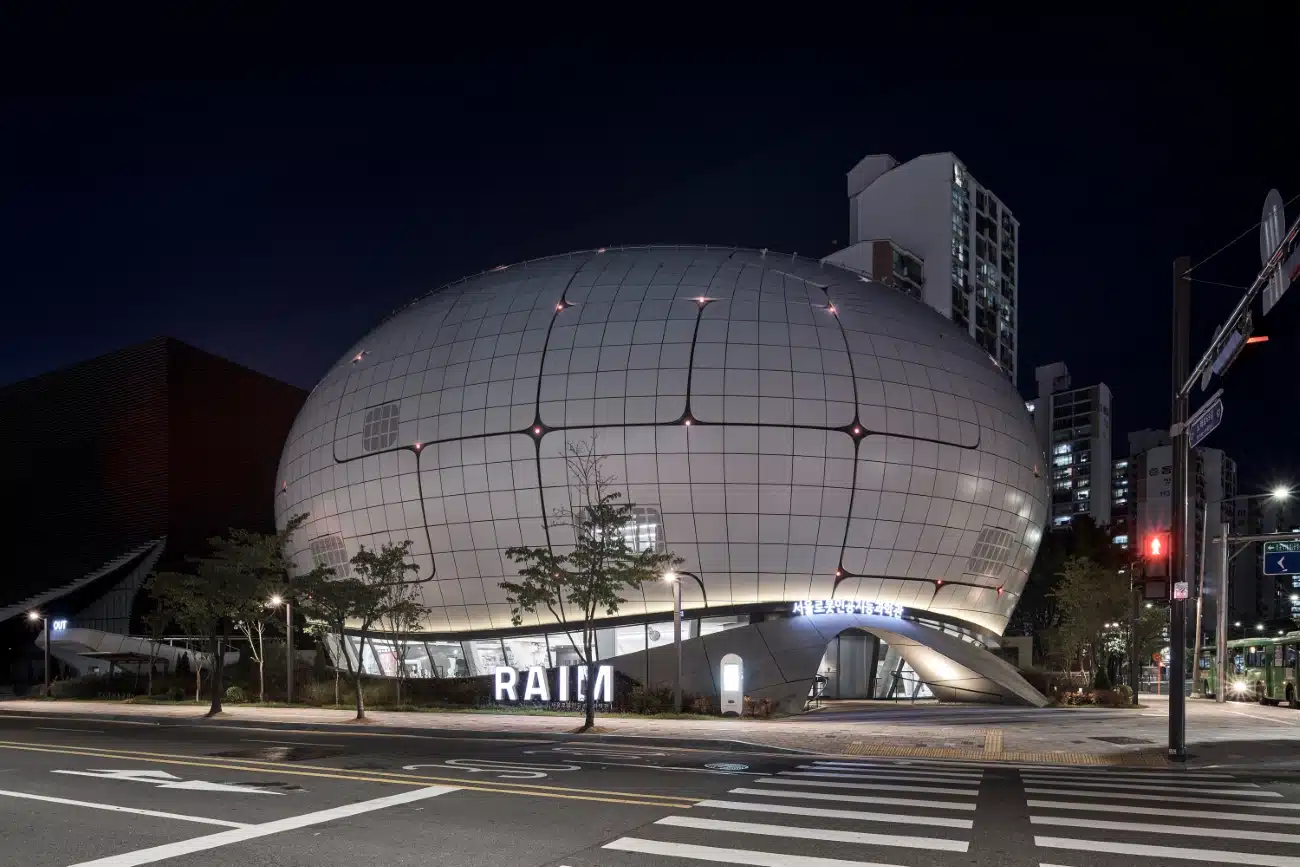
The world’s first Robot & AI Museum (RAIM) opened in Seoul, South Korea.
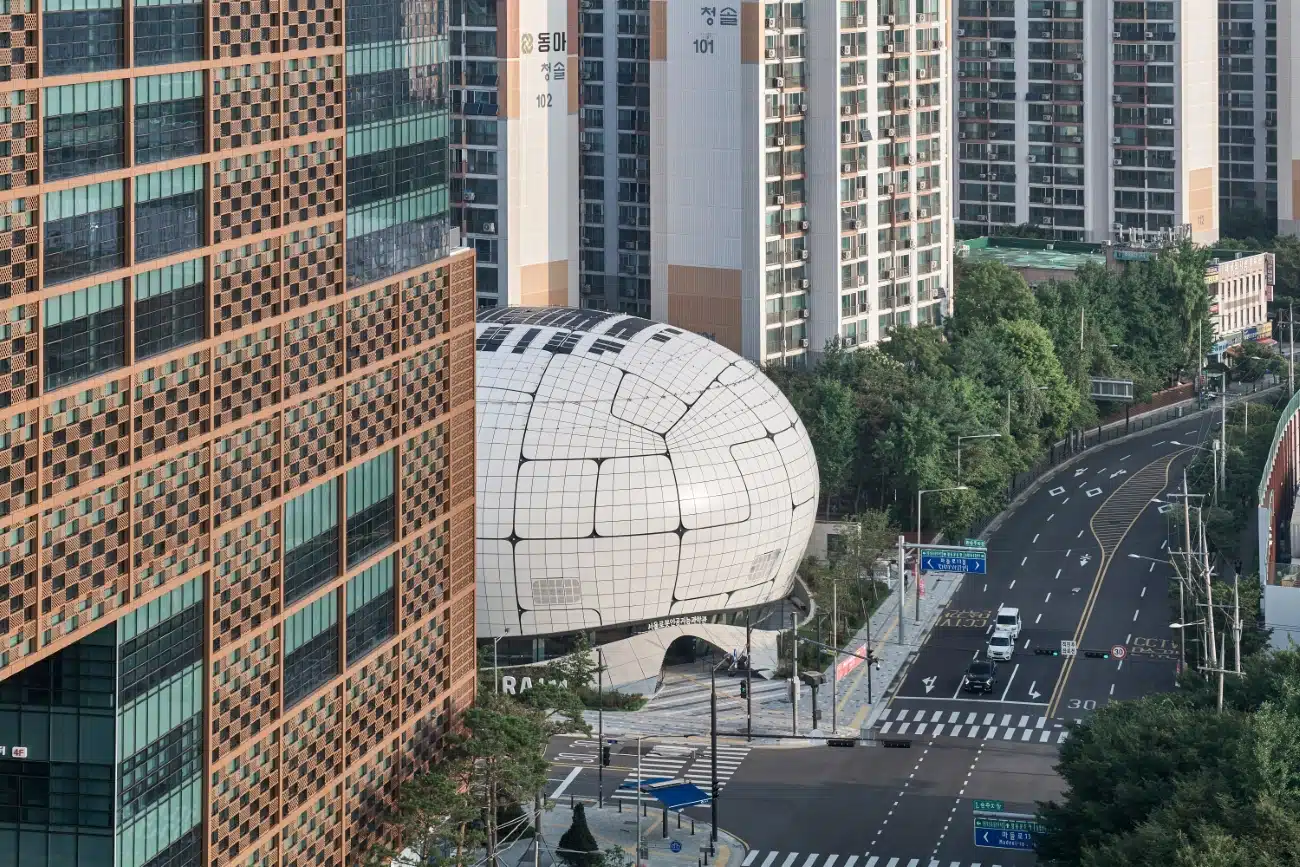
Seoul Robotics and AI MuseumSeoul Robotics and AI Museum

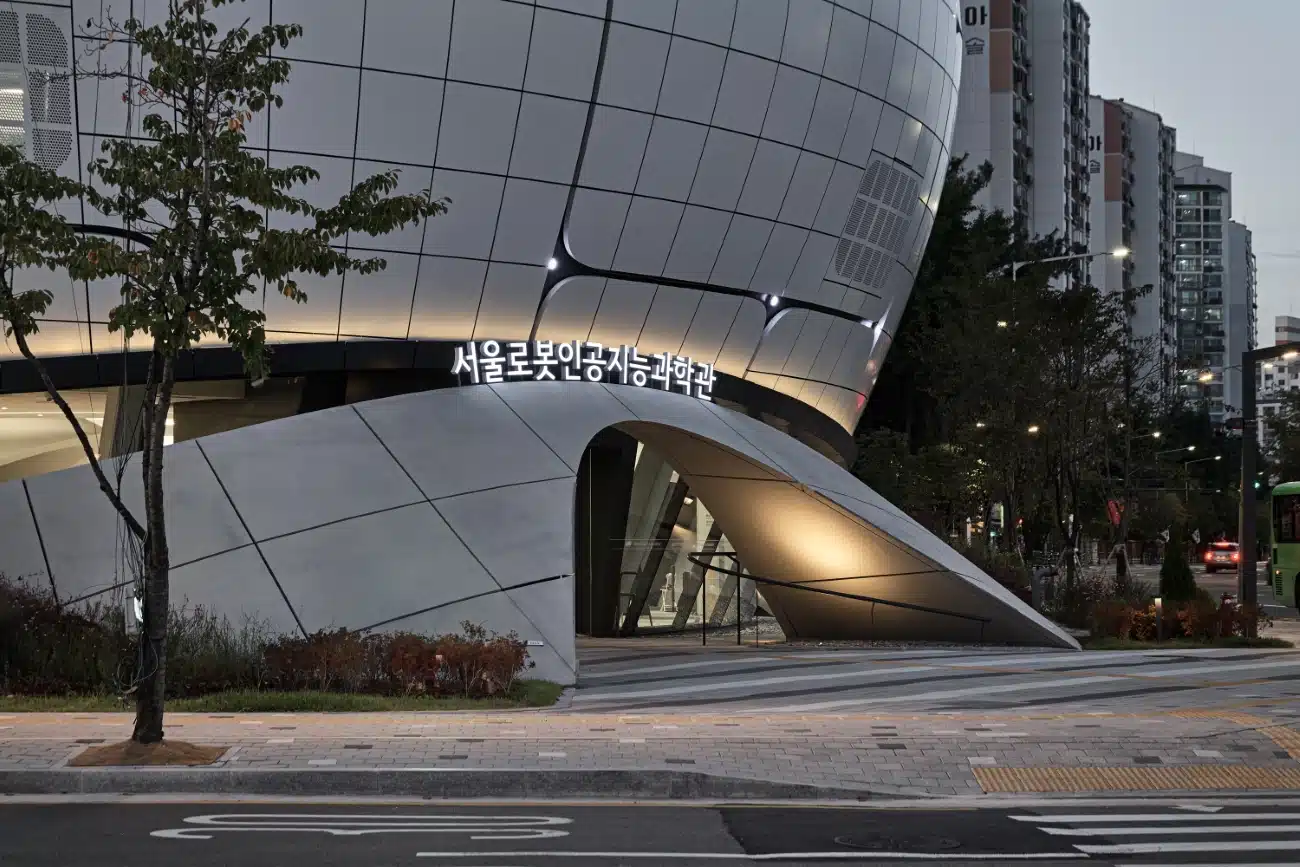
Designed by Melike Altınışık Architects, it takes on a spherical, non-directional form intended to “reflect the fluidity and dynamism of the AI and robotics fields.”
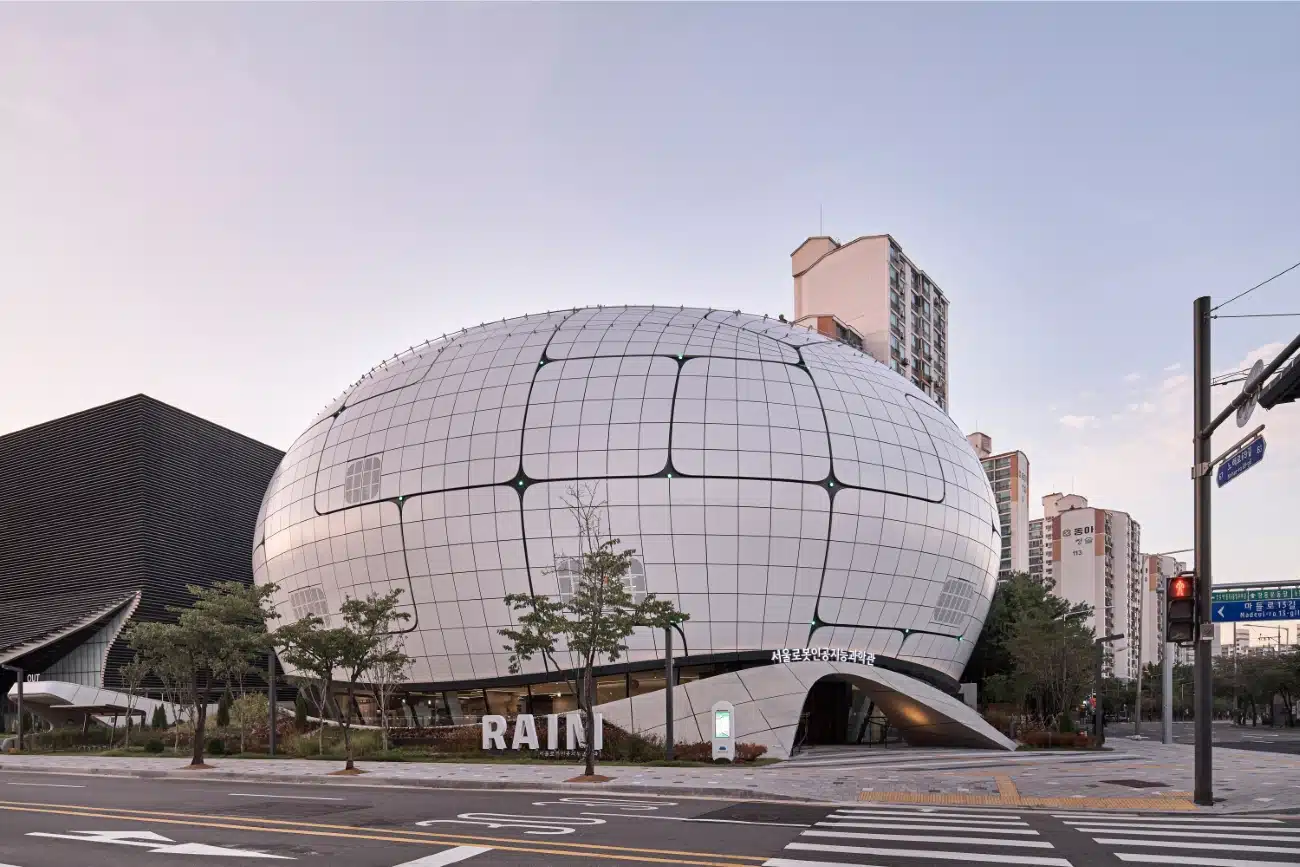
Seoul Robotics and AI MuseumSeoul Robotics and AI Museum

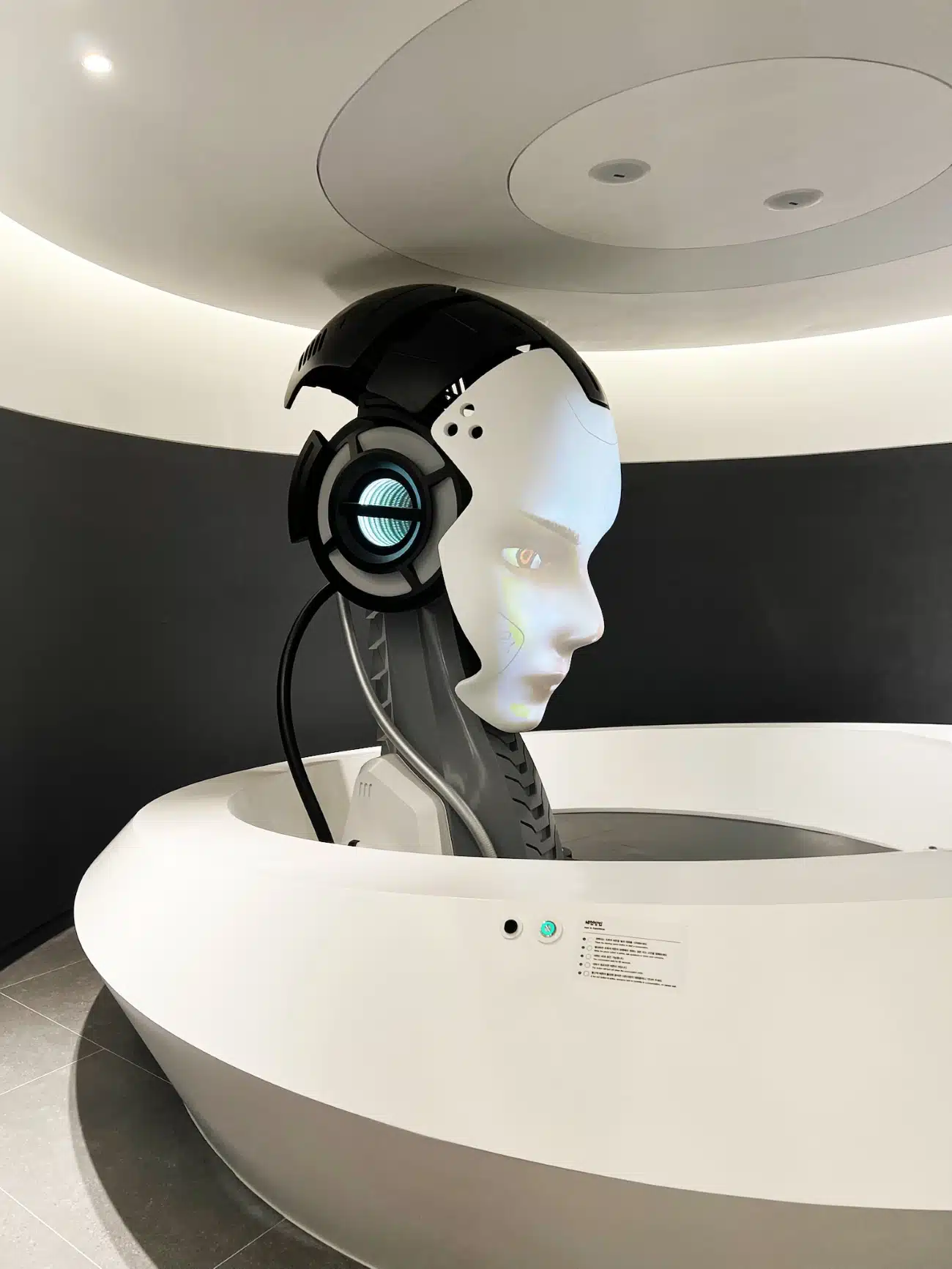
Visitors are greeted by robots on the ground floor and are slowly led to the upper exhibition areas via a vertical exhibition tunnel.
Seoul Robotics and AI MuseumSeoul Robotics and AI Museum

Smart technology was incorporated into the design and construction of the museum, making it a part of the technology narrative it presents.
Seoul Robotics and AI MuseumSeoul Robotics and AI Museum

Altınışık hopes that RAIM is just the start of several technology museums that could spread across the city, with this site remaining the central hub.
Seoul Robotics and AI MuseumSeoul Robotics and AI Museum

Melike Altınışık Architects: Website | Facebook | Instagram

All images by Namsun Lee except where noted. My Modern Met granted permission to feature photos by Melike Altınışık Architects.

Related Articles:

World’s First Museum for Video Game Art Will Open in Japan

Museum of Paper Cleverly Designed With a Roof That Looks Like a Sheet of Folded Paper

Proposal For Seoul’s Newest Performing Arts Center Is Made Up of Five Futuristic Buildings

Zaha Hadid Architects Designs Futuristic Science Fiction Museum in China That “Floats” on Water

Similar Posts

  • Award-Winning Sustainable Design In Stunning Washington State Residence

    Located in Bainbridge Island, Washington, this spectacular residence overlooks the Puget Sound and the Seattle skyline from lofty Yeomalt Bluff. A jewel of sustainable design, the Platinum House earned the first LEED Platinum certification in the state, outside of the City of Seattle. Coates Design Seattle Architects filled the Platinum House’s 2,500 sqft with innovative […]

    You’re reading Award-Winning Sustainable Design In Stunning Washington State Residence, originally posted on Decoist. If you enjoyed this post, be sure to follow Decoist on Twitter, Facebook and Pinterest.

  • House of Shifting Sands

    Sited gently on the lower slope of a dramatic sixty foot high coastal bank and surrounded by miles of undeveloped Cape Cod National Seashore beaches and scrub pines is a warm, modern beach house that is more than just a place to enjoy uninterrupted ocean views and sea breezes. Our clients dreamed of a house that would work equally well as both a year-round family “camp” and also as a “thinking retreat” for collaborating with their colleagues. From the beginning of design it was critically important to us and to our clients – as well as the Town Conservation Commission and National Seashore representatives – that the house fit into its fragile site seamlessly. Our team responded with great care by designing the house to curve and shift softly with the natural topography and also by envisioning the new native and drought resistant landscaping growing back tight to the house as if both had always been there together. The main house is conceived of as a collage of overlapping, cantilevered planes and volumes that culminate in a large living / dining space defined by an asymmetrically arcing copper roof plane. Entry to the house is by way of a long ramp through what will in a few years be a thicket of native pines and bushes, then through curving cedar shingled planes. The inland side of the house is tucked into its shifting, sandy landscape and is comprised of cedar shingled planes that float above the ground and contain bedrooms, bathrooms, and the kitchen, and lower volumes of horizontal tongue and groove cedar boards that enclose bedrooms and a gathering space for teenage sons. On the Cape Cod Bay side, the house opens up through walls of glass to endless water views and heavenly sea breezes. In the middle of the house, just inside the front door, is an architectural “hole” that allows the house to breathe and cool itself naturally most of the year through its floor to ceiling awning windows, and which also provides views of the sky from a shady breezeway on the lower level. Along one wall of the hole is a trellis planted with evergreen and seasonally aromatic flowering vines. On the Cape Cod Bay side, the house opens up through walls of glass to endless water views and heavenly sea breezes. In the middle of the house, just inside the front door, is an architectural “hole” that allows the house to breathe and cool itself naturally most of the year through its floor to ceiling awning windows, and which also provides views of the sky from a shady breezeway on the lower level. Along one wall of the hole is a trellis planted with evergreen and seasonally aromatic flowering vines. Separated from the main house by a screen porch and contiguous deck, is a separate art / yoga / thinking studio that seemingly floats fourteen feet above the ground. Inside is a single large loft space as well as a full bath, and below is an open-air summer art studio and boat / beach toy storage, behind walls of wood slats and matching barn doors.