A Camera-Ready Remodel in Los Angeles Asks $789K

After a multiphase update and an appearance on HGTV, this Montecito Heights midcentury seeks a new owner.

Set on a hillside, surrounded by greenery, 3877 Latrobe Street was built in 1964, as part of The Cliffs, a modernist development in the Montecito Heights neighborhood of Los Angeles.

Designed by architect John Lawrence Pugsley, best known for his midcentury commissions in nearby Pasadena, 3877 Latrobe Street was built in 1964 as part of The Cliffs, a modernist development in Montecito Heights, Los Angeles.

Tucked into the hillside and surrounded by greenery, the 1,426-square-foot residence features three bedrooms and two bathrooms in an open floor plan; multiple skylights and well-placed windows bathe the interior with natural light, and balconies on both levels form an outdoor connection.

Set on a hillside, surrounded by greenery, 3877 Latrobe Street was built in 1964, as part of The Cliffs, a modernist development in the Montecito Heights neighborhood of Los Angeles.

Set on a hillside and surrounded by greenery, 3877 Latrobe Street was built in 1964 as part of The Cliffs, a modernist development in the Montecito Heights neighborhood of Los Angeles. 

Photo by Charmaine David

It wasn’t, however, always like this. “The house, when we bought it, was so dark and gloomy,” say current homeowners Jeffrey Kleeger, an architectural designer, and Elisa Read, a landscape designer and horticulture specialist. They took on several phases of renovation starting in 2008, when the home received a new roof and skylights. They also opened up the kitchen to create an open-plan great room. 

After the windows were updated in 2010, the recession stalled further renovation. Then, in 2011, the couple and the house were chosen to appear on an episode of HGTV’s Room Crashers, allowing them to finally “complete their dream” with architect Don Dimster. 

A skylight over the entrance is particularly welcoming.

A skylight over the entrance sets the tone for a breezy interior.

Photo by Charmaine David

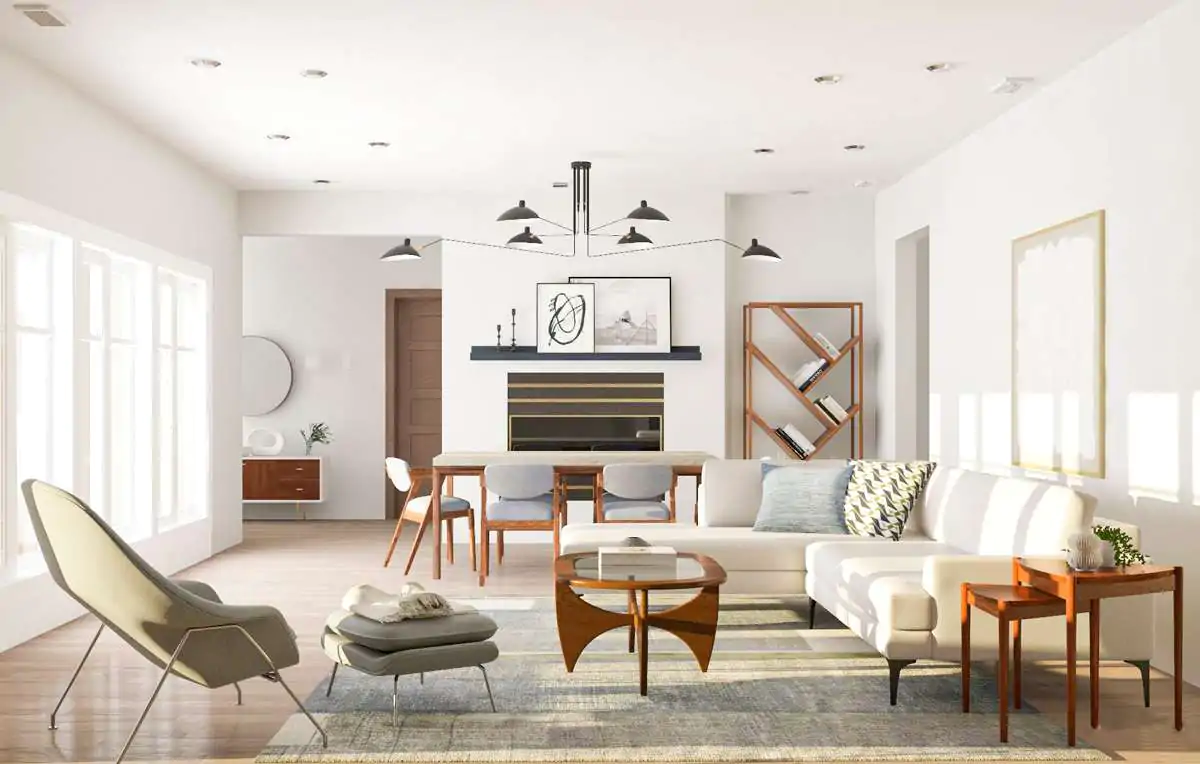
The home boasts an open floor plan that is bright and filled with lots of natural light thanks to multiple skylights, windows, and sliding glass doors that lead to a balcony.

The open floor plan benefits from lots of natural light thanks to multiple skylights, windows, and sliding glass doors that lead to a balcony. 

Photo by Charmaine David

See the full story on Dwell.com: A Camera-Ready Remodel in Los Angeles Asks $789K

Similar Posts

  • Kahua Kuili Residence

    The Kahua Kuili residence is a modern interpretation of the classic Hawai’i summer camp. In keeping with the firm’s design philosophy, the warm yet spacious retreat was designed with longevity in mind. Kahua Kuili incorporates centuries-old indigenous design elements paired with contemporary attitudes to create a residence that will remain relevant for generations to come. Located within the dry portion of the Kona Coast at the base of the large cinder cone Pu’u Kuili, the property offers expansive views of the Pacific Ocean and Kua Bay as well as mountain views of Hualalai. Previously the site of a working ranch, the transition to residence became an opportunity to return the majority of the landscape to its natural state: a mix of lava and bunch grasses. Inspired by traditional Hawaiian architecture, the 5,590-square-foot residence is composed of multiple structures that simultaneously provide privacy through their scattered arrangement and community through the open spaces between them. The camp-like retreat’s focal point is the main hale (Hawaiian for house), which provides a central gathering place for family and friends. The main hale opens to ocean views and the central, protected courtyard, enabling activity to flow easily between indoor and outdoor space, including to the adjacent pool and tiki bar. The bar/lounge area spills over into the pool, complete with multiple lounge chairs and breathtaking ocean views. A barbecue/luau area allows for gatherings of family and friends who can picnic under the comfort and shade of a magnificent kiawe tree. Deep roof overhangs define the transition between inside and outside and offer shelter from sun and rain. Outdoor spaces link the separate structures—guest quarters, studio, wash house, garage—to one another. The use of simple, durable materials, such as board-formed concrete, western red cedar, large sliding doors, operable wood ventilation louvers, and rope lashing help reinforce the camp-like aesthetic. Western red cedar was selected for its resistance to termites and dry rot as well as for the beautiful way it patinas with age. Natural stone cowboy walls surrounding the property help create a sense of privacy from nearby houses. The interiors, by Marion Philpotts, were designed in a comfortable, contemporary aesthetic with bright colors and retro elements that tie into the modern theme of the structure. The expansive cedar-clad kitchen features a breakfast bar, dining table, and state-of-the-art appliances. Tall ceilings, large windows, and grand sliding doors that open to the courtyard contribute to the casual ease of the house. Intimate spaces, which include cozy reading nooks and relaxing sitting areas, are scattered throughout the home. Kahua Kuili is the quintessential destination for relaxation, where one can unwind comfortably and in style, all while enjoying the natural climate and landscape of Hawaii. Project team
    Architect: Walker Warner Architects
    Interior Designer: Philpotts Interiors
    Landscape: David Y. Tamura Associates
    Builder: Maryl Construction
    Photography: Matthew Millman