henrique oliveira arrives at art basel miami beach
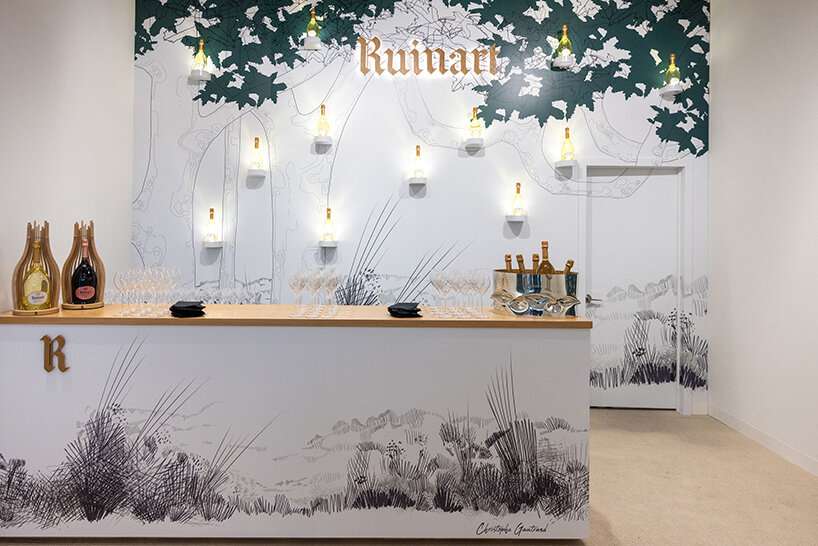
Brazilian sculptor Henrique Oliveira displayed his large-scale sculptures at Art Basel Miami Beach 2024 with his latest installation, presented in collaboration with Maison Ruinart at the Ruinart Lounge. The pieces, three monumental freestanding sculptures made from recycled plywood and papier-mâché, are part of Ruinart’s 2024 Carte Blanche initiative, Conversations with Nature, which celebrates a decade of intertwining art and sustainability.
This year, Ruinart invited six international artists to interpret the relationship between humanity and nature, each offering a unique perspective on the theme. The team at Ruinart notes that Oliveira’s work evokes the labyrinthine chalk caves of the Champagne region, where the brand ages its champagne, drawing a thoughtful connection between natural history and craftsmanship. designboom met with the artist at Art Basel Miami Beach to experience the Ruinart Lounge and learn about his artistic process — see the full guide to Miami Art & Design Week 2024 here.
images courtesy Maison Ruinart
sculpting the natural forms of maison ruinart
Artist Henrique Oliveira’s sculptures for Maison Ruinart, towering with vine- and branch-like structures, reflects his ongoing fascination with nature’s forms. Its twisting and expansive design evokes the underground chalk pits of Reims, which have shaped the Champagne region’s legacy. ‘I have always worked with these tangled branches and vine-like forms. Even before creating sculptures, these shapes were present in my paintings,’ the artist tells designboom.
The materials, sourced from construction waste and discarded wood, emphasize the artist’s commitment to sustainability. ‘The plywood and bark I use were once part of trees, cut and transformed into industrial products, then discarded. I recover these materials and give them a second life. For this piece, I created a skeleton from flexible plywood, applied papier-mâché, and layered bark on top to mimic natural textures,’ he explains.
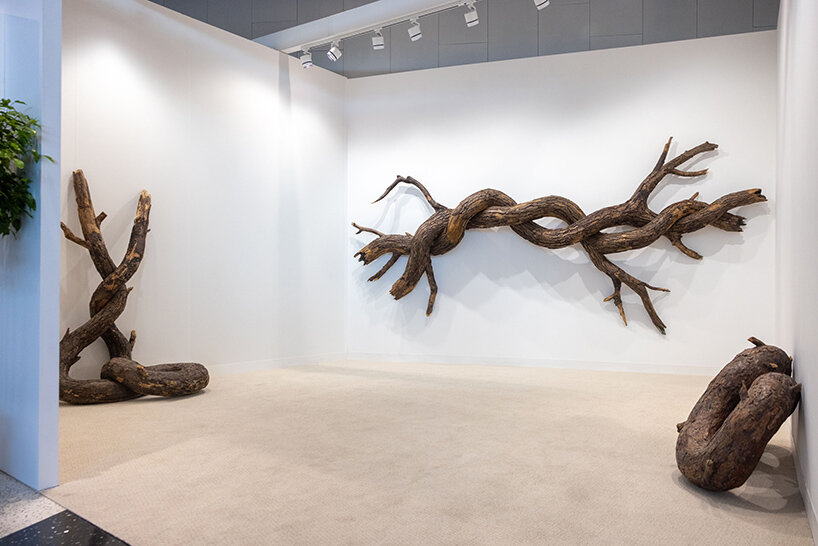
Henrique Oliveira presented monumental sculptures at Art Basel Miami Beach with Maison Ruinart
the artist’s process of three dimensional collage
Displayed at the Ruinart Lounge, Henrique Oliveira’s work mirrors contemporary struggles with environmental stewardship. ‘Nature used to be something humans feared—wild forests and dangerous animals. Now, it’s disappearing under the weight of human occupation,’ he said. ‘We put so much effort into recreating something that looks like nature. The process is like a puzzle, piecing together discarded parts to create something that appears effortless but is anything but.’
The sculptures’ undulating forms suggest both organic growth and surreal interpretations. ‘In nature, it’s rare to find a vine or tree this size, yet the movement hints at something animal-like, perhaps a lizard or snake. There’s a sense of infinite growth and recycling — an echo of the cycles within nature itself,’ Oliveira adds.
A painter by training, Oliveira sees his sculptures as three-dimensional extensions of his pictorial practice. ‘My background is in painting, and the textures and layering in my sculptures are deeply tied to that,’ he notes. His journey from two-dimensional work on plywood to large-scale, site-specific sculptures reflects an organic evolution. ‘The scratches on plywood once reminded me of brushstrokes. Eventually, I began building three-dimensional works that interacted with architecture, evolving my practice into what it is today.’
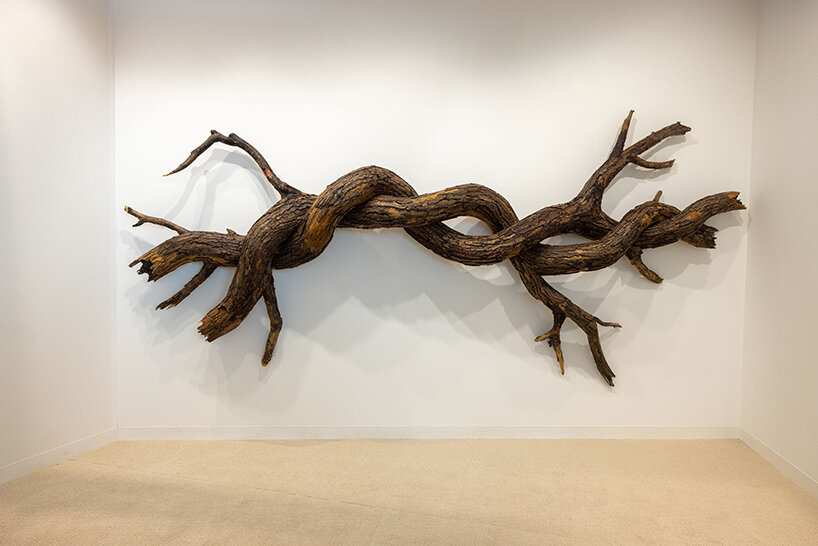
the sculptures are made from recycled plywood, bark, and papier-mâché
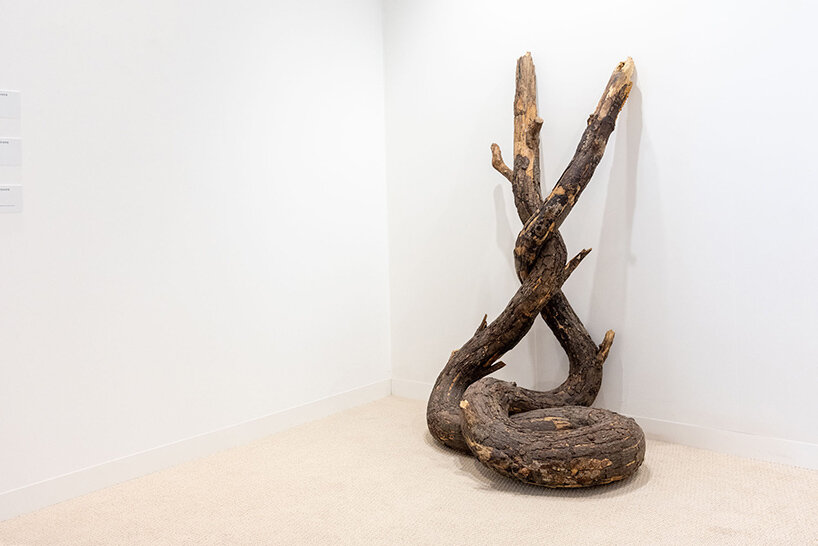
twisting vine-like forms reflect Oliveira’s fascination with nature’s shapes and organic growth
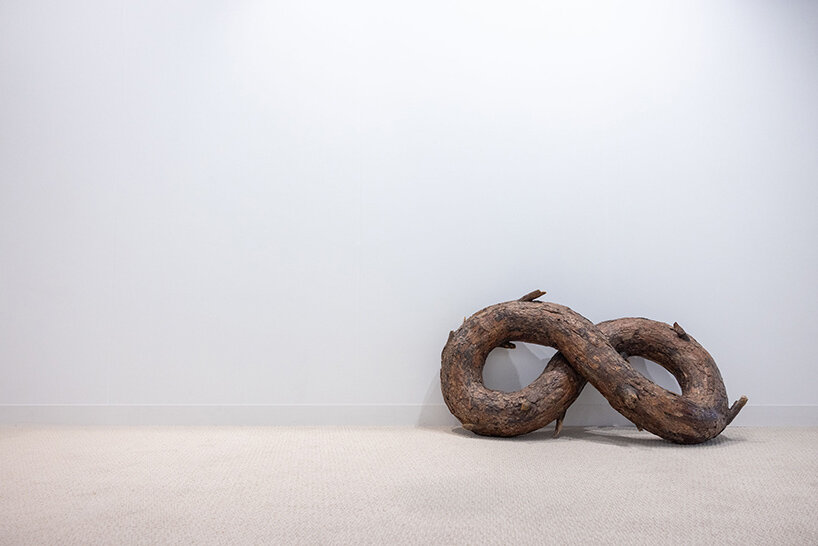
materials are sourced from discarded wood and construction waste