Century Old Car Assembly Factory Finds New Life as a Stunning Modern Home

The Camperdown Warehouse designed by Archer Office in Sydney, Australia is anything but your usual home with its polished modern finishes and a lovely rear yard. This revamped and rejuvenated contemporary house was an old car assembly factory built in the 1920’s with some of the best top-end cars over the years rolling off of its production line. Changing times meant that the 90’s saw this once busy industrial hub being turned into a residential unit. With time, its interior grew dark and dreary, requiring a bright and functional contemporary update. This is just what its latest avatar promises as raw concrete finishes are paired with sweeping space and plenty of natural light.
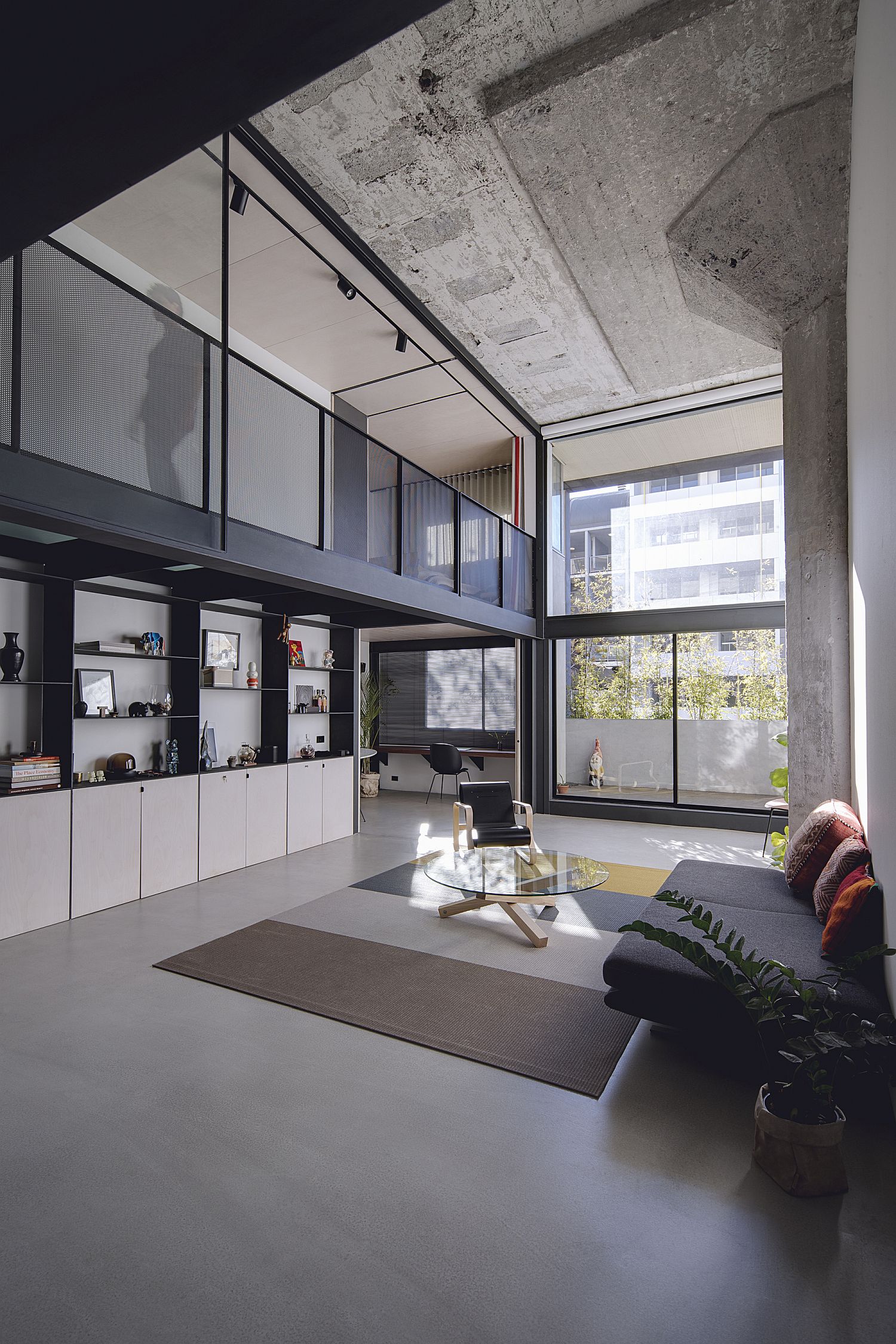
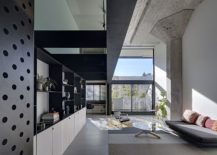
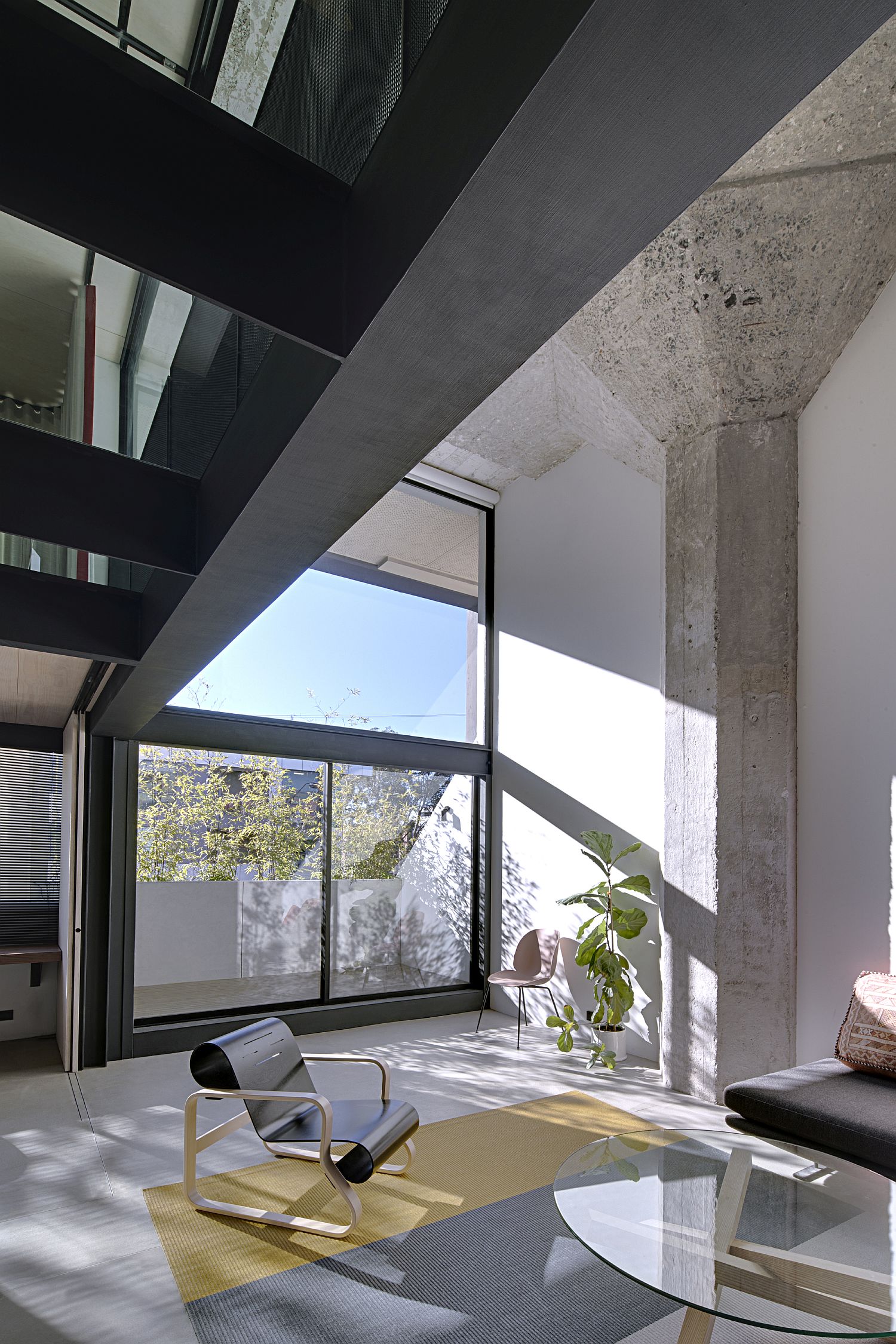
Elegant and spacious double-height living area of the house in Sydney

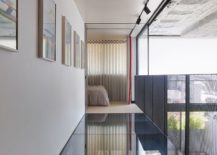
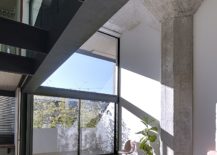
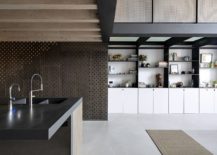
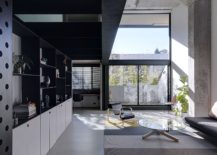
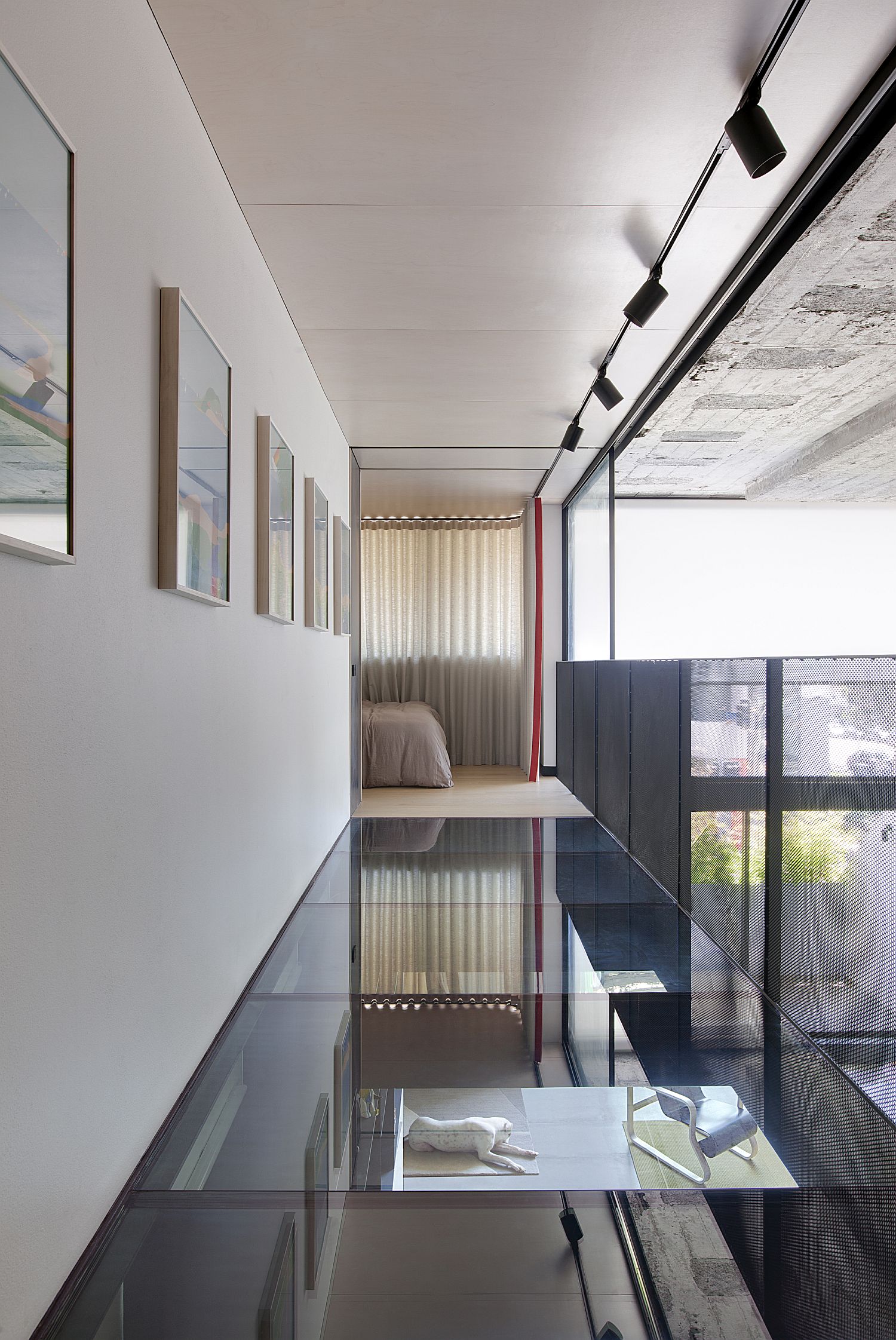
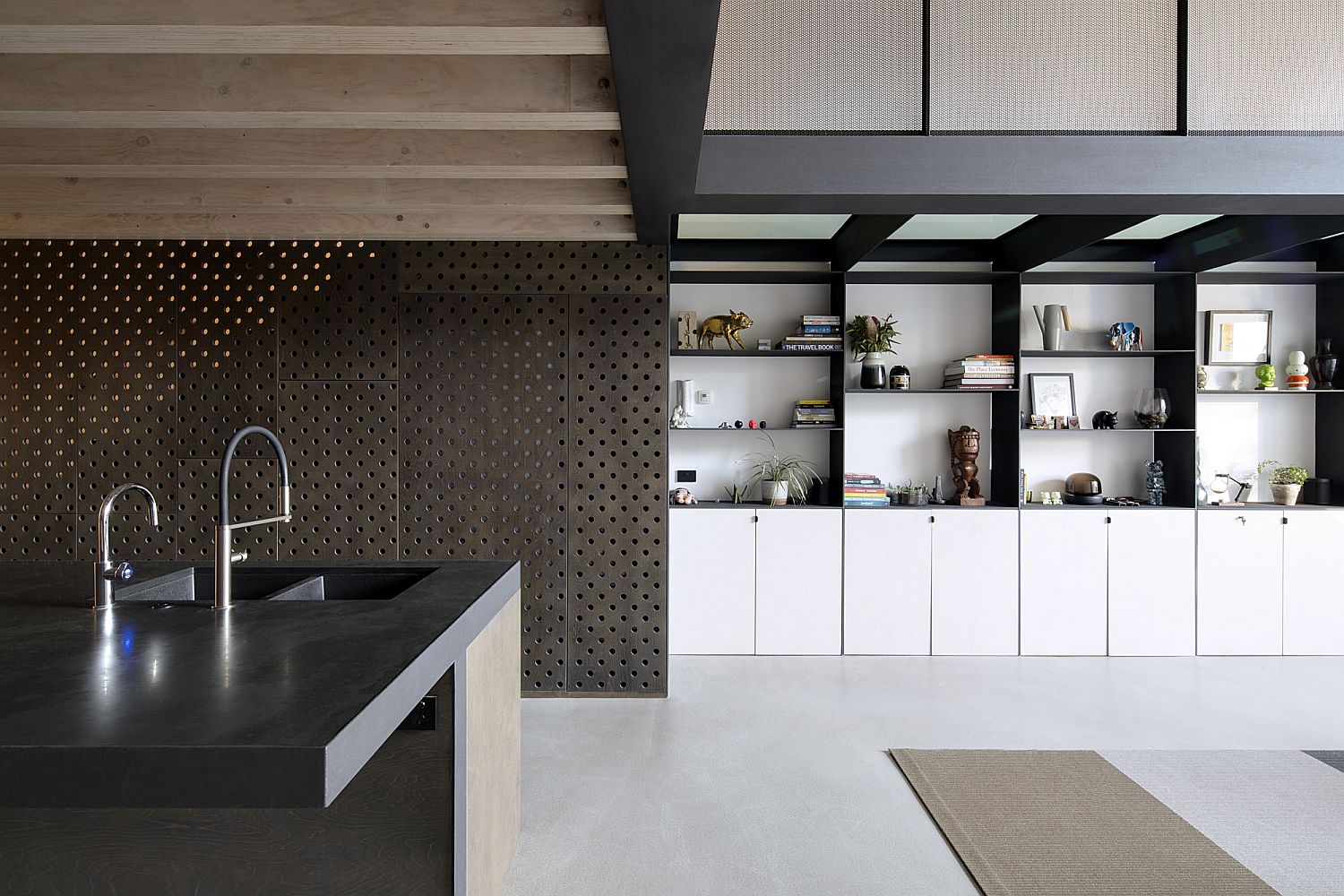
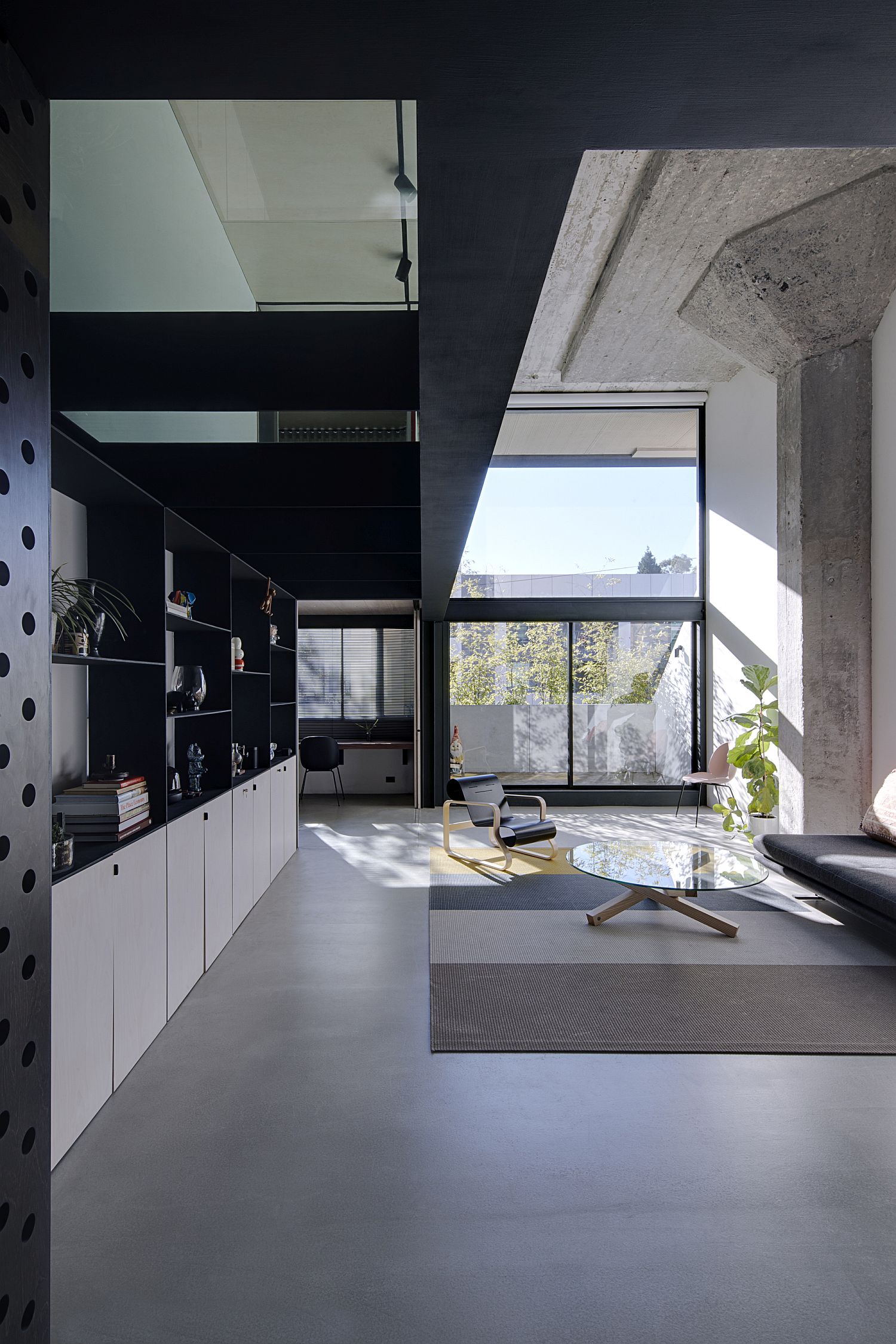
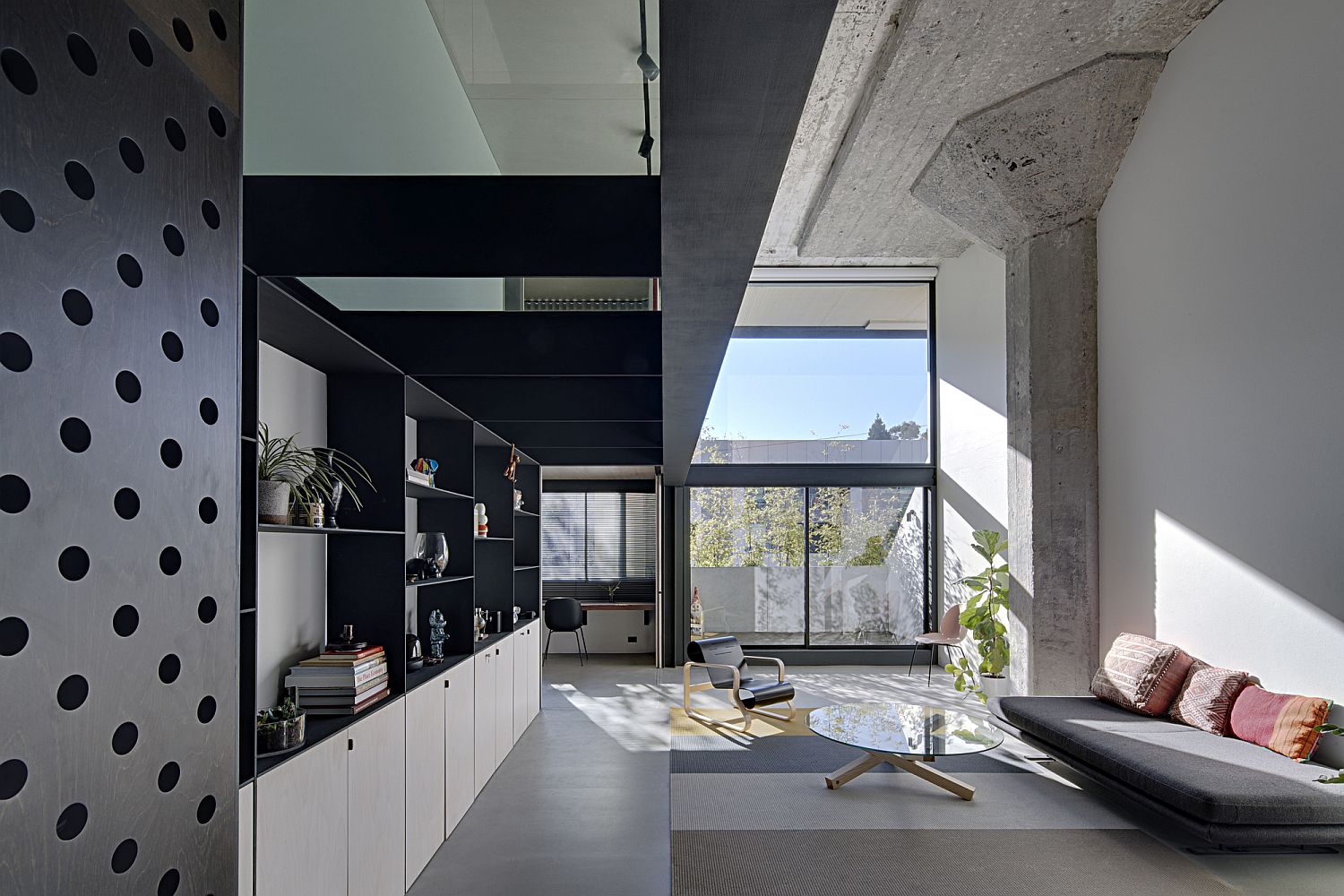
The home is now much more cheerful even as its double-height living area clad in concrete still reminds us of its past. A series of large glass windows on one side and a stylish glass walkway above make sure that light finds its way into every corner of the new living area. Next to it is the kitchen and dining space that embrace this modern industrial vibe in an equally enthusiastic fashion. A series of open shelves in the living area along with closed cabinets make things even more organized and polished.

RELATED: Stunning Mountain Views And A Wood-Clad Interior Shape Modern Swiss Home
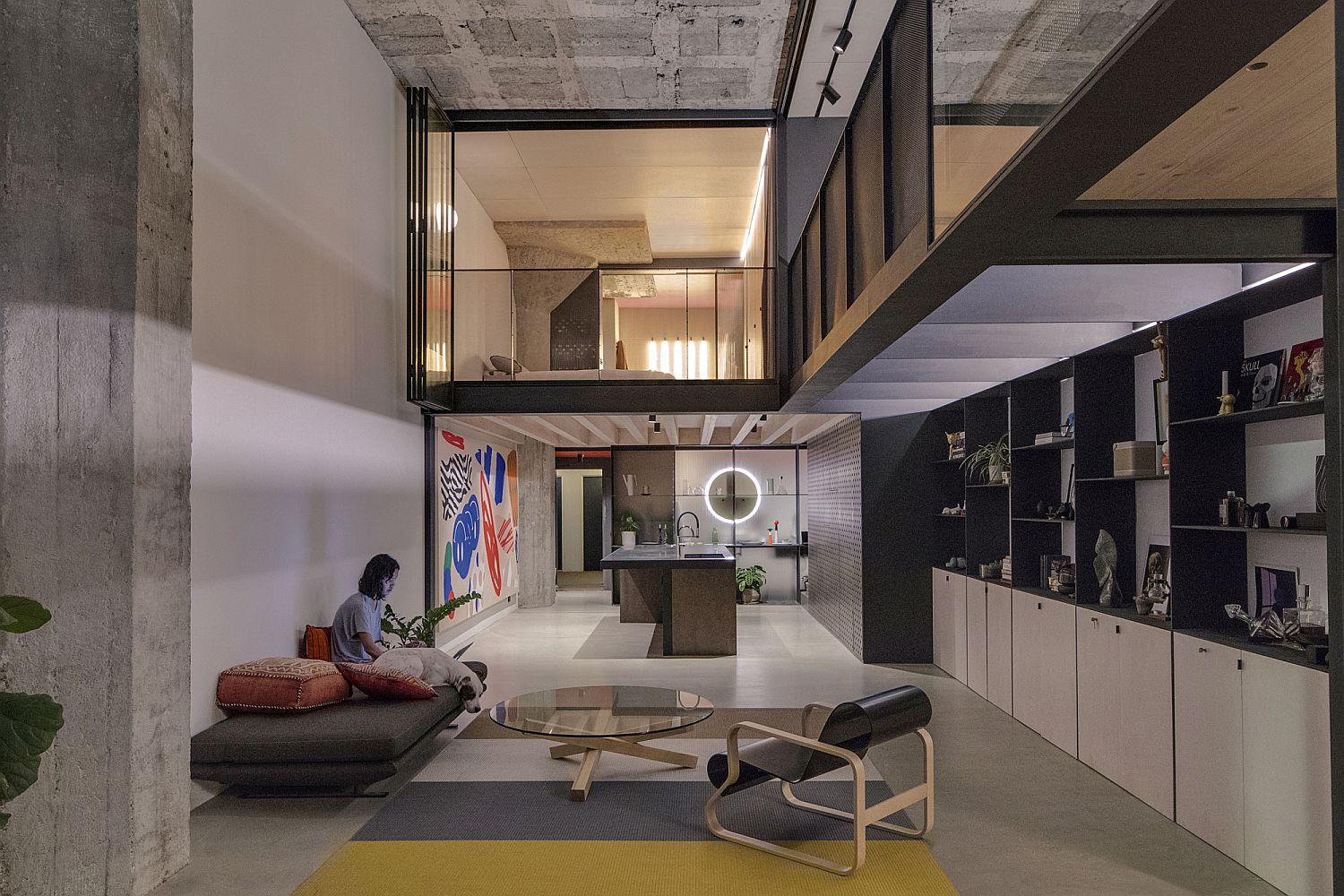
Exposed concrete interior of the modern industrial home in Sydney
Glass walkway connects the two different upper levels of the house
Innovative design of the glass walkway brings in more natural light
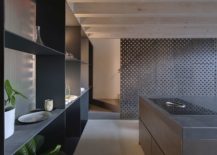
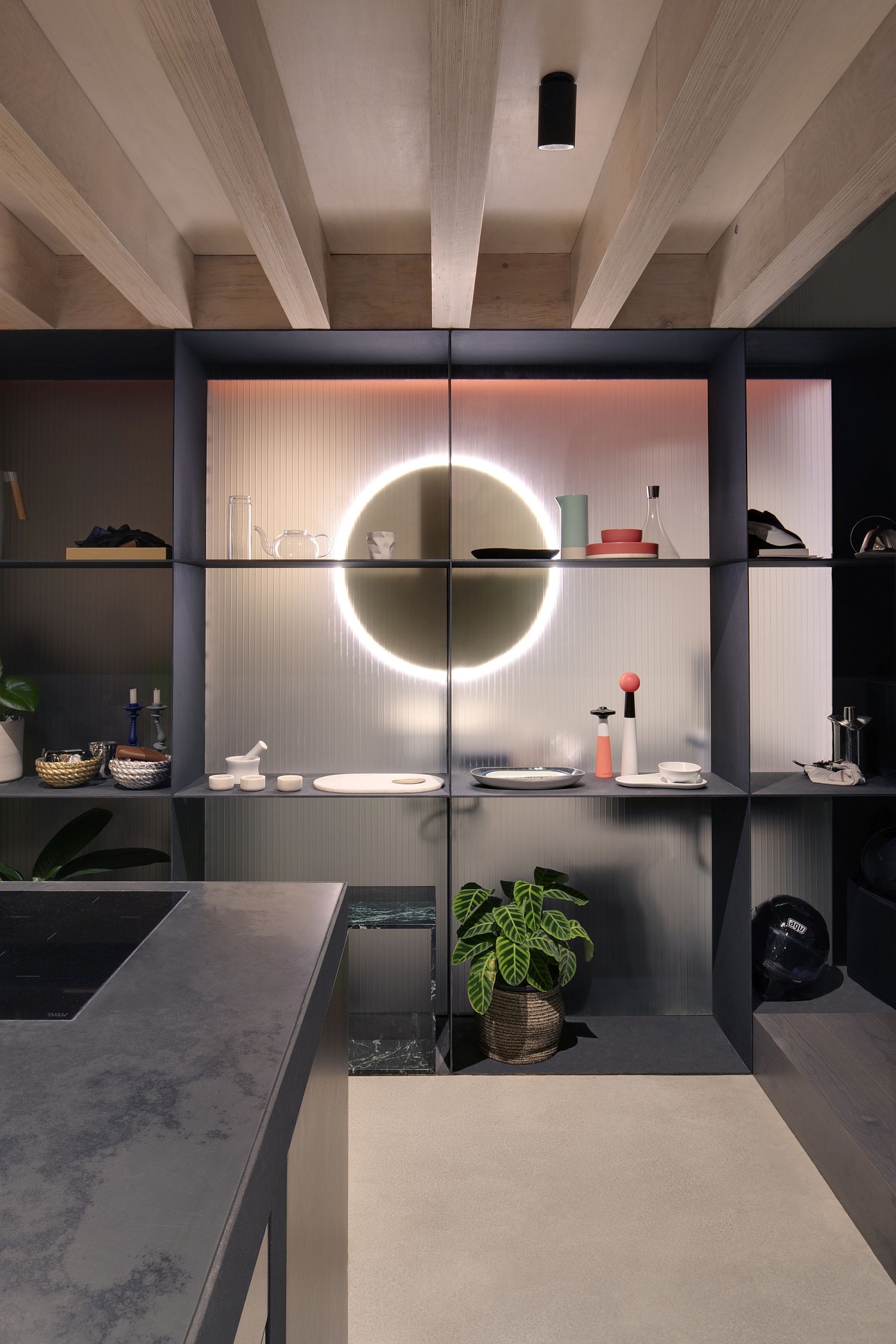
Kitchen matches the industrial minimal appeal of the house
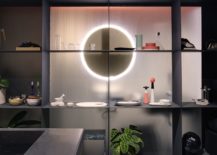
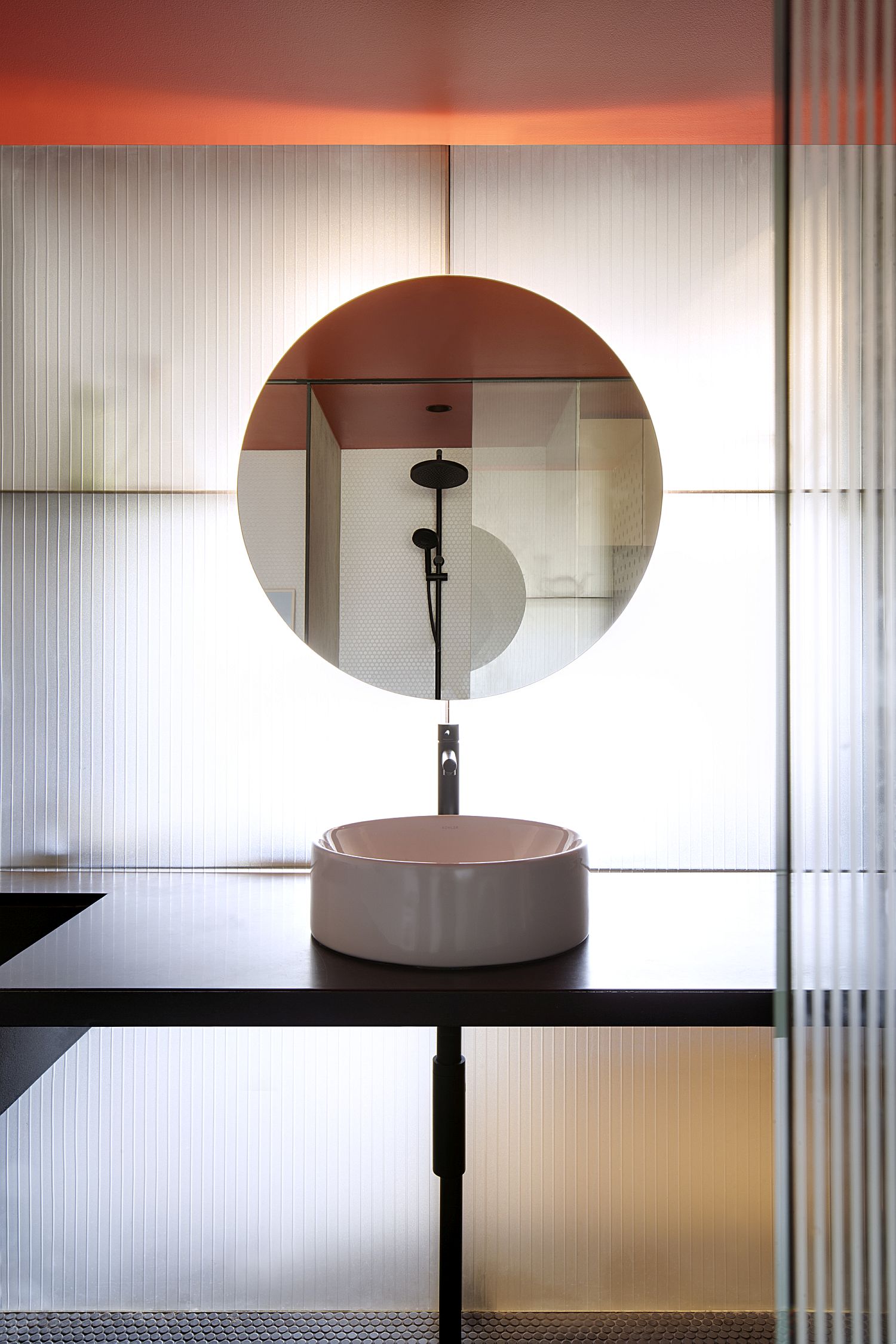
Minimal powder room with lovely round mirror and fab back light
Natural lighting illuminates the double-height living room

The concrete shell of the house has been largely retained while the interior has been given a contemporary sheen. Track lighting, modern home fixtures and clever partitions complete a delightful residence where the old and the new find space next to one another with ease. [Photography: Kasia Werstak]

RELATED: Old Garage with Heritage Façade Finds New Life as a Fabulous Family Home
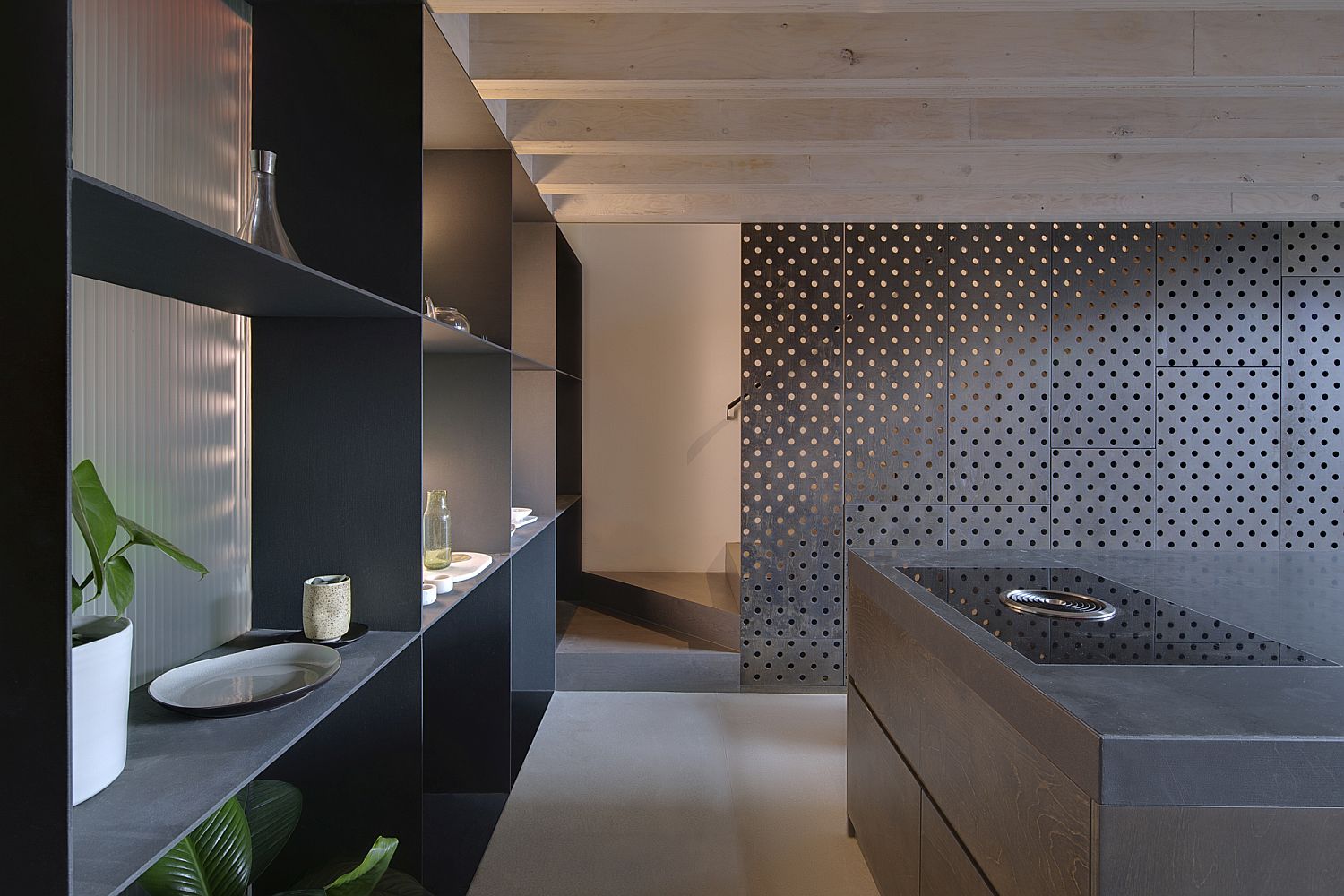
Smart way to delineate the kitchen from the entrance without blocking light
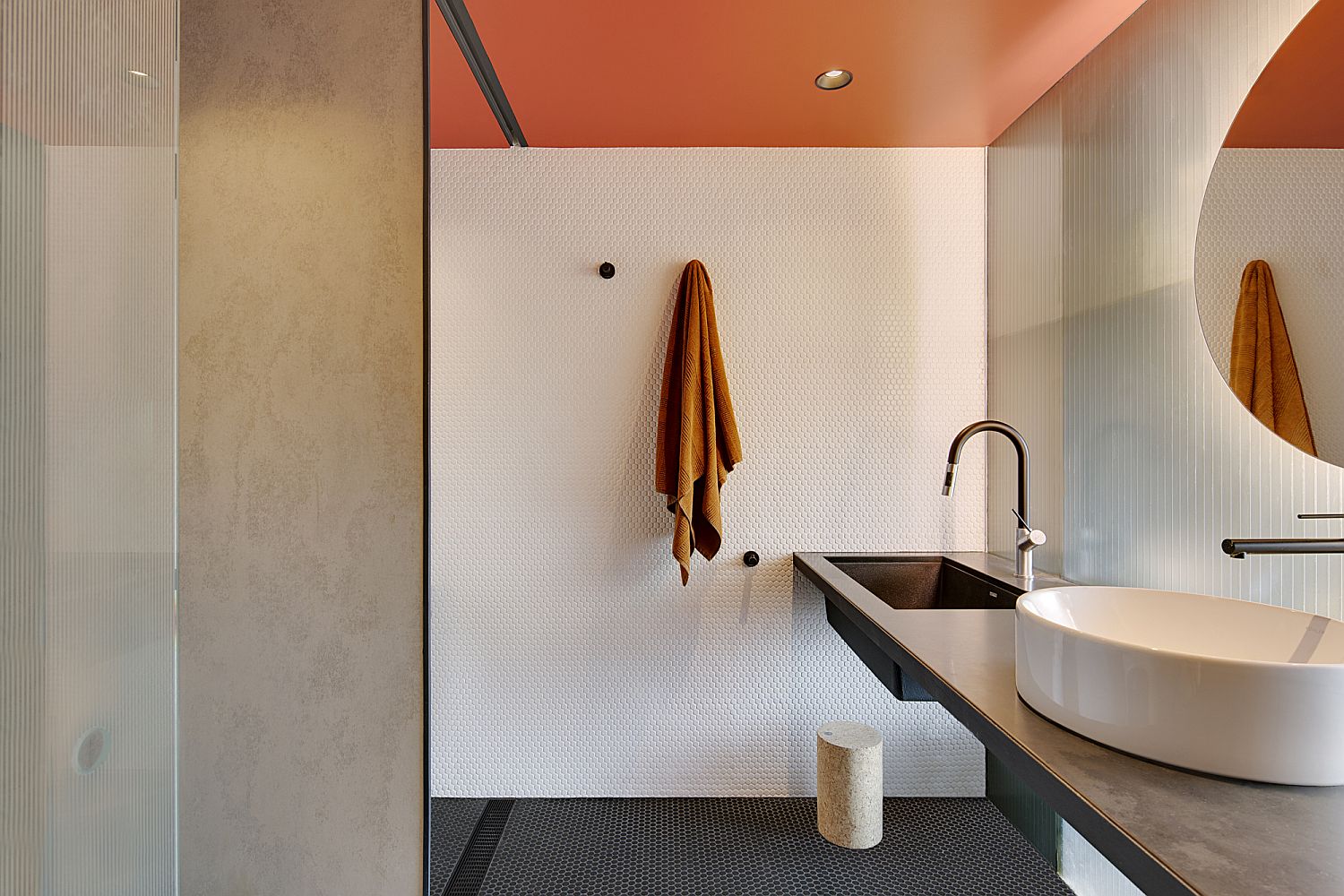
White penny tiles coupled with brilliant orange ceiling in the contemporary bathroom
White, concrete and gray living area of the spacious home
Dashing lighting and smart interior create a relaxing and sophisticated setting
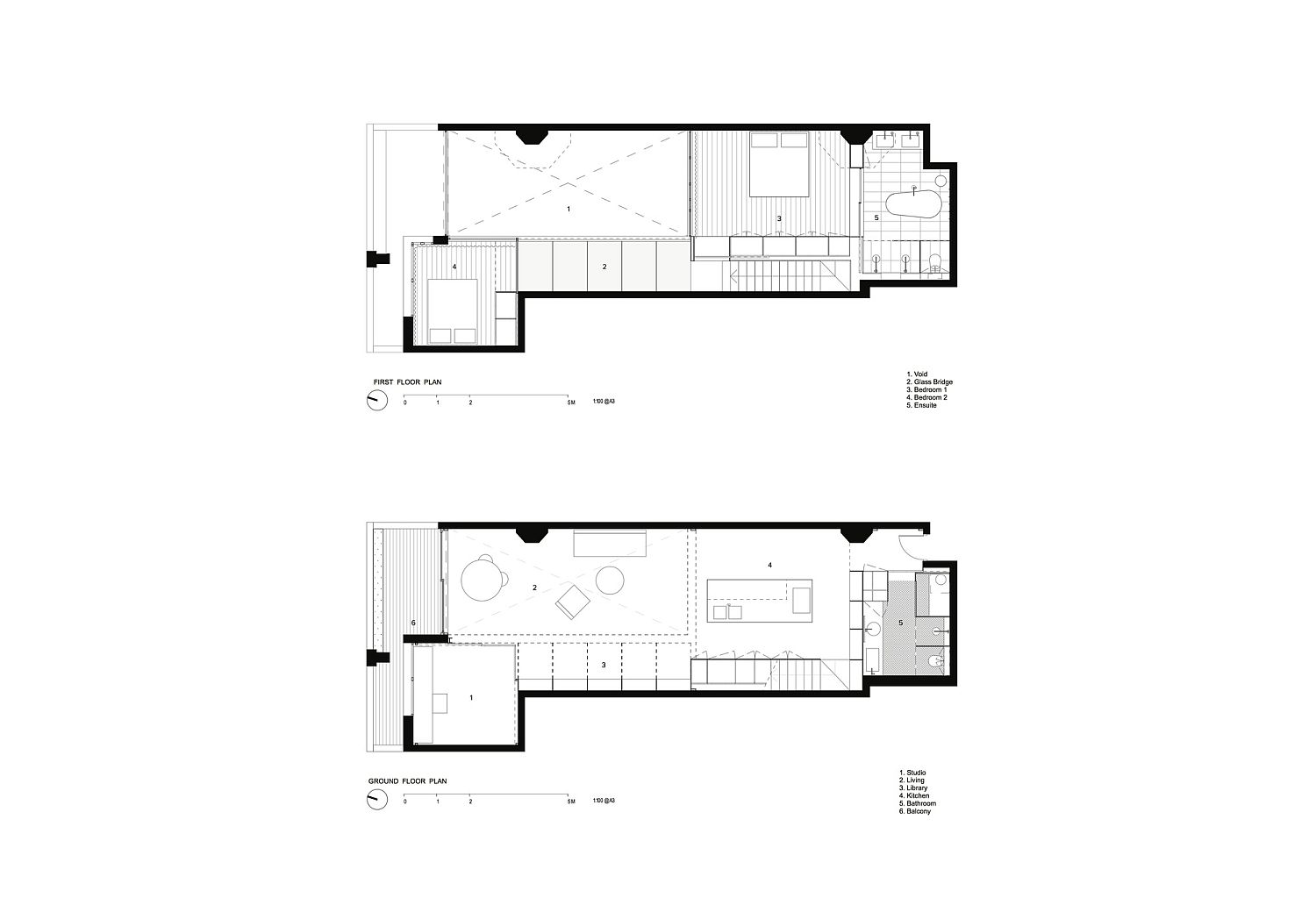
Design plan of the interior with fabulous modern interiors

You’re reading Century Old Car Assembly Factory Finds New Life as a Stunning Modern Home, originally posted on Decoist. If you enjoyed this post, be sure to follow Decoist on Twitter, Facebook and Pinterest.

Similar Posts

  • House LV1 (house nanchi 1 y 2)

    CASA LV1 (casa nanchi 1 y 2)
    BRIEF DESCRIPTION OF THE CONSTRUCTION
    The Casa LV1 (casa nanchi 1 and 2), is a multi-familiar conformed by two houses constructed in the same land, the main material used for its construction was white striated concrete.
    DESCRIPTIVE MEMORY
    The Casa LV1 (casa nanchi 1 and 2) is a complex of two houses designed for a family an elderly couple, their young daughter and their granddaughter. Each house has the necessary privacy for each development, with the interrelationship and coexistence of the family; they are located in an irregular diamond-shaped land of approximately 250m2, a gradient over 10% with a view to the southeast.
    The Casa nanchi 1, on its main floor has: living room, dinning room, kitchen, bathroom, main bedroom with closet and its own bathroom, this floor is directly connected with the service area; the lower floor has a hall, two bedrooms with closet and its own bathroom; the upper floor has a roofed recreation room and a garden terrace. All the floors are connected by a stair, and has a parking lot. The total constructed surface is of 160 m2.
    The Casa nanchi 2 has on its main floor: living room, dining room, kitchen, bathroom and service area; on the upper floor it has: main bedroom with closet and its own bathroom, an additional bedroom with closet, a little play room and a bathroom; on the lower floor, where the entrance is, has: two parking lots and an exterior stair which is connected to the other floors. The total constructed surface of the house is 145 m2 excluding parking lots.
    Both houses share main entrance, service yard, green spaces and services.
    The houses are named after the nanchi tree (byrosonimacrassifolia) that is located in that land; it was respected and the project was adapted around it, to make it a natural decoration for the dinning room of the Casa nanchi 1. This house was designed for an elderly couple and it has a terrace in the upper floor, which is a recreational and relaxing space with a view of the surroundings to enjoy with the company of family, friends and guests. It has a double-height space which allows the development of the tree.
    The design of the Casa nanchi 2, which was designed for the daughter and granddaughter of the family, is inspired in the Brno chair, designed by the architect Ludwig Mies van ser Rohe, which not only allows a large volume, but also an efficient and free structural principle because with this solution is obtained an overhang of 4.85 m with a support of 2.85 m, generating a space without any support under the construction.
    The concept of the houses is derogates no only from the connection (interior-familiar, exterior-landscape), but also from the visual freedom that people perceive before entering in the house and also in the interior of them. This is fulfilled by the volumetric integration that defined the spaces of each house, both prisms have specific substractions that allow a formal integration of the two elements; in the Casa nanchi 1 the terrace is subtracted and in the Casa nanchi 2 the parking area is subtracted, transforming both elements without losing its integrity.
    The connection of both houses is so important that is not only achieved materially with the union of the two architectonic objects from the common entrance, connotating the link of the family, but also with the landscape, through the transparency in the facade of the two houses, which creates a visual freedom for the inhabitants. This gives a greater illumination of the spaces, producing a feeling of spaciousness and allows the air circulation due to the large windows that are handled by the users.
    The material, white striated exposed concrete and stone dust of the region, recalls the honesty of the materials, this simplicity benefits the environment, because it doesn’t use coatings in walls, fooors or roofs, contributing the less possible to the pollution. The exposed finishes means less production, transportation and utilization of pollutant materials. As said before, the free circulation of air allows a constant cleaning of the interior air which allows a natural regulation of the temperature, achieving termic comfort for the users and reducing the use of electronic devices that cools artificially the place. Besides, the same large windows avoid the unnecessary use of artificial illumination during the day allowing the entrance of sunlight in the morning.