Flexible and Adaptable Tiny House Inspired by Californian Coastal Goodness

Tiny homes offer the perfect living solution for those who cannot afford to spend a fortune on a lavish, brand new house. It not brings alive the dream of owning a house on a budget, but also saves space and conserves resources. This tiny backyard house designed by Abodu in collaboration with Koto is one such amazing delight that takes no more than just 2 weeks to build and can be installed pretty much on any site with ease. The house does not burn a hole in your pocket, leaves the landscape it sits on largely untouched and ensures that you have an efficient house or even a beautiful second home, backyard guest space or even holiday home that is modern and functional.
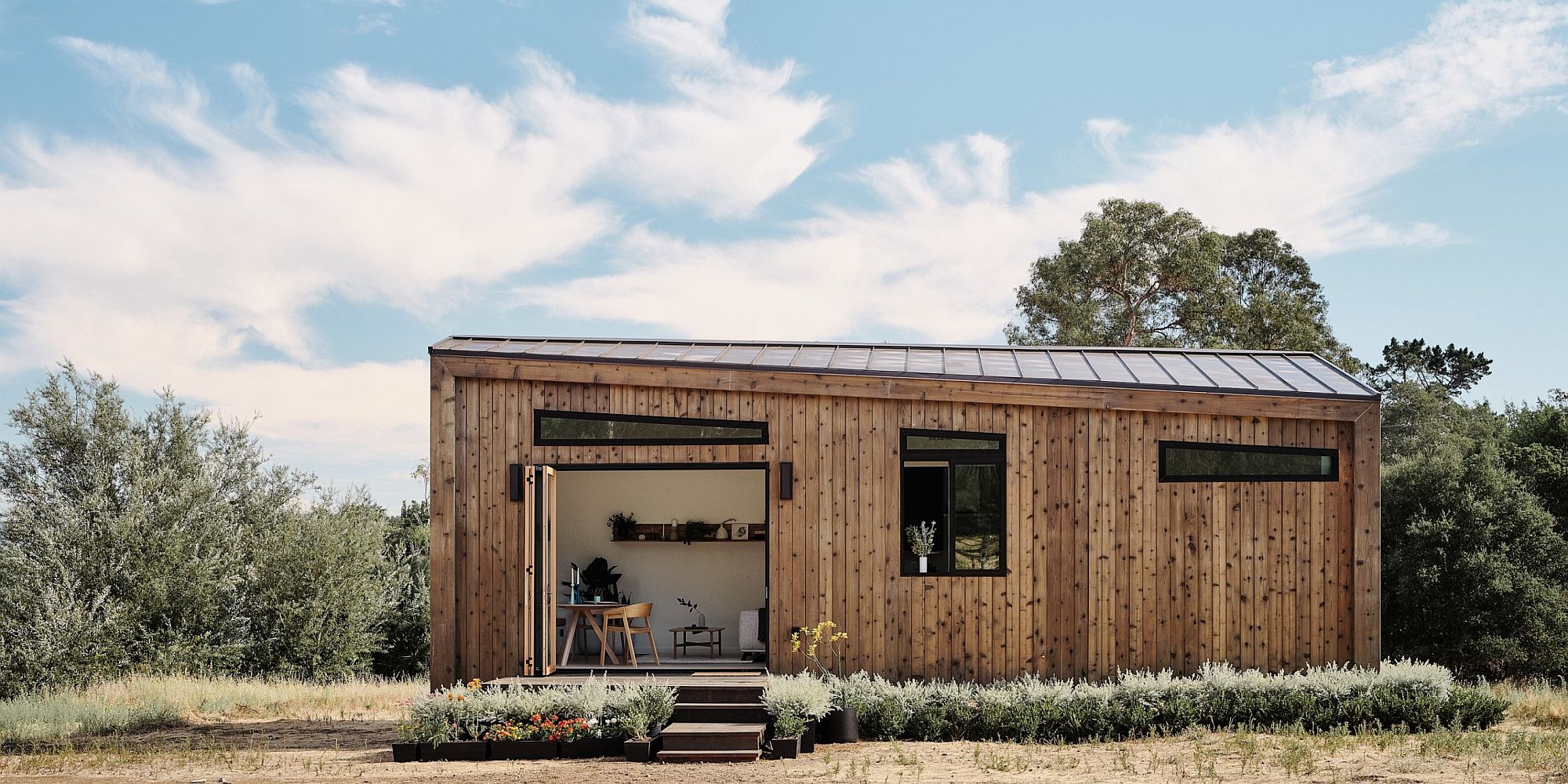
Backyard tiny house in wood offers smart living solutions in limited space

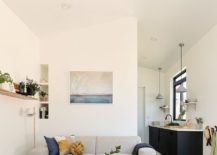
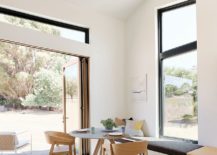
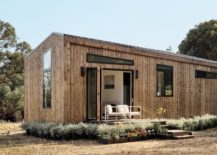
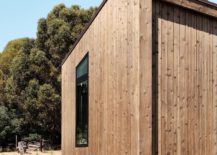
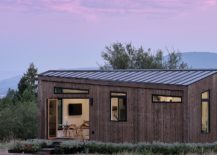
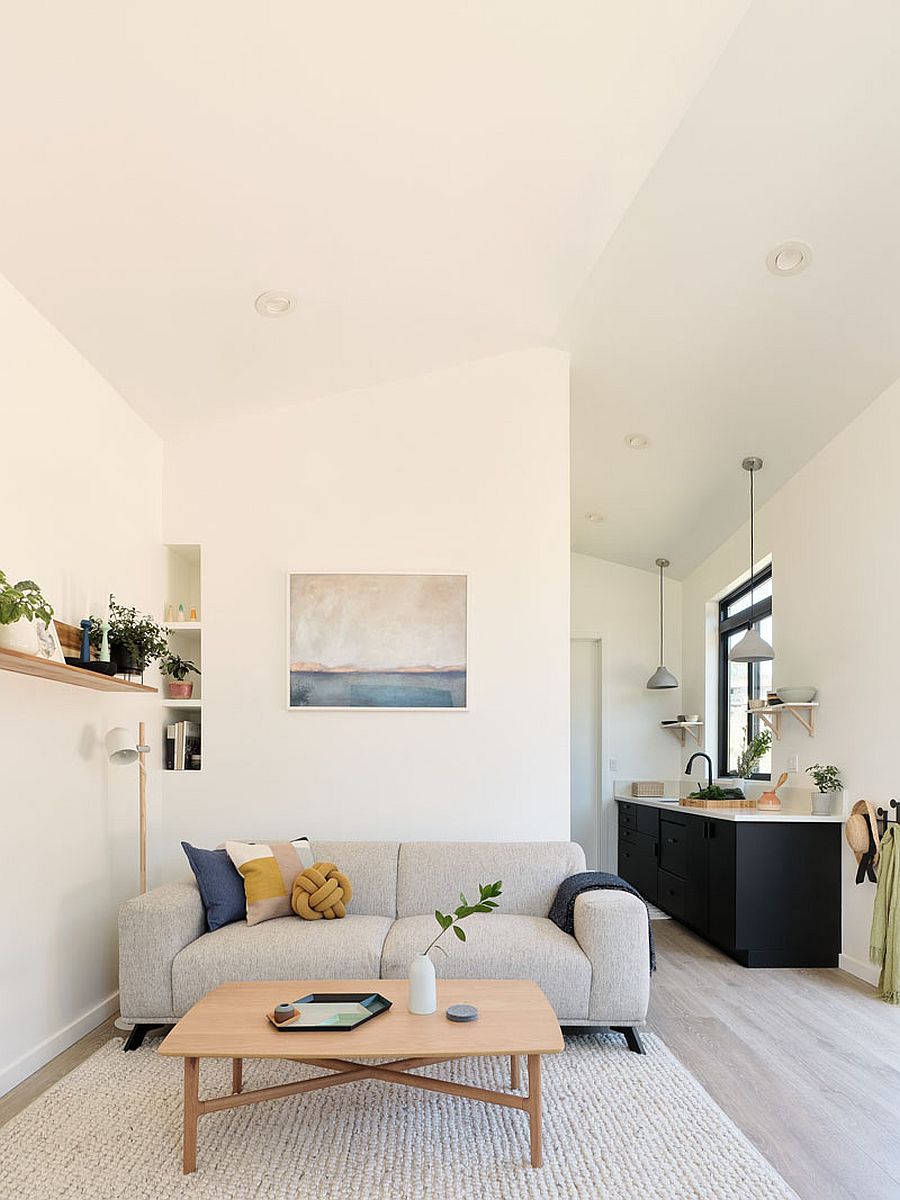
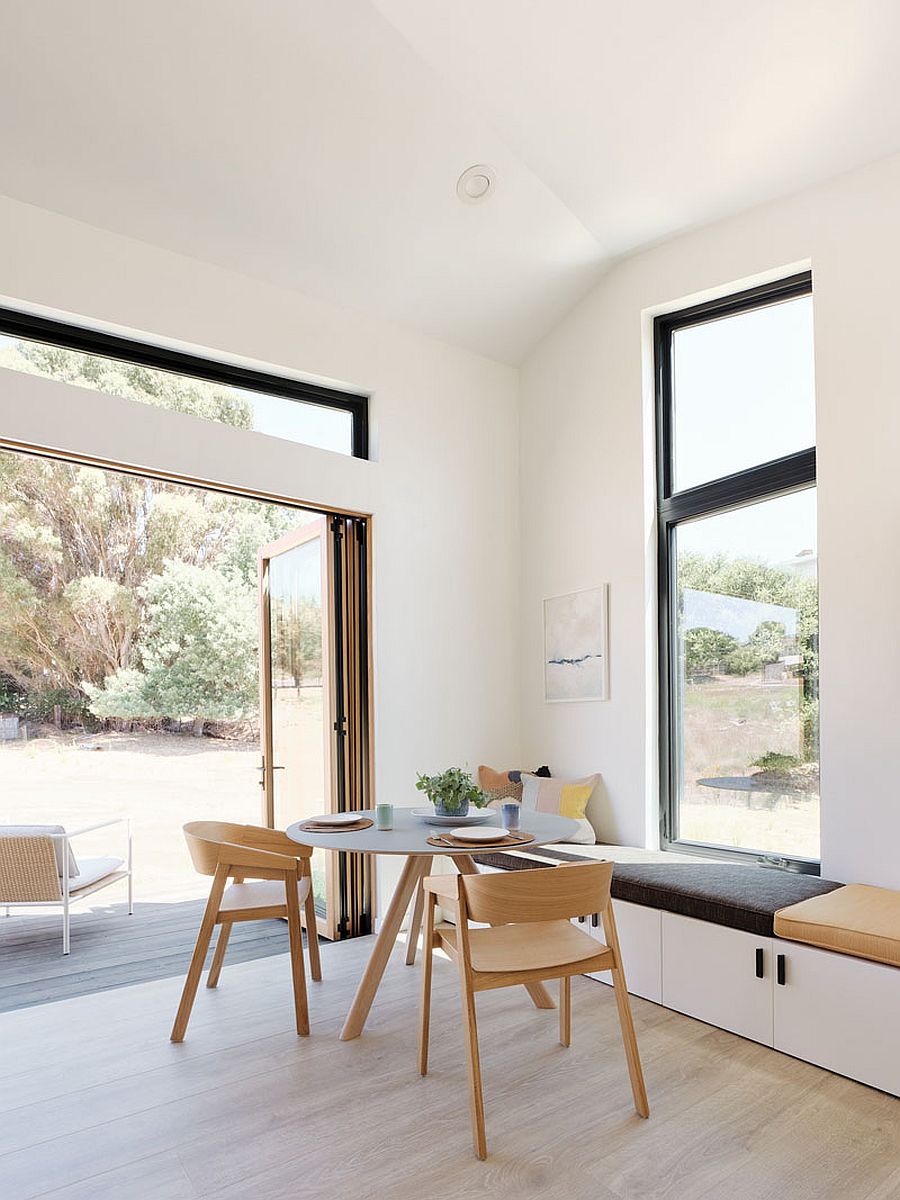
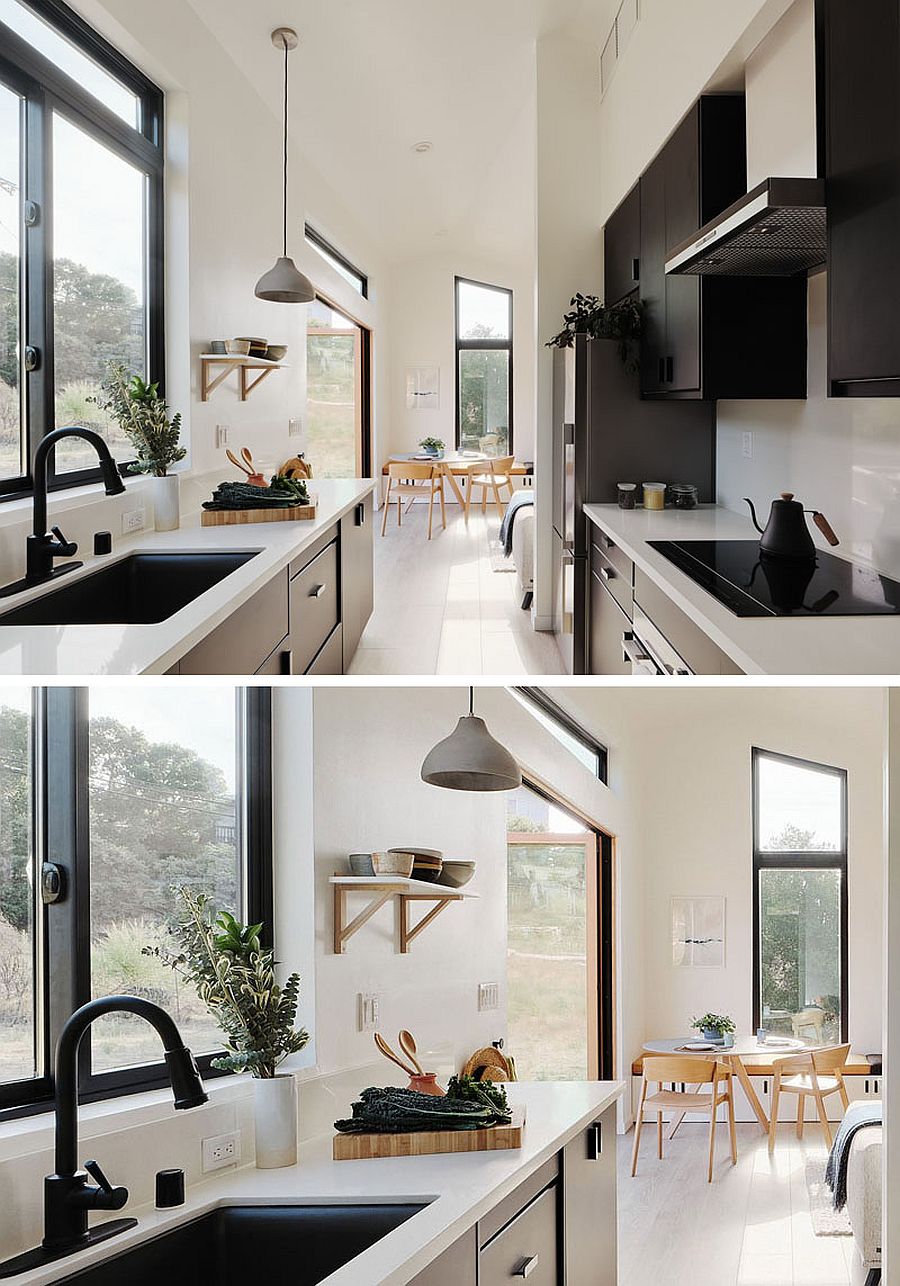
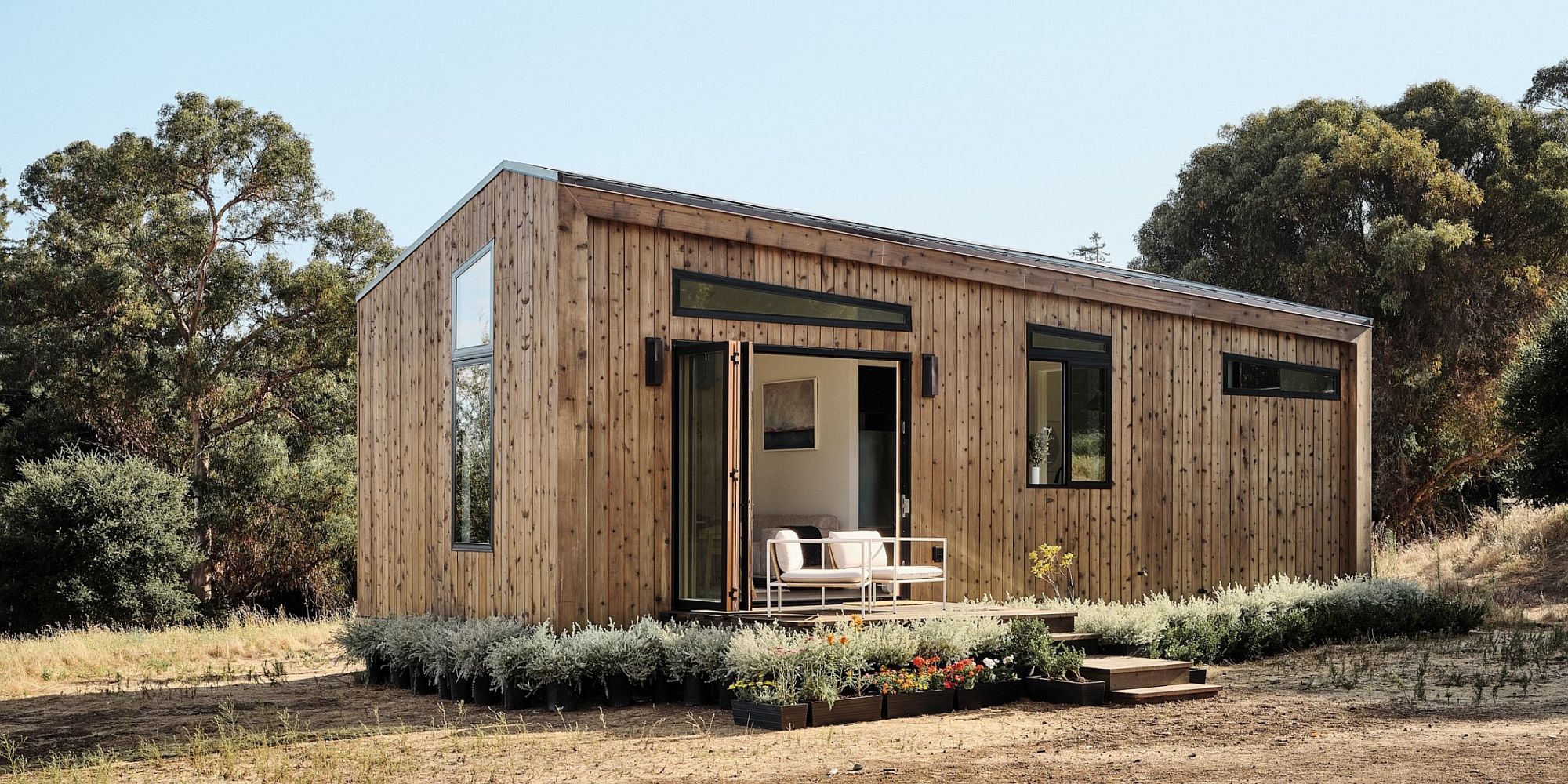
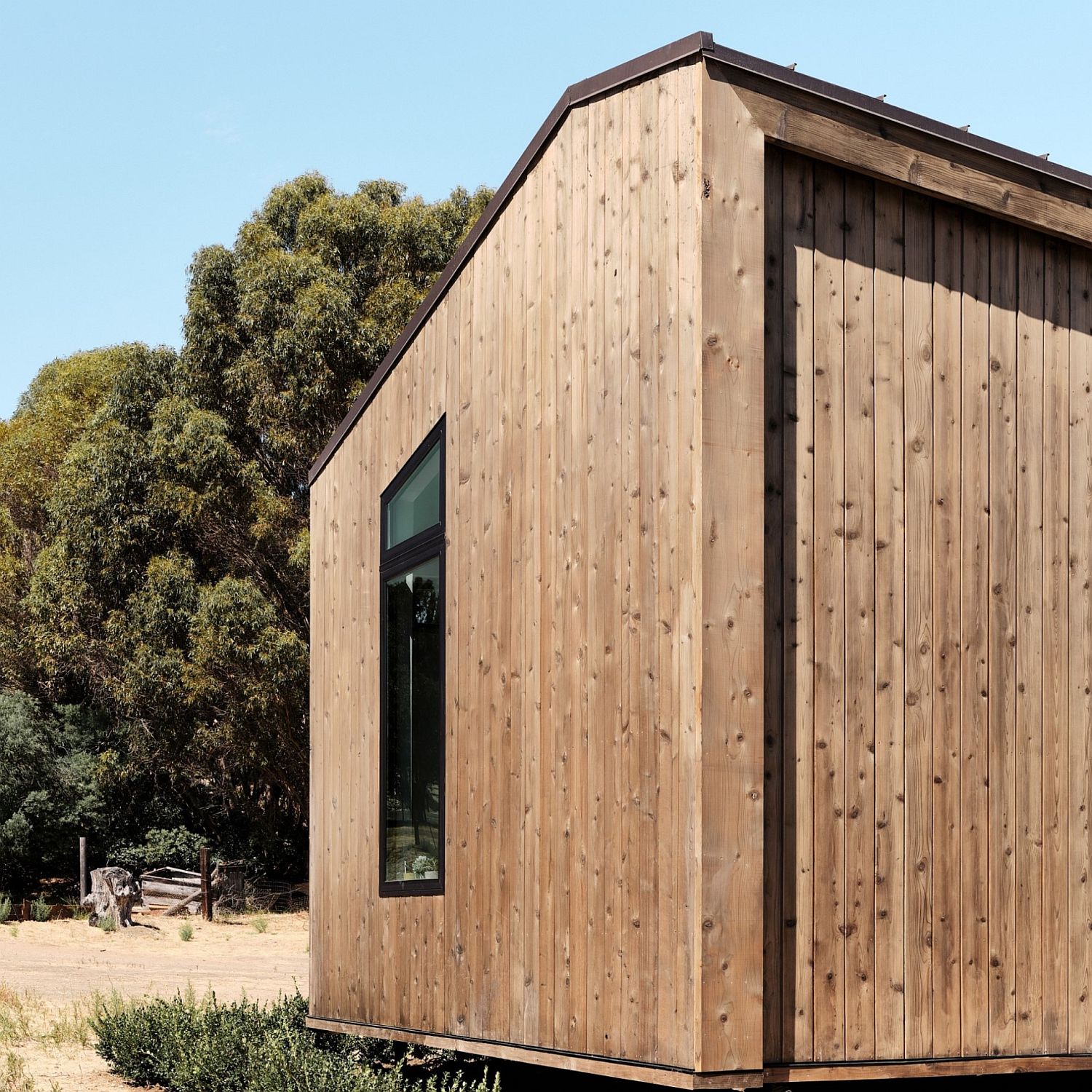
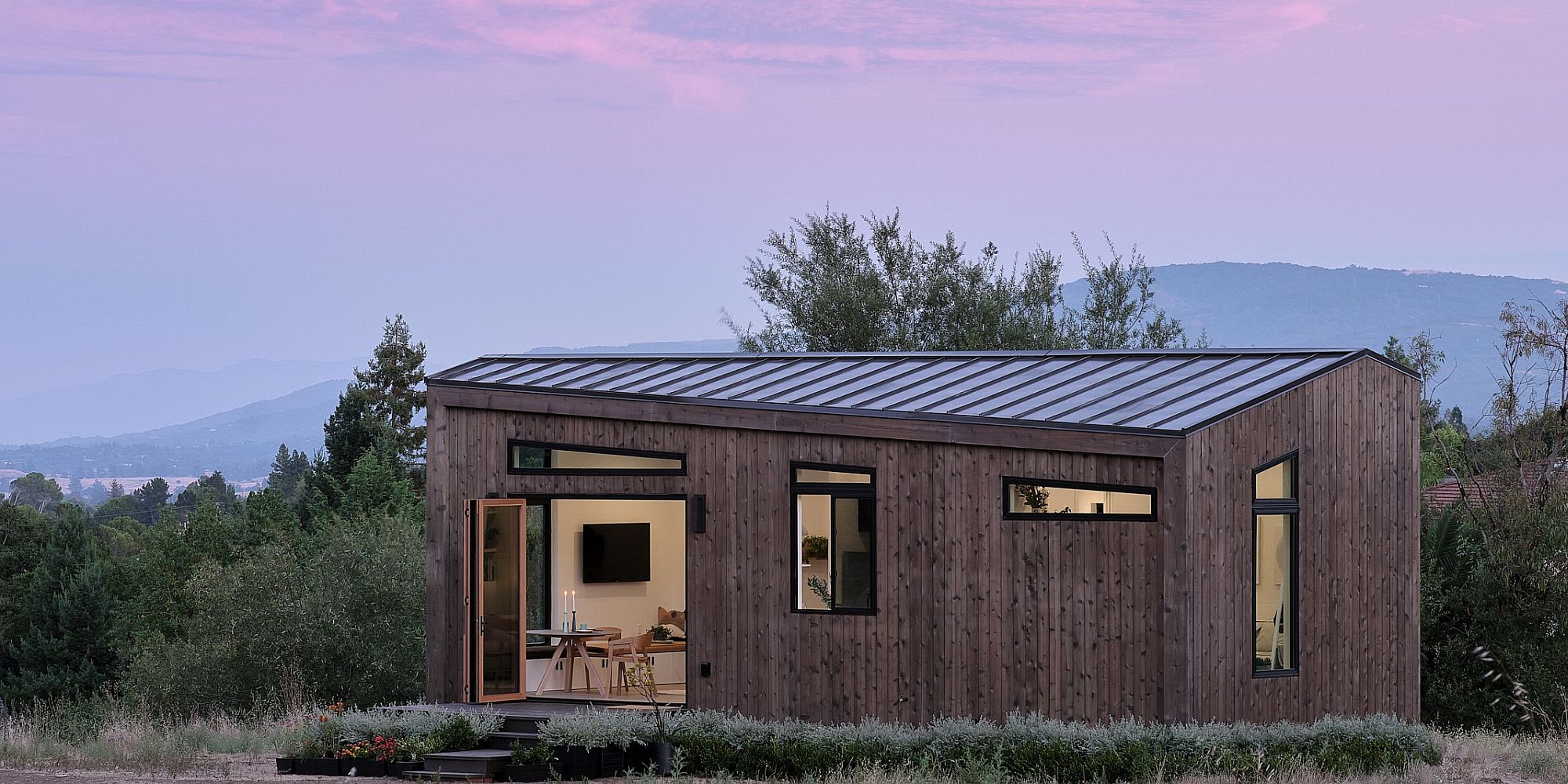
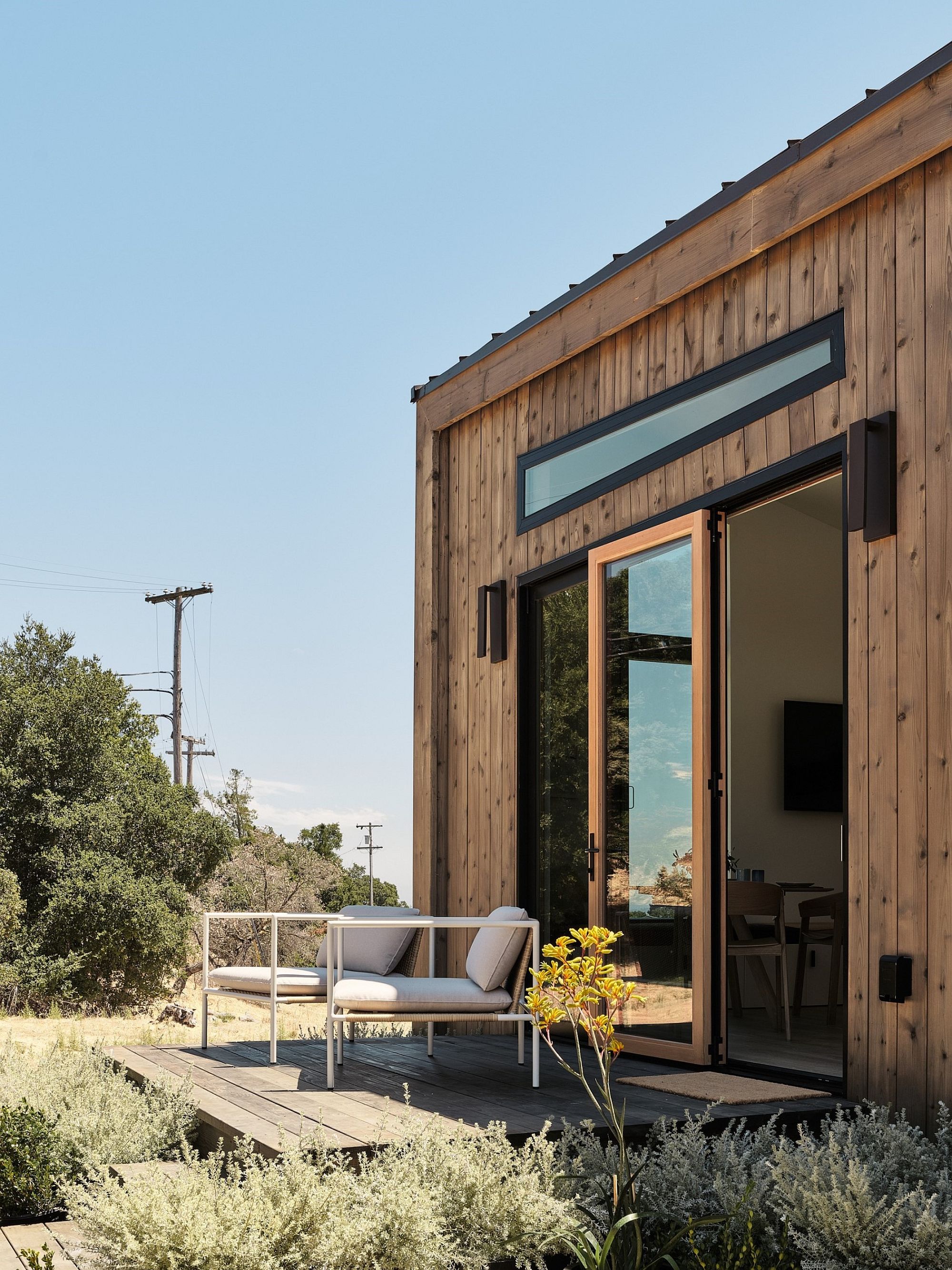
The cabin has been built suing very high environmental standards and everything from permissions to building and installation is taken care of with ease. On the outside, it is naturally-stained cedar that shapes the cabins with standing seam metal roof providing visual contrast. Inside the cabin it is a world of white and wood that takes over everywhere. A living room that is much more spacious than it really is welcomes you thanks to the vaulted ceiling even as the kitchen and small corner dining area sit next to it. Black and white in the kitchen and ample natural light complete these tiny homes where you can customize details to suit your specific needs. [Photography: Joe Fletcher]

RELATED: Tiny Holiday Cabin In Normandy Charms With Its Disarming Rustic Goodness!
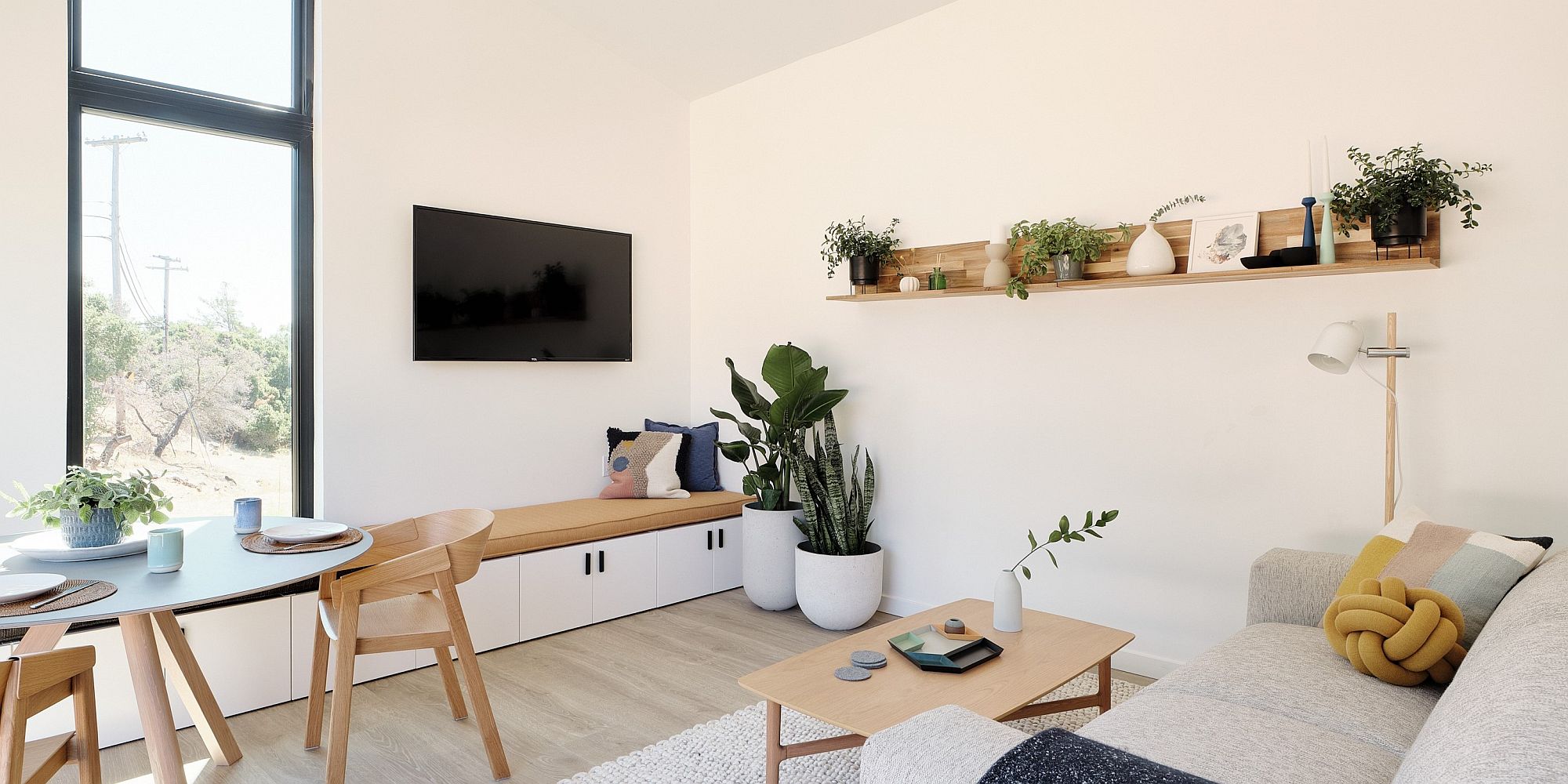
White and wood tiny living room design
Spacious and simple living room inside the modern tiny house
Creative little breakfast nook and dining area in the corner of the tiny house
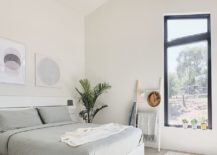
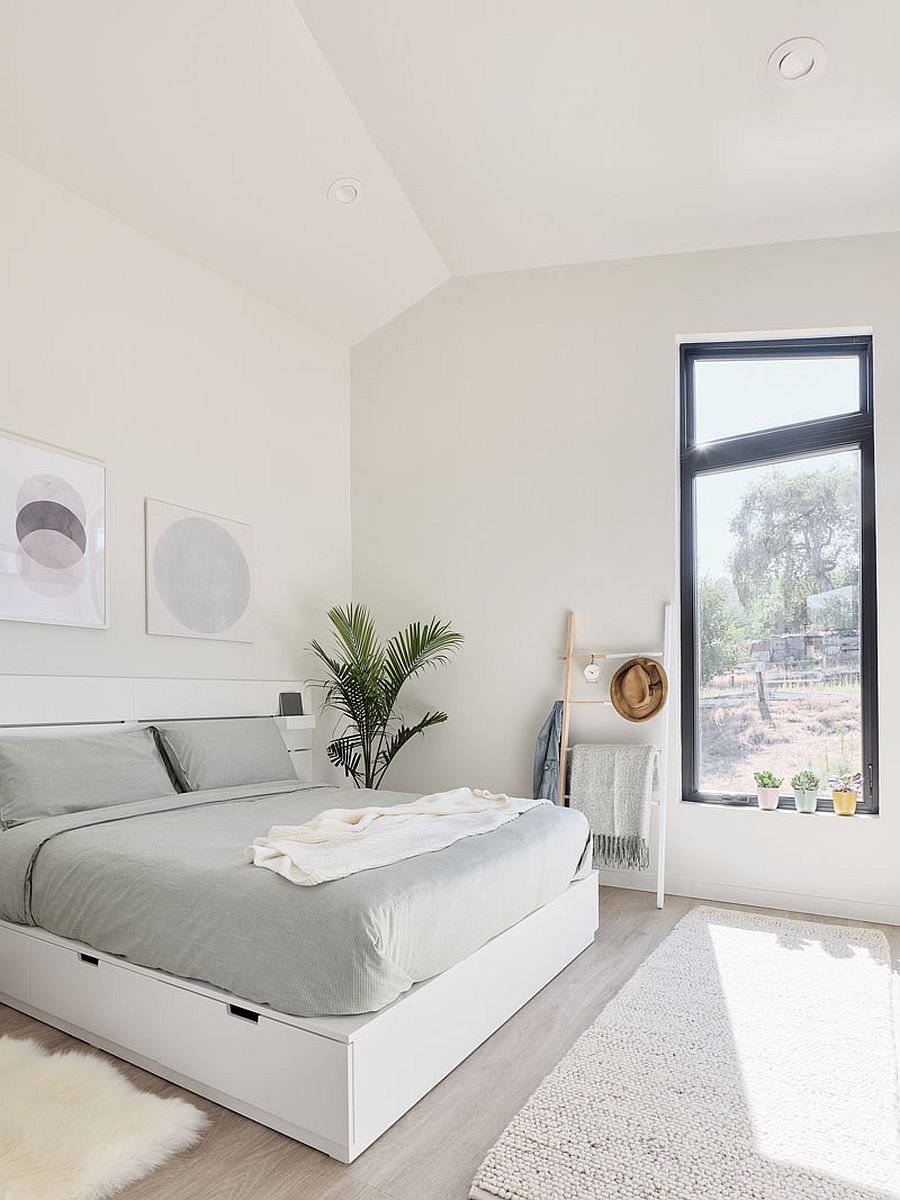
Light-filled and white bedroom with vaulted ceiling
Look at the gorgeous and stylish kitchen in black and white inside the tiny house

With our partners at Koto, we’ve spent thousands of hours considering and detailing every inch of your Abodu to make sure it’s the perfect backyard home- that can be customized to your liking. We pair the latest technology with the industry’s best craftspeople to build backyard homes in our factory to the highest environmental standards.

RELATED: Digital Detox: Eco-Friendly Off-Grid Tiny House that is Incredibly Adaptable
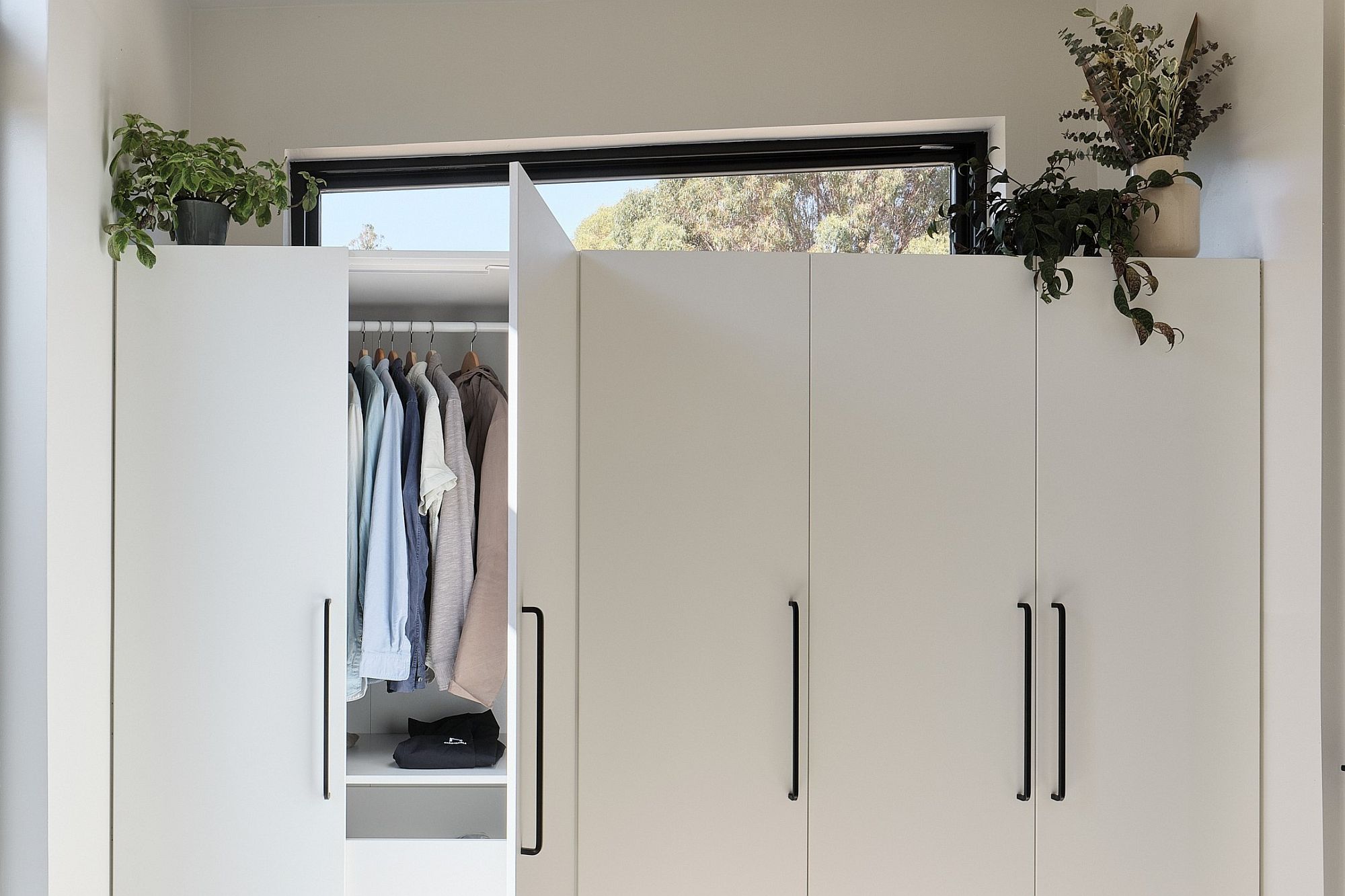
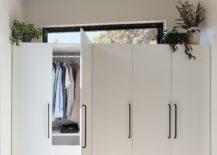
Smart and space-savvy bedroom wardrobe makes most of available space
Simple and elegant tiny house design that saves space and budget
Standing seam metal roof and wood tiny house in the backyard
Fabulous tiny home designed by Koto and Abodu
Naturally-stained cedar siding shapes the exterior of the house

You’re reading Flexible and Adaptable Tiny House Inspired by Californian Coastal Goodness, originally posted on Decoist. If you enjoyed this post, be sure to follow Decoist on Twitter, Facebook and Pinterest.
Similar Posts

  • The Fieldhouse

    Built for family and friends as a space for sport and gathering, the Fieldhouse is a simple, functional structure. Like the immersion of nature and recreation in the development of state and national parks of the early 20th century, this family wanted a structure where friends, family, and neighbors could gather, play sport, celebrate and relax in the country. The Fieldhouse feels distant and secluded, located on a mostly undeveloped seven-acre site, surrounded by a meadow of natural grasses, a fruit orchard, wetland ponds and a maintained field for sporting. As long time natives of the Pacific Northwest, the family was keen to convey a specific sense of place and longevity. The architecture responds to those ideas in its simplicity and versatility, and in its construction from durable, local materials. Inspiration was taken from vernacular stone and timber structures built across the country in the 1930s by the Civilian Conservation Corps. The architects and clients channeled their own recollections of summers spent in Seattle’s waterfront parks and their simple elegant structures, often by early 20th century Seattle architect Ellsworth Storey. The 1,664-square-foot structure consists of a covered outdoor patio flanked by two, offset and enclosed spaces housing a sun room and inglenook to the west, and a kitchen, grill and two bathrooms to the east. Designed to accommodate almost any situation, the Fieldhouse can shelter four as comfortably as it can 60, hosting sleepovers, family sports tournaments, reunions and outdoor dining with ease. The structure employs a gradient of enclosure and structural qualities from the immersive intimate inglenook to the ever thinning shed roof structure, gently lifting off above the central patio. The building can be shutdown to weather storms, or opened wide to allow light, air and activity to pass through freely. The structure provides a straight-forward and visibly-constructed language of materials. It progressively lightens from a solid stone base, to thick timber columns, to pairs of rafters and thinner yet pairs of purlins, supporting the single-plane shed roof. The timber is all Douglas fir and cedar harvested and salvaged from the Pacific Northwest. The stone is taken from a quarry on nearby Vancouver Island and the early, factory-style steel casement doors and windows are West Coast built. This timeless assembly of materials and method of construction suggest that this is a building about its surroundings and a stalwart of the region it resides in, functioning as well today as it will in 100 years. Hoedemaker Pfeiffer design team
    Steve Hoedemaker, co-founder and partner
    Justin Oldenhuis Project team
    Hoedemaker Pfeiffer (Architecture)
    Hoedemaker Pfeiffer (Interior Design)
    Joseph McKinstry Construction Company (Contractor)
    Swenson Say Faget (Structural Engineer)
    Kenneth Philp Landscape Architects (Landscape Architect) Photography
    Andrew Giammarco

  • Villa Bunkherr

    Artistic Character The biggest challenge of the project Bunkherr came up at the outset of the collaboration between the client and the architects. The attractive hillside property was located in a former holiday home neighborhood set amidst a picturesque landscape in Hesse, Germany. Due to great dedication, perseverance and a tenacious struggle for the client’s strong desire to build their home in this very attractive place, a construction permit could finally be successfully acquired. The design is based on the idea of a human back, which divides the property into two areas: a public hillside area, which contains the entrance to the house, the garage and a spacious, plaza-like courtyard – an inviting place to share time with friends and neighbors. Even the client’s horse finds room here. And it also has a private valley facing area, which offers a magnificent view of nature. The structure of the building is defined by two building blocks, which are arranged at right angles to one another, the upper floor is cantilevered towards the valley. The private rooms of the parents are accommodated there. Below on the ground floor there is an open kitchen, dining and living area, which is characterized by the room-high glazing. A central design concept was to create spaces for the works of the artistically influenced client. For example, the interior of the house, has sculptures and paintings that add a special personal touch to the timeless, modern style of the house. Only a few materials, such as the white screed, which is not only used on the floor but also on the furniture, and the specially designed wooden boards provide a stylish setting for this.

  • These Versatile IKEA Rugs Have True Design Power

    Not only are IKEA rugs affordable, their accessibility and appeal repeatedly put them in the spotlight, especially when it comes to room makeovers. The most popular IKEA rug with design bloggers is STOCKHOLM (shown below), as the staggered black-and-white stripe motif is compatible with a range of palettes and design styles. Some would go as […]

    You’re reading These Versatile IKEA Rugs Have True Design Power, originally posted on Decoist. If you enjoyed this post, be sure to follow Decoist on Twitter, Facebook and Pinterest.