Los Feliz Residence

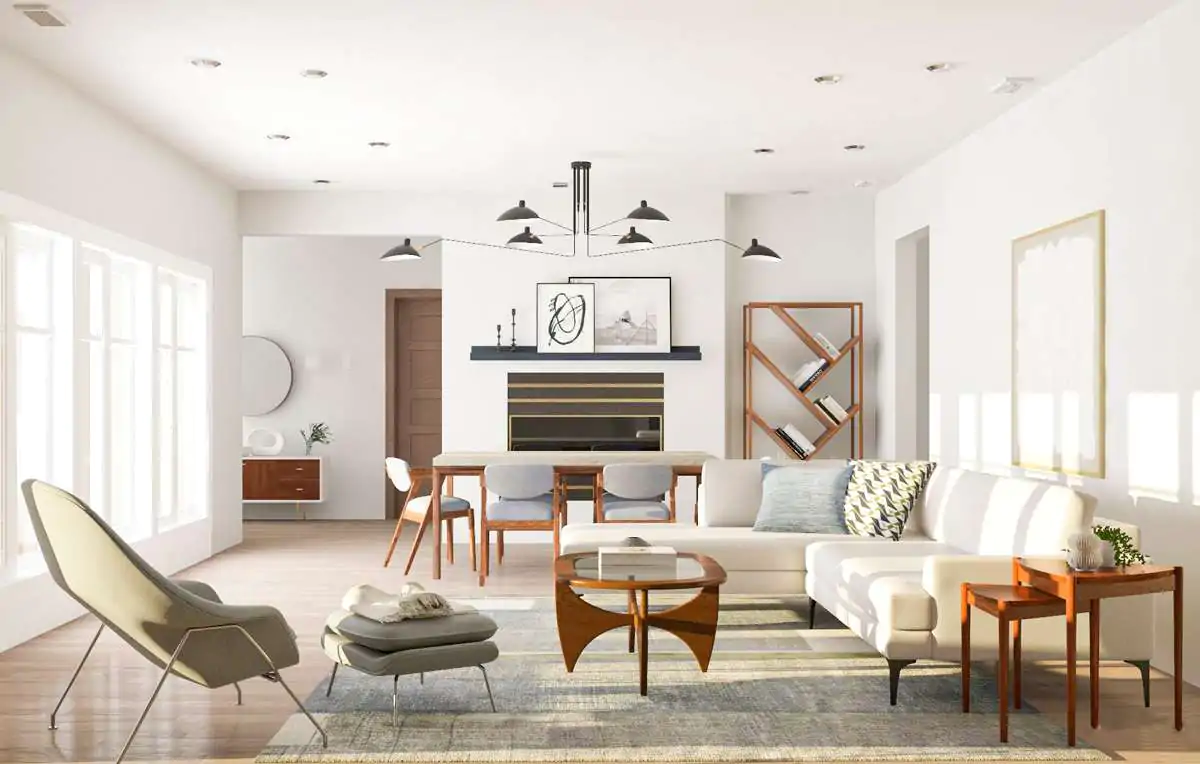
This mid-century modern house was restored and renovated by Dutton Architects. Our clients loved their home and property, but wanted a better flow for their family life, both within the house itself as well as a better indoor-outdoor connection to the front garden and back yard pool. The house has amazing canyon views, and is filled with lovely afternoon light. The clients have an amazing design sensibility and collect beautiful objects, furniture, books, art, and vinyl LP’s.

Reconfiguring the house allowed us to add some logic and coherence to the rooms and flow. There is now a central hall that connects the entry area to the kitchen, living room, and bedrooms. In this view, the full-height custom walnut casework separates the kitchen from the entry area.
The new kitchen is modern and utilitarian, modest yet open and spacious. The U-shaped counters face the views on one side, and bookended by a skylit wall of hand-cut blue ceramic tile. The long skylight over the back counter helps balance the light from the windows opposite, and gives a warm wash of light over the work space all day long.

See more on Dwell.com: Los Feliz Residence by Dutton Architects – Los Angeles, California

Homes near Los Angeles, California

  • Santa Monica Proper
  • Dundee Residence
  • Gold-Diggers

Similar Posts

  • The Ibiza Campo Loft

    The Ibiza Campo Loft
    A total transformation from an old abandoned warehouse to a dreamy loft on the island of Ibiza. On a remote mountain field in the rugged north of Ibiza lies this beautiful island home. What formerly
    served as a workshop and storage, has now been turned into a contemporary dream house. The owner of
    Ibiza Interiors and the Nieuw developed this 100 year old warehouse into a design guesthouse and
    showcase project. When interior architect Jurjen van Hulzen saw the structure and location of the building, the concept for the design was born. Concrete columns and steel beams were carrying a typical Ibizan ‘sabina beam’ roof. A mix of the industrial structure combined with the rustic roof formed the concept for the rest of the design: an interesting play and contrast between rustic and industrial. That’s also how it’s got the name ‘Campo Loft’, which basically means ‘industrial open living space on the field’. The beautiful traditional building structure has been preserved to keep the character of the typical Ibizan
    architecture. Basic and local materials have been used; a concrete floor, chalk and mud plastered stone
    walls and ‘sabina beams’ made from trees that only grow on the island. A new material that has been
    incorporated into the house is steel. A powdercoated steel is used for the window frames and doors, and
    there’s a custom made raw steel kitchen. The building had been unused for many years, and was in very poor condition. Therefore only the walls and parts of the roof could remain. Electricity, water and sewage were not present, the architects had to add all these things to make it work as a contemporary home. Water comes from a private well and there are solar panels installed for hot water, floor heating and electricity. The house is consequently completely independent of the grid operation and is thus self-sustainable. Owner Jurjen van Hulzen designed a well thought through floor plan, with a big open space on the south
    side of the building, with views all over the valley. The main space is connected to the big private terrace.
    The two bedrooms have been place on the north side corners of the building, to keep them dark and cool.
    Then there’s a dining space with build-in bench and roof light, that really made this ‘lost’ space part of the
    loft. And a bathroom with free standing bath with openable windows, to be able to get a fireplace and
    nature view when you’re bathing. The bathroom has herringbone pattern floor made from terra cotta tiles, a modern interpretation of the traditional Spanish floor. The loft has been designed to become a comfortable and modern space. A house with a basic, natural but high-end character. To finish of the design they have collaborated with their familiar project partners: 100% natural beds from Coco-mat, and all the furniture, lighting, curtains and carpets are from their partner store The Modern in Amsterdam. The urban and rough steel kitchen island with marble top is from Eginstill. And the walls have been decorated with art from gallery Vroom & Varossieau. They’ve used the bath and sink from Not Only White, and the taps and shower are designed by Piet Boon for Cocoon. The result is a fantastic contemporary natural residence where contrast plays a big role; old and new, sleek and rustic, light and dark, rough and soft. At the same time there’s a certain balance as well, and
    everywhere you look something is happening. With an incredible view from the mountain, a yoga platform
    on the roof and many fruit trees and a vegetable garden, this is truly a piece of paradise. The Campo Loft is now being used as a showcase project and guesthouse. A unique place to relax and unwind, designed by and for design lovers.

  • 1930’s Art Shop in Spain Transformed into a Fabulous Modern Office

    There are times when you need to cover the existing walls of your home with new finishes for a more polished interior. Then there are occasions when you strip out the excess and unnecessary finishes that have been added to a space over the years to discover its beautiful ‘bones’. Revamped and renovated completely to […]

    You’re reading 1930’s Art Shop in Spain Transformed into a Fabulous Modern Office, originally posted on Decoist. If you enjoyed this post, be sure to follow Decoist on Twitter, Facebook and Pinterest.

  • Burnt Cedar

    This is a full-time beach house for a car passionate family of four situated across from Burnt Cedar Beach in Incline Village, Nevada on the north shore of Lake Tahoe. Prior to being pulled up the hill to flumes and rails destined for Virginia City, logs were staged here as the mountains around the lake shore were logged during the silver mining years of the 1860s. Set into a neighborhood originally built in the 1950s and bordered by houses to the sides and rear, the house takes a simple box form, half buried into the slope. It faces the lake with full height glazing that encloses a loft-like plan with double height living spaces. The clients requested a space that felt like the landscape and maintained a feeling inside of being outside in the light and shadow play of the sixty to ninety-foot Jeffrey and Ponderosa pines that populate the lake shore.  Perforated wood ceilings and acoustical plaster walls soften the sounds of the concrete and glass pavilion-like house. An underground garage is excavated under the house with level access to the street, a must in this snowy climate for a family with an eclectic car collection.