L-Shaped Contemporary Home in Brazil with a Green Roof and Lovely Courtyard

Every home design is a response to both the specific needs of the lot and the necessity of the homeowners. The balance between both the elements defines both the contours of the house and creates that picture-perfect ambiance. Casa da Mata designed by Leo Romano in Brazil is no different with a street façade that keeps out prying eyes while the rear section of the home connects the interior with the garden in a seamless manner. Sliding and stacked doors connect the interior with the backyard and the transition between both the zones is organic and elegant.
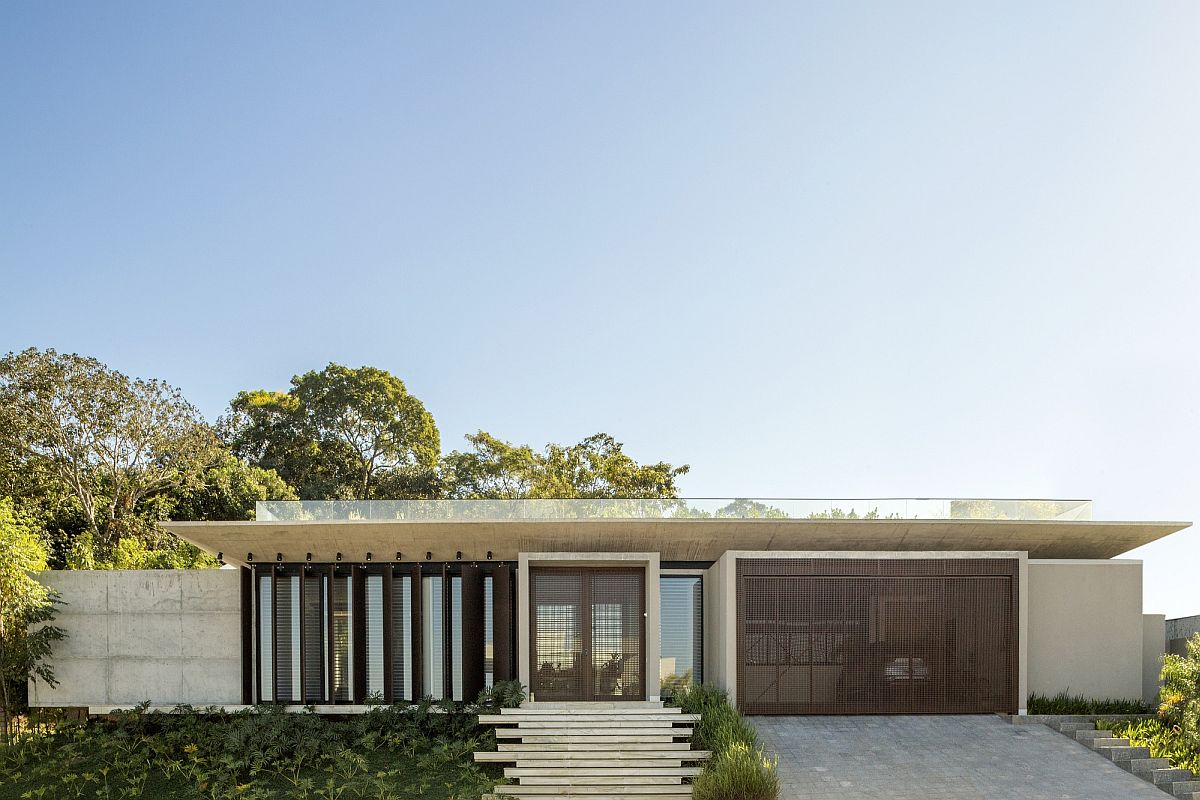
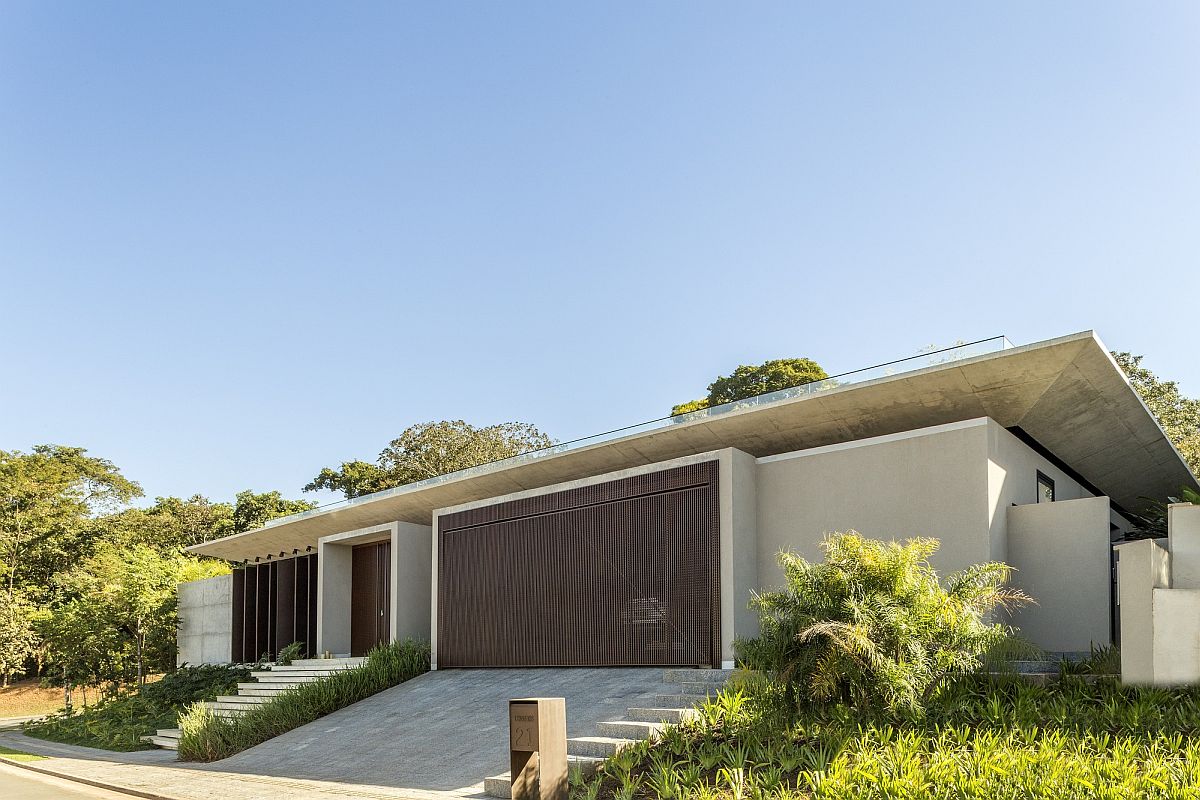
Street facade of Casa da Mata in Brazil with a polished contemporary design


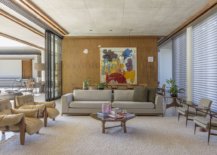
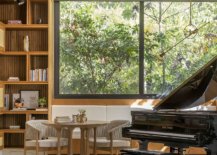
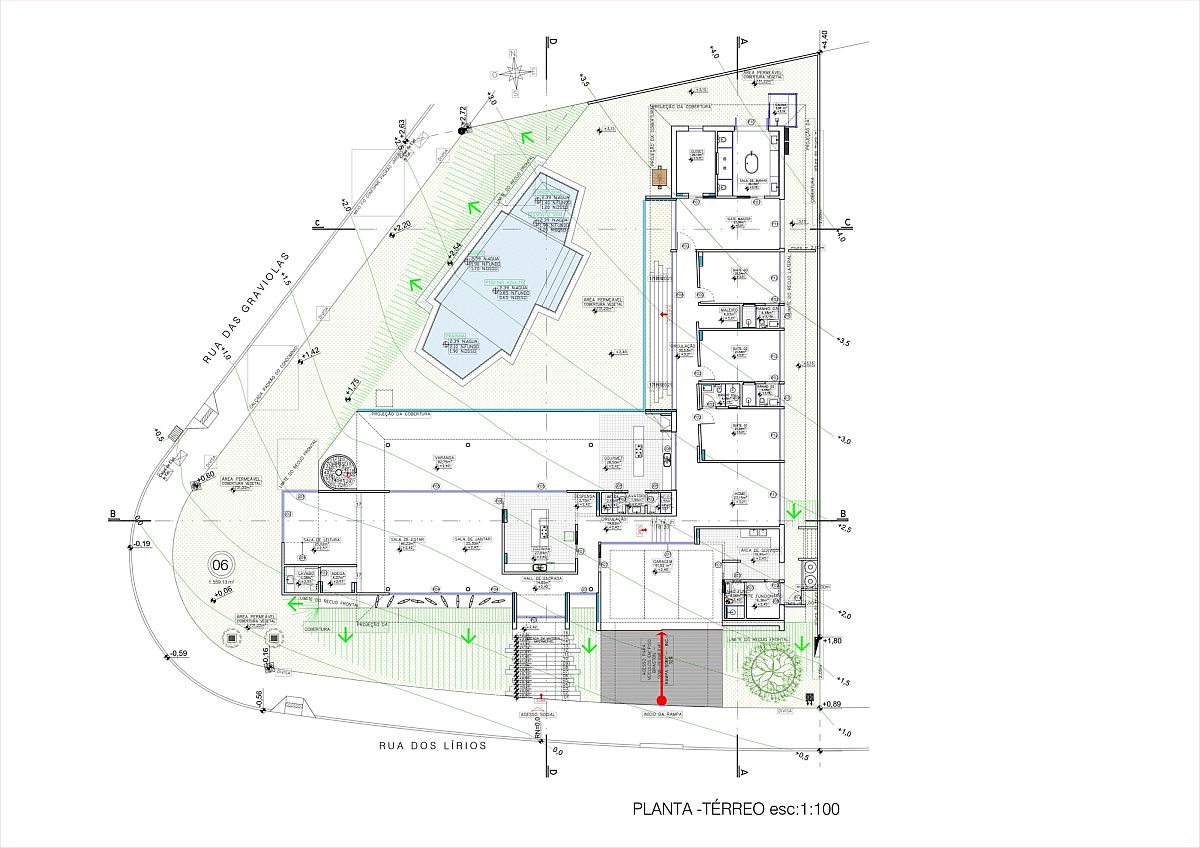
The L-shaped design of the house adds to the warmth of the courtyard and improves it aesthetically while sitting on the triangular lot. Nature becomes a part of the interior here while the kitchen, dining space and the living area extends outdoors. On the inside, it is a wood and white color scheme that sets the mood with bright wall art, indoor plants and pastel green and pink colors making their presence felt. The L-shaped plan of the residence also naturally delineates the public and private areas; a feature that makes this residence special. [Photography: Edgard Cesar]
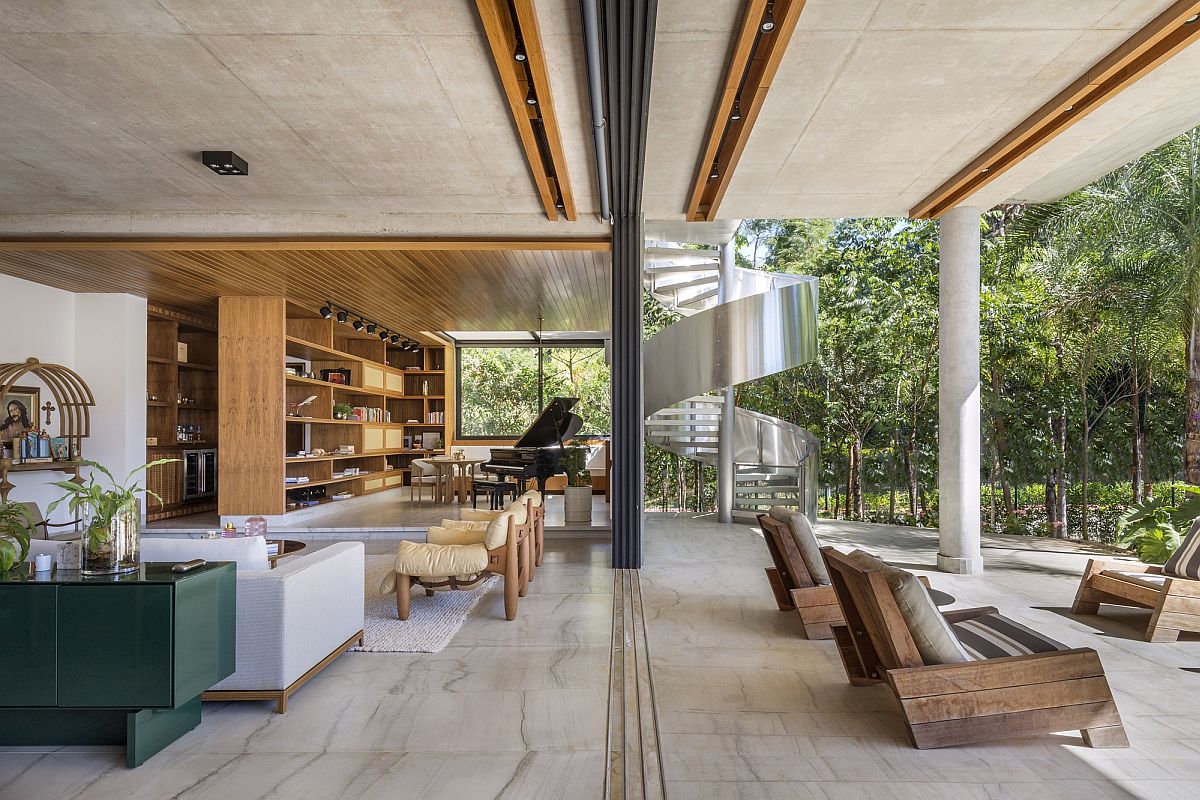
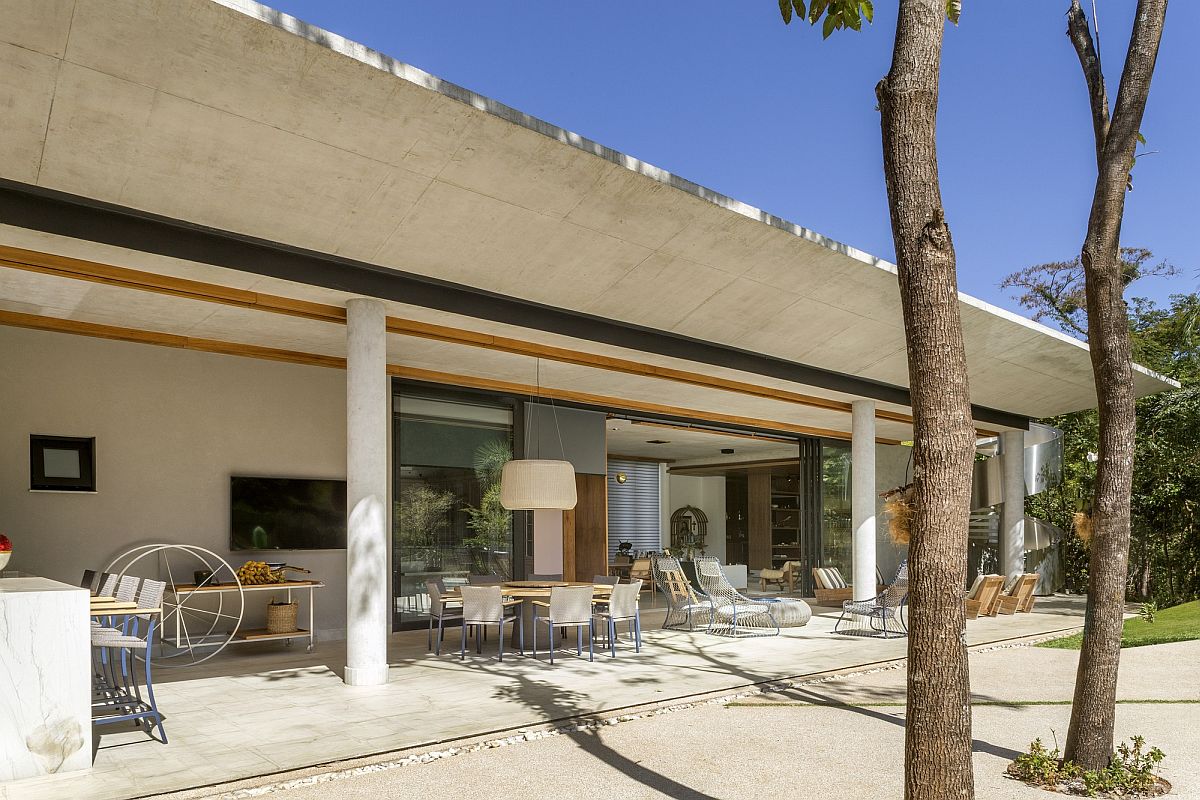
Seamless interface connects the interior with the outdoors at the Brazilian home
Sliding glass doors allow the interior to easily connect with the outdoors
Stylish street facade of the home offers complete privacy while separating it from the crowd
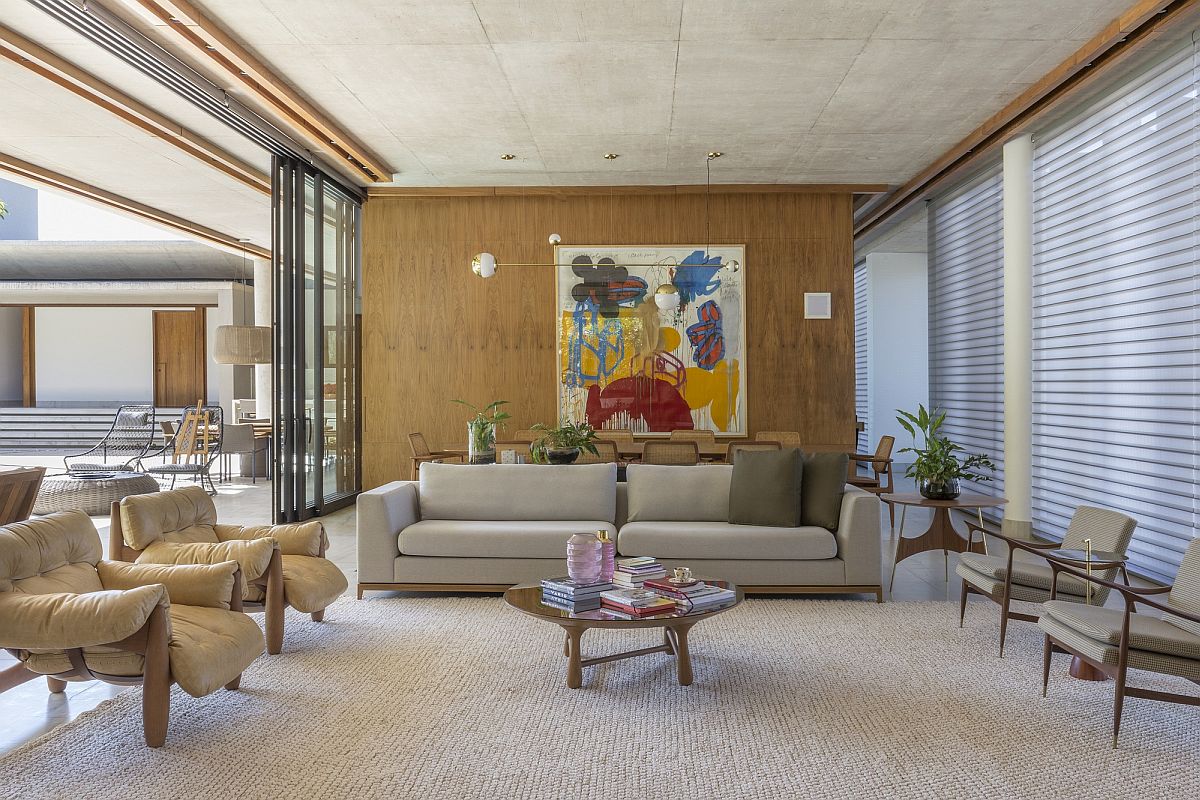
Wall art adds bright color to the living area
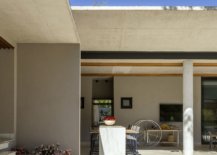
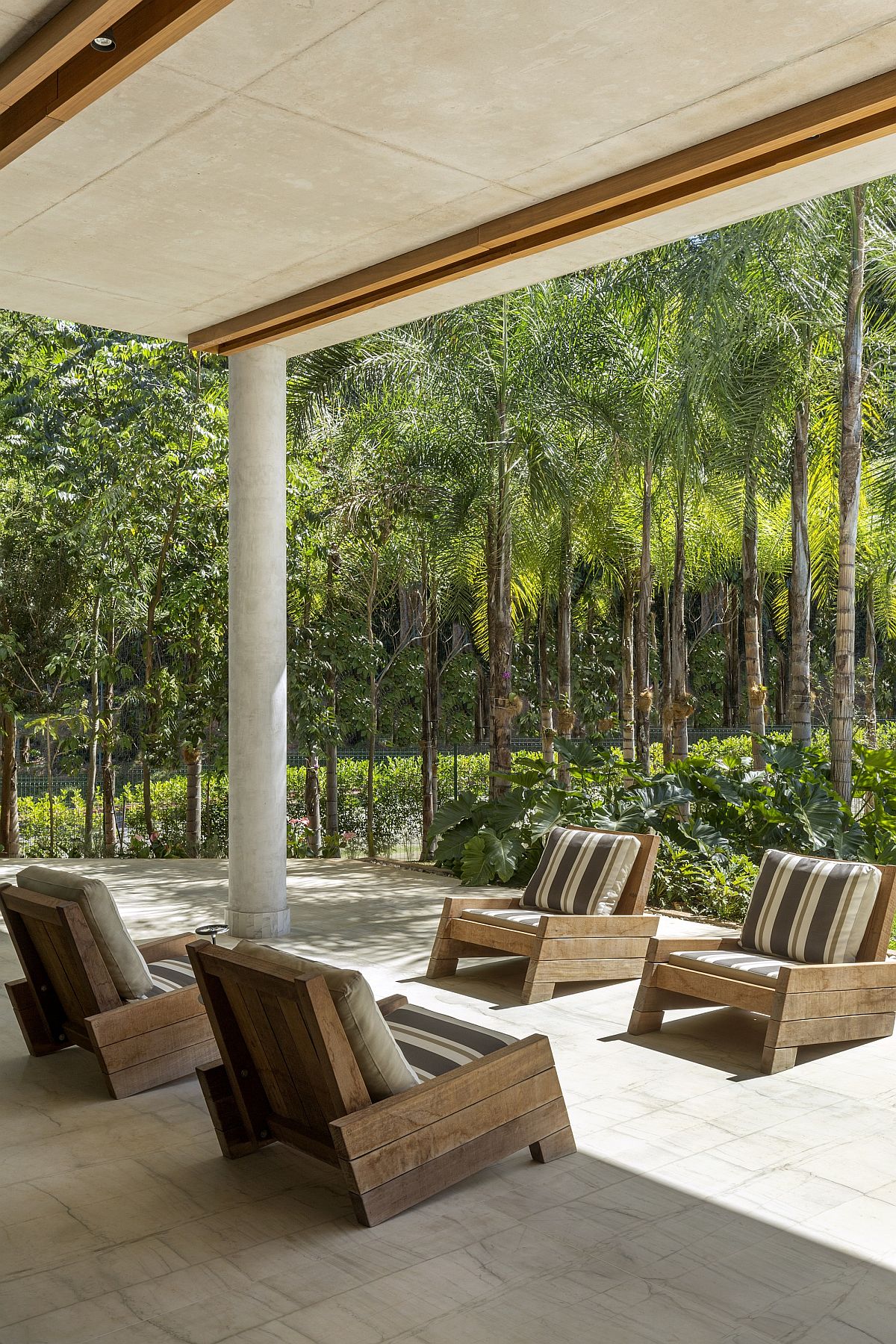
Covered patios outside the house create a fabulous hangout for friends and family
Gorgeous green landscape around the house brings an additional layer of privacy to the backyard

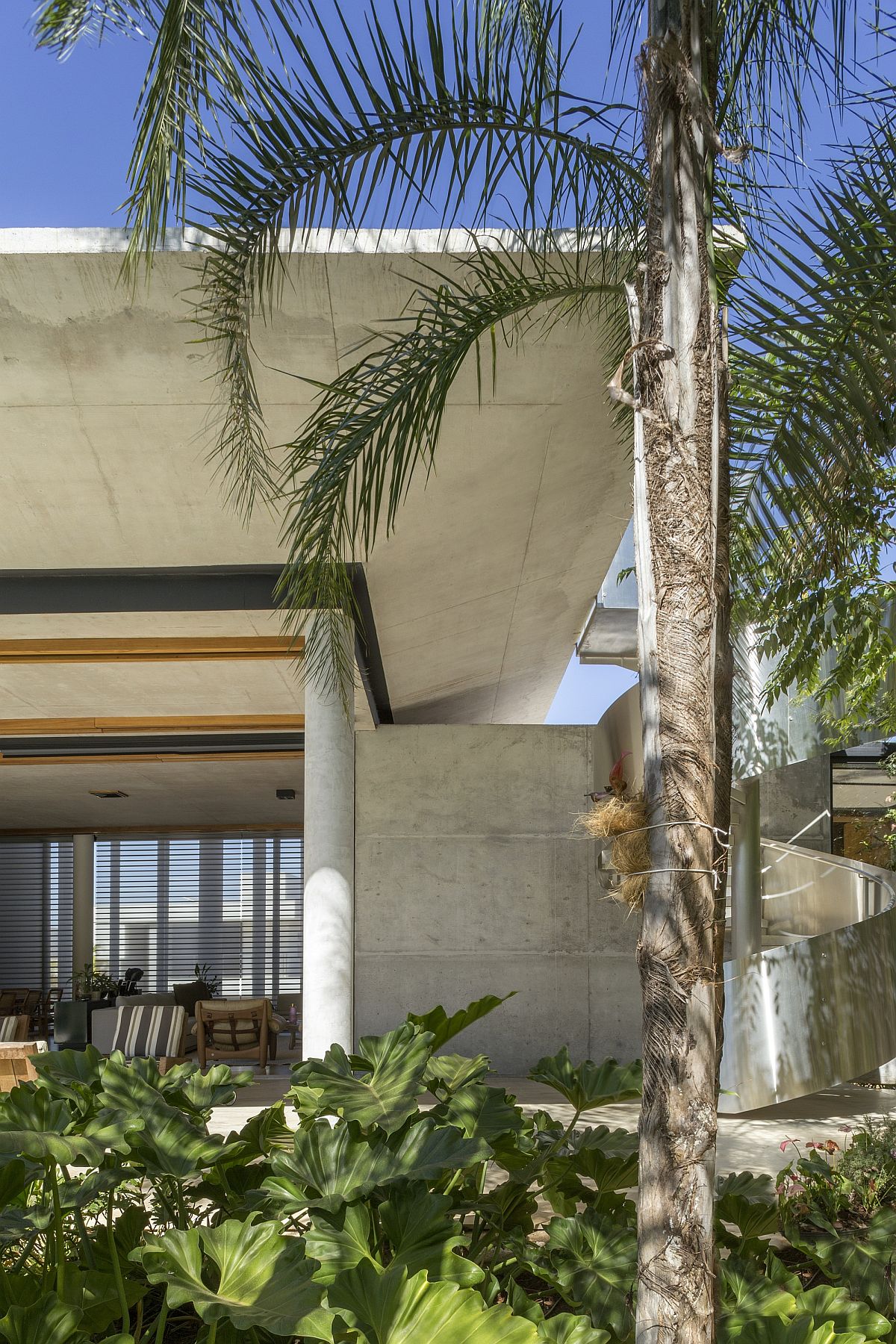
The architectural concept focuses on extending the horizontal lines, creating a visual extension of the building from all sides. The main facade combines concrete with vertical baffles for more privacy. An overhanging concrete box stretches out. This box also features an opening in the ceiling, bringing architecture and nature closer together.
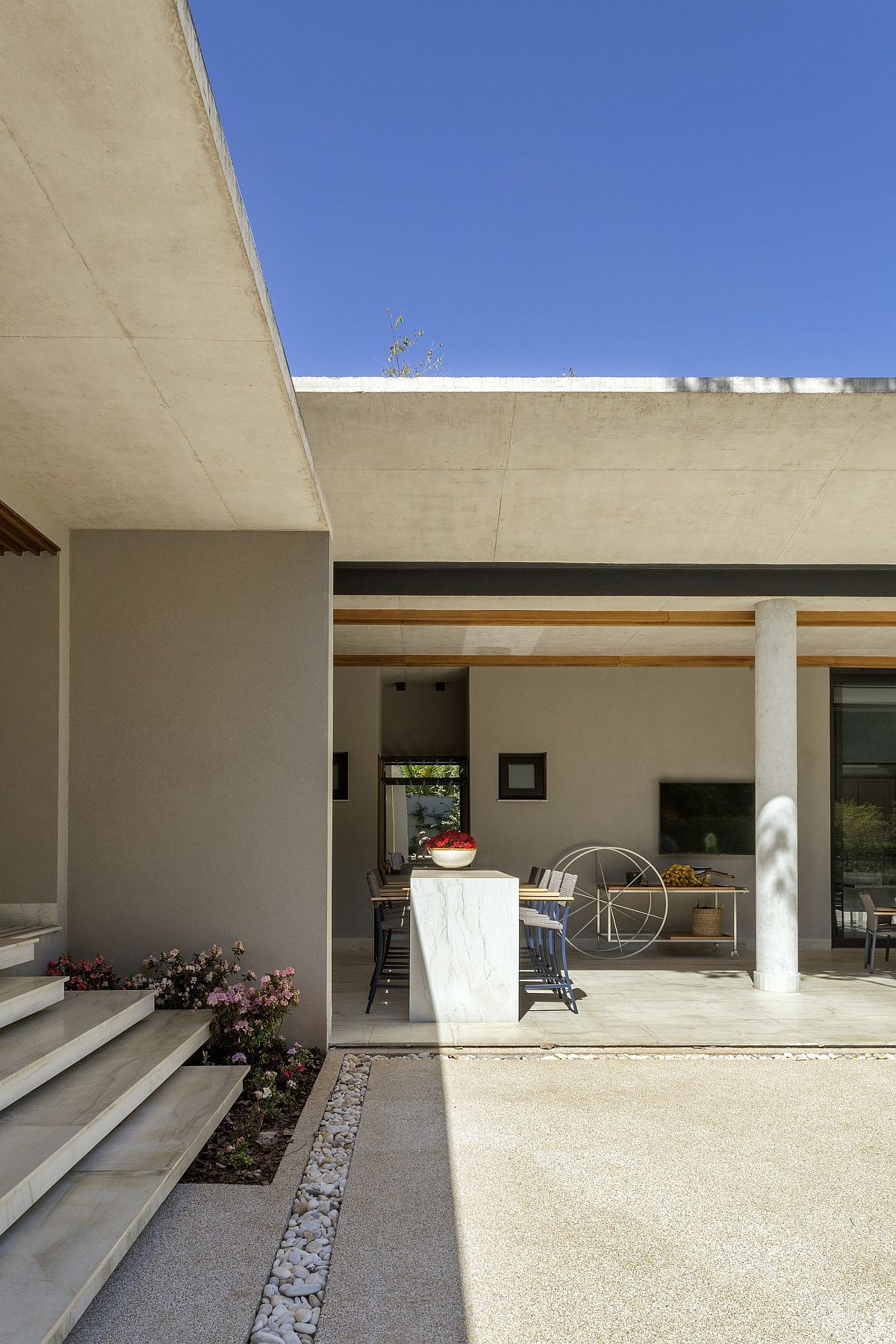
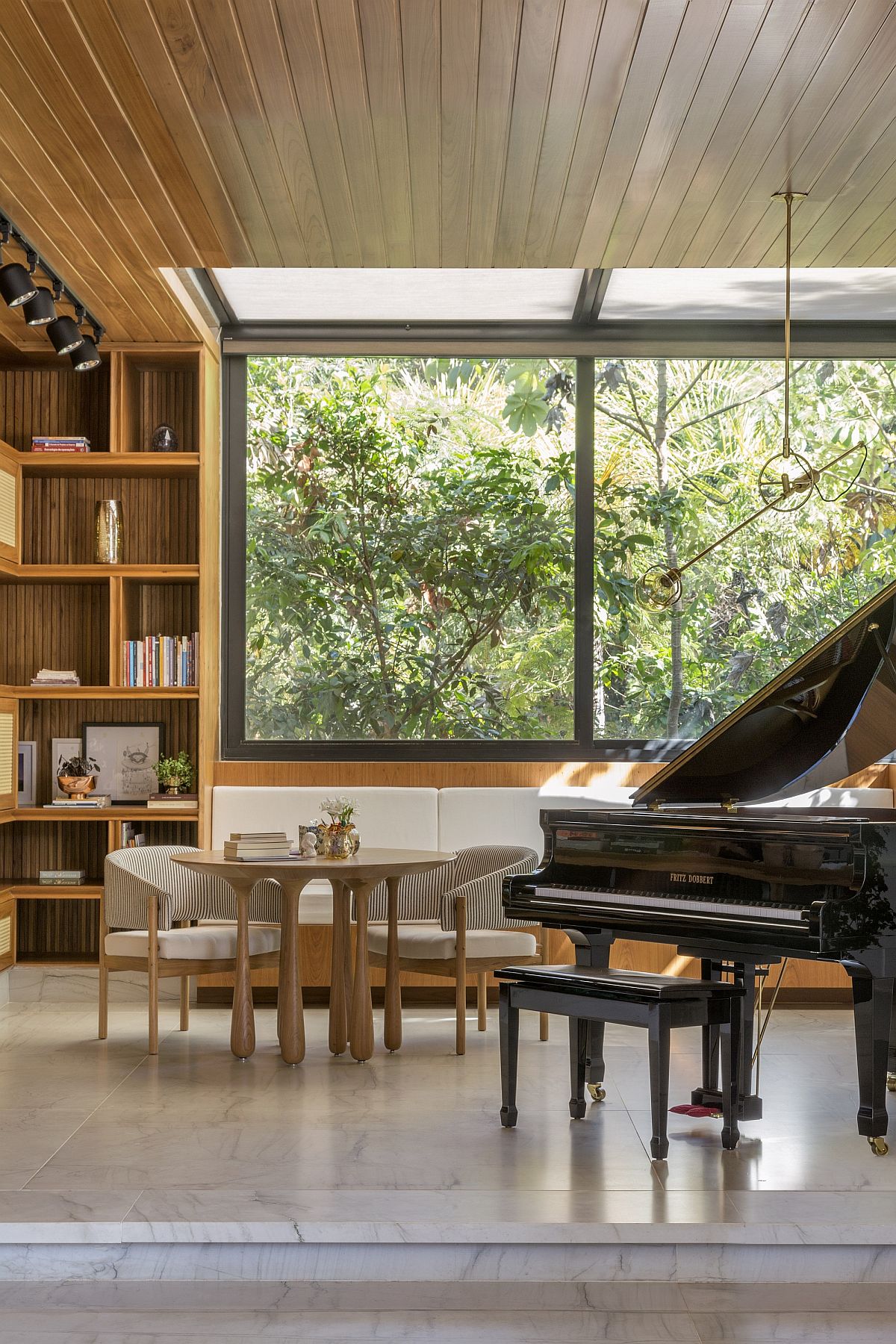
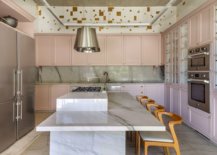
Marble counterops and modern decor adds to the relaxed contemporary style of the home
Modern wood and white interior of the house with a multi-level design
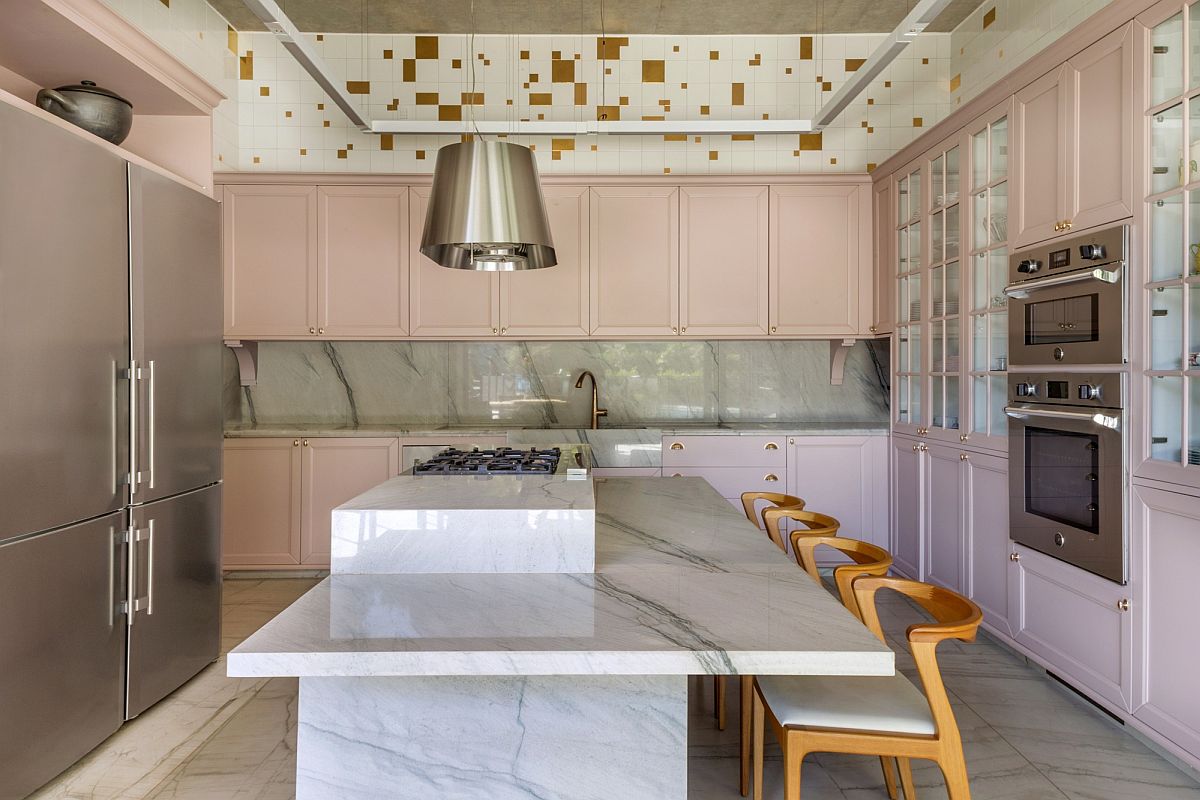
Pastel pink cabinets and light green add color to the modern kitchen
Design plan of House da Mata designed by Leo Romano in Brazil

You’re reading L-Shaped Contemporary Home in Brazil with a Green Roof and Lovely Courtyard, originally posted on Decoist. If you enjoyed this post, be sure to follow Decoist on Twitter, Facebook and Pinterest.

Similar Posts

  • SO House

    REVEALING THE EVIDENCE Confrontation with the reality of these ruins was always a confrontation seeped in memories. Memories
    of a place where the raw matter it is constituted of – the rock, the valley and the mountain – shows evident expression, provoking a game of fine balance between place, matter, light and shadow. We found light that dripped down the stone walls defining spaces separated only by rows of stacked rock. In each fissure, in each wrinkle, a soft balance between light and shadow. Standing before this scenery, the exercise consisted in finding the most natural way to connect ruins and spaces, simultaneously defining future possibilities for links between the interior and the exterior. Where decisions were concerned, we chose to rehabilitate pre-existing volumes and introduce a new connecting element. The answer is given by the almost immediate decision to join together the pre-existing elements. This
    gesture, deeply connected to the terrain along the pendente – connects the two sections facing west,
    forming an exterior courtyard adorned with a centenary olive tree. This project builds a space that runs through the ruins, uniting them and revealing the obvious functional relationship between the house’s programmatic areas, simultaneously differentiating the possibilities for inhabiting the exterior space. It expresses its temporality through the antagonism of matter in its relationship with pre-existing elements.