How To Make The Perfect DIY Gallery Wall For Any Home

Choosing what to do with that blank wall in your living room can feel like a daunting task if you aren’t an expert in home decor, but it doesn’t have to be!

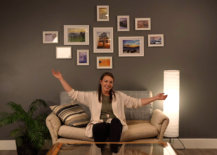
One of the best uses of that space is to create your own DIY gallery wall. It’s the perfect way to display all of your favorite photographs or artwork while adding drama and depth to the room. A DIY photo wall is a classic design choice that allows you to decorate a space, while also having the freedom to change out photos or change the layout when you feel like something new.

Supply List:

  1. 8″ x 10″ picture frames — We chose to use 3 frames of this size.
  2. 5″ x 7″ picture frames — We used 8 frames of this size.
  3. Photos or artwork that fit in the frames you’ve chosen.
  4. 1 roll of crafting paper
  5. Scissors
  6. Clear Scotch tape
  7. Painters or masking tape
  8. Tape measure
  9. Level
  10. Hanging hardware
    • We used nails however you could choose a product like Command picture hanging strips if you don’t want to leave holes or marks on your wall.
  11. Pencil or pencil crayon

Step 1:

The first thing to do is choose which wall you want to arrange your gallery on. When choosing your wall, large spaces such as a stairway, hallway, or a feature wall above a couch work well.

Step 2:

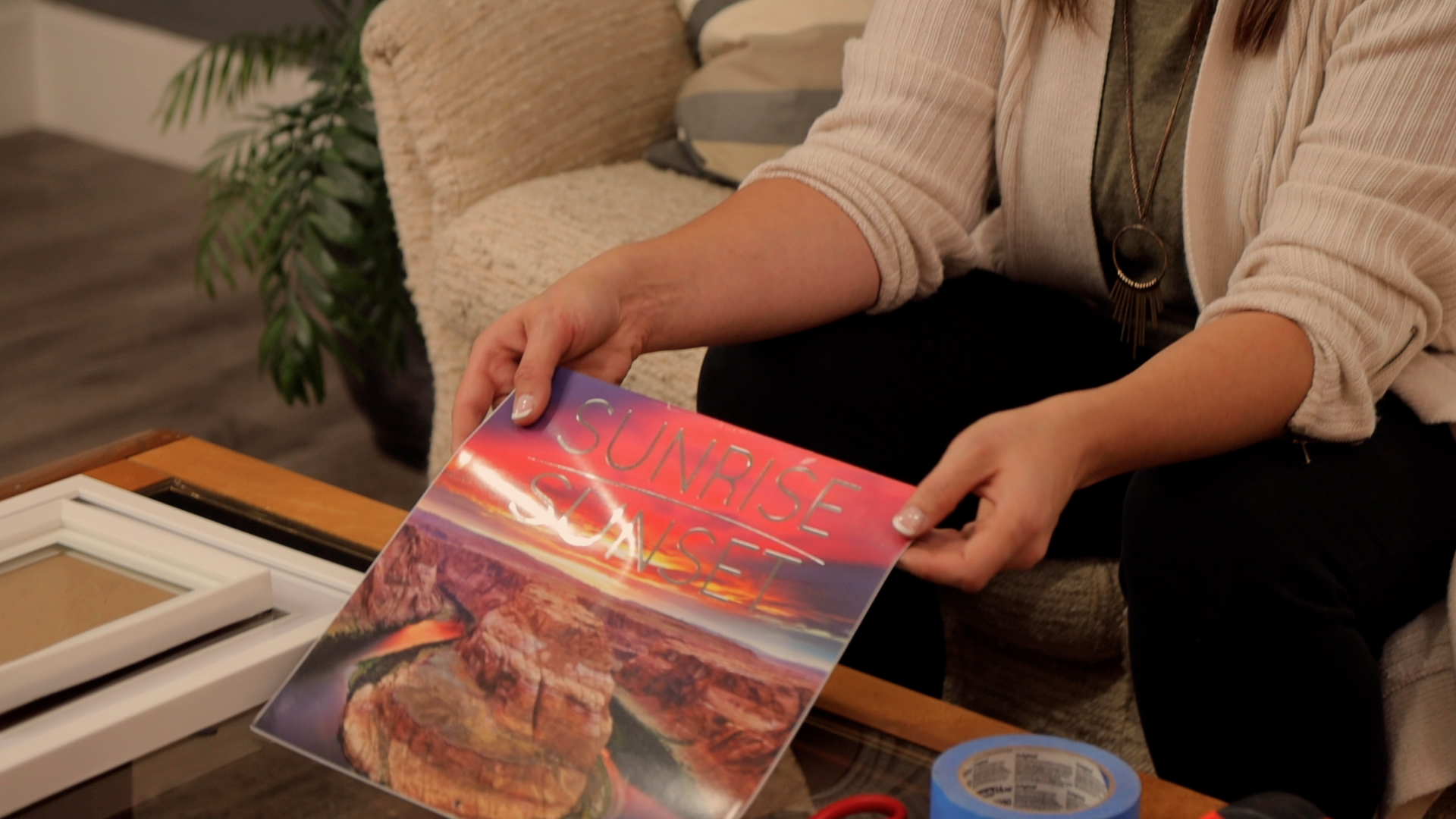
Choose the color and picture theme you want for your wall. It’s important to have a theme so you can create the best display. If you don’t consider a color scheme or theme ahead of time, your wall can end up looking unbalanced.
choosing photos for gallery wall

Step 3:

The next step is to create your wall template. Having a template ensures that your pictures are lined up and not doing any damage to your walls. It also gives you the opportunity to rearrange your photos and decide what layout works best for your photos.

Step 4:

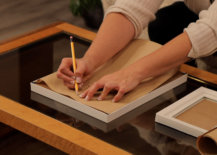
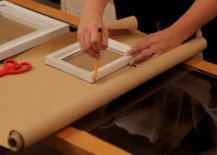
Grab the roll of crafting paper and place your picture frame on top of it. Trace around the edges of the frame, then cut it out. Repeat this for every frame you’re going to hang.
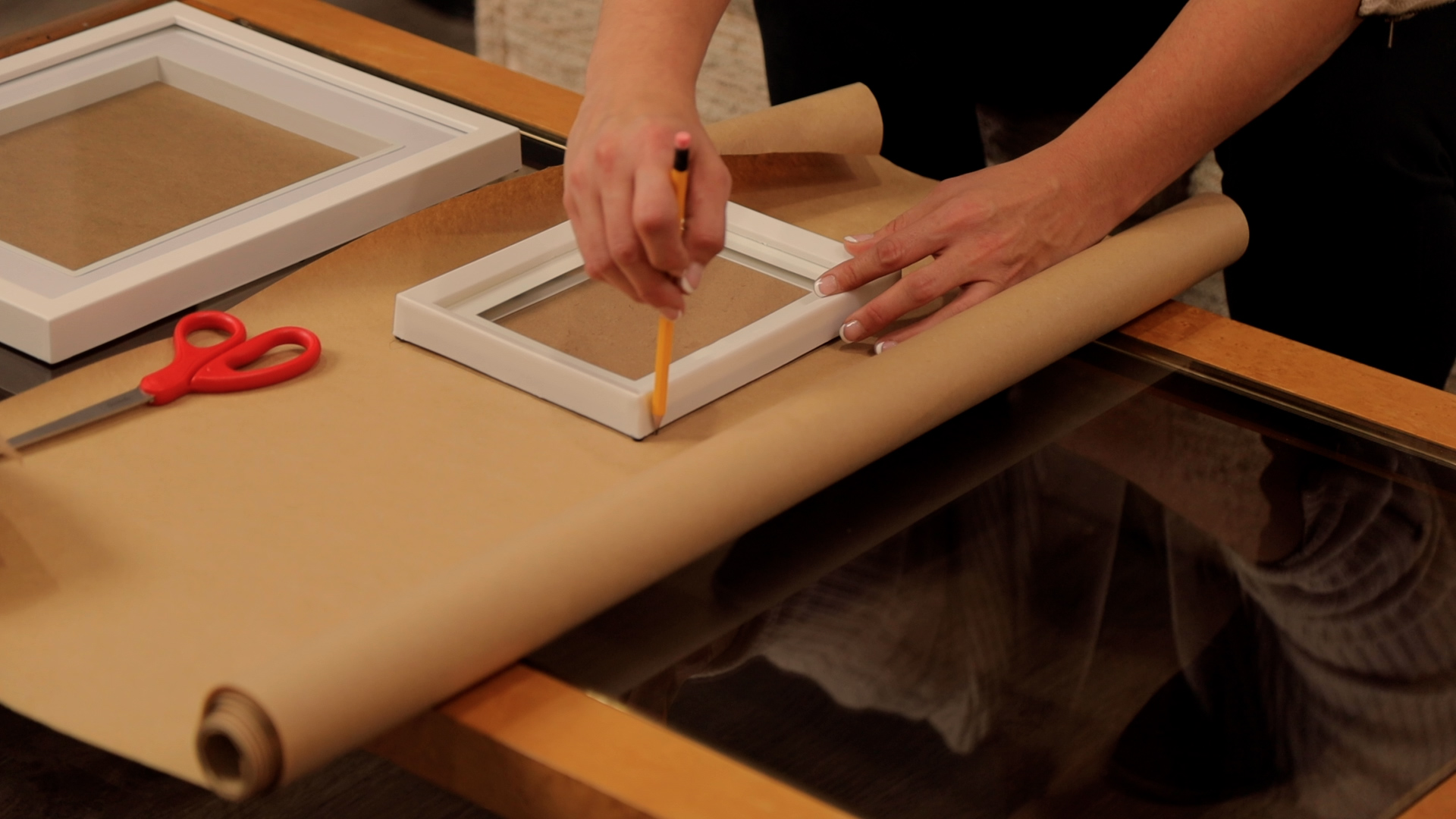
tracing frames onto crafting paper

Step 5:

Line up each template to the back of the frames. Mark the spot where the hanging hardware will be for each frame. This ensures accuracy when you’re hanging the pictures.
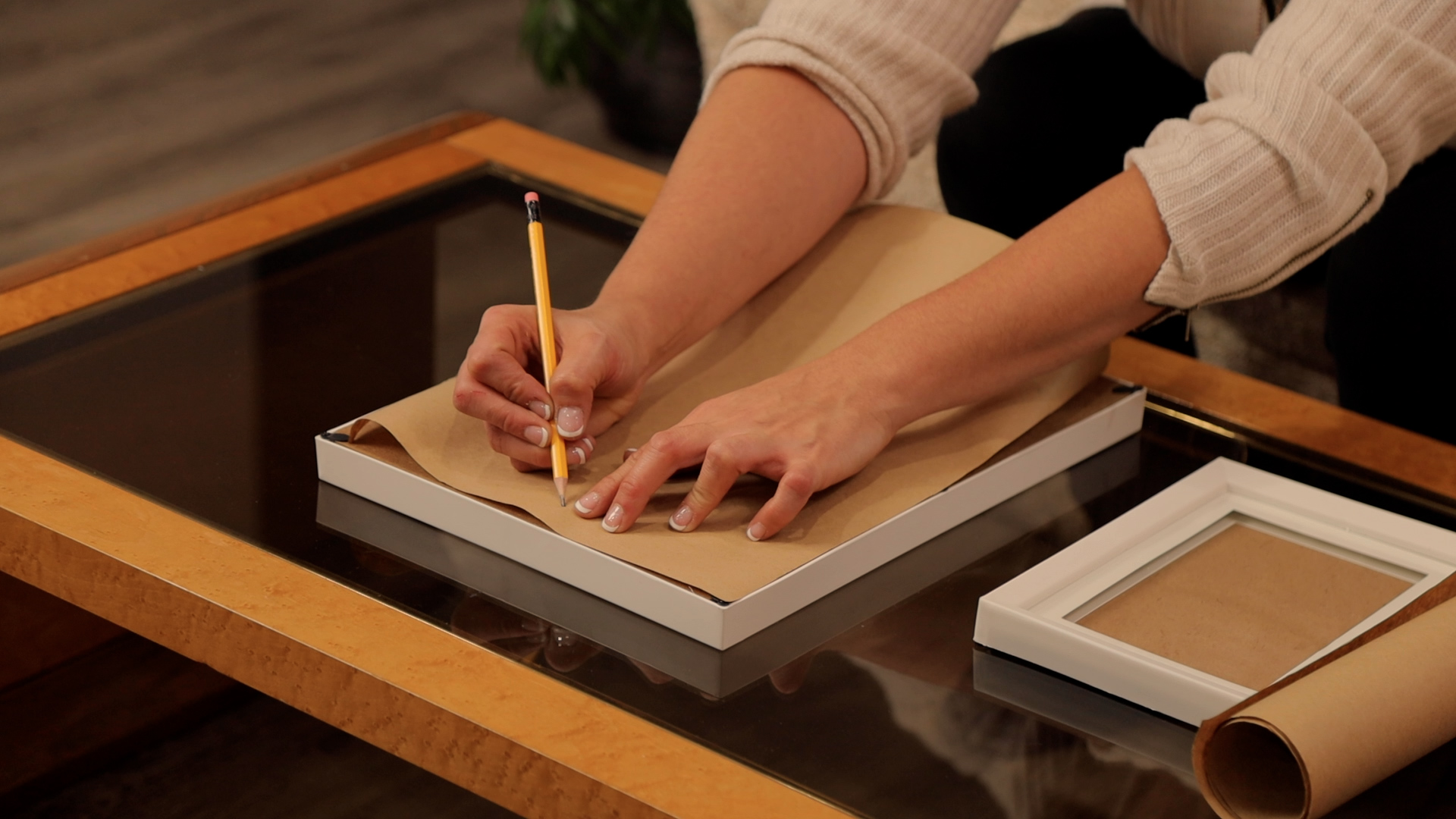
lining up template with picture frames for hardware


PRO TIP: Label each template with a brief description so you know which picture it represents.

Step 6:

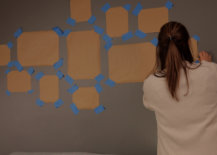
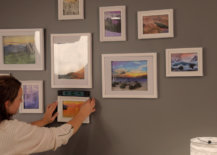
Now it’s time for you to tape the templates to the wall you’ve chosen.
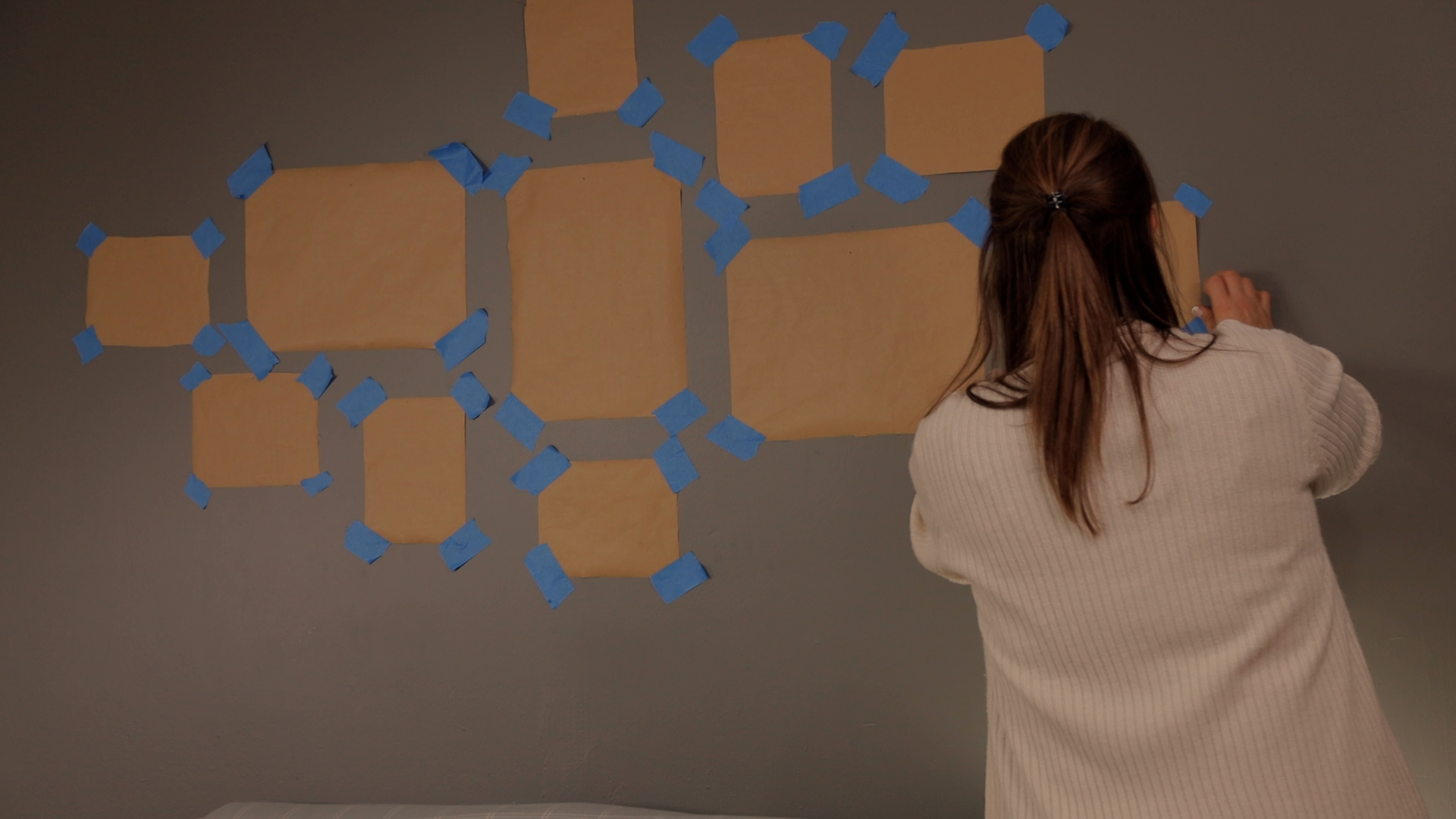
taping up the templates for gallery wall

Step 7:

Once you have all the templates taped up, it’s time to grab your hammer and nails. Nail in your hardware using the markings you made on the craft paper templates.

PRO TIP: To give your photos extra support, hammer your nail on a downward angle.

Step 8:

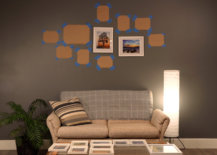
Your final step is to hang all of your photos in the spots you’ve laid out. To ensure that your photos are lined up just right we recommend using a level.
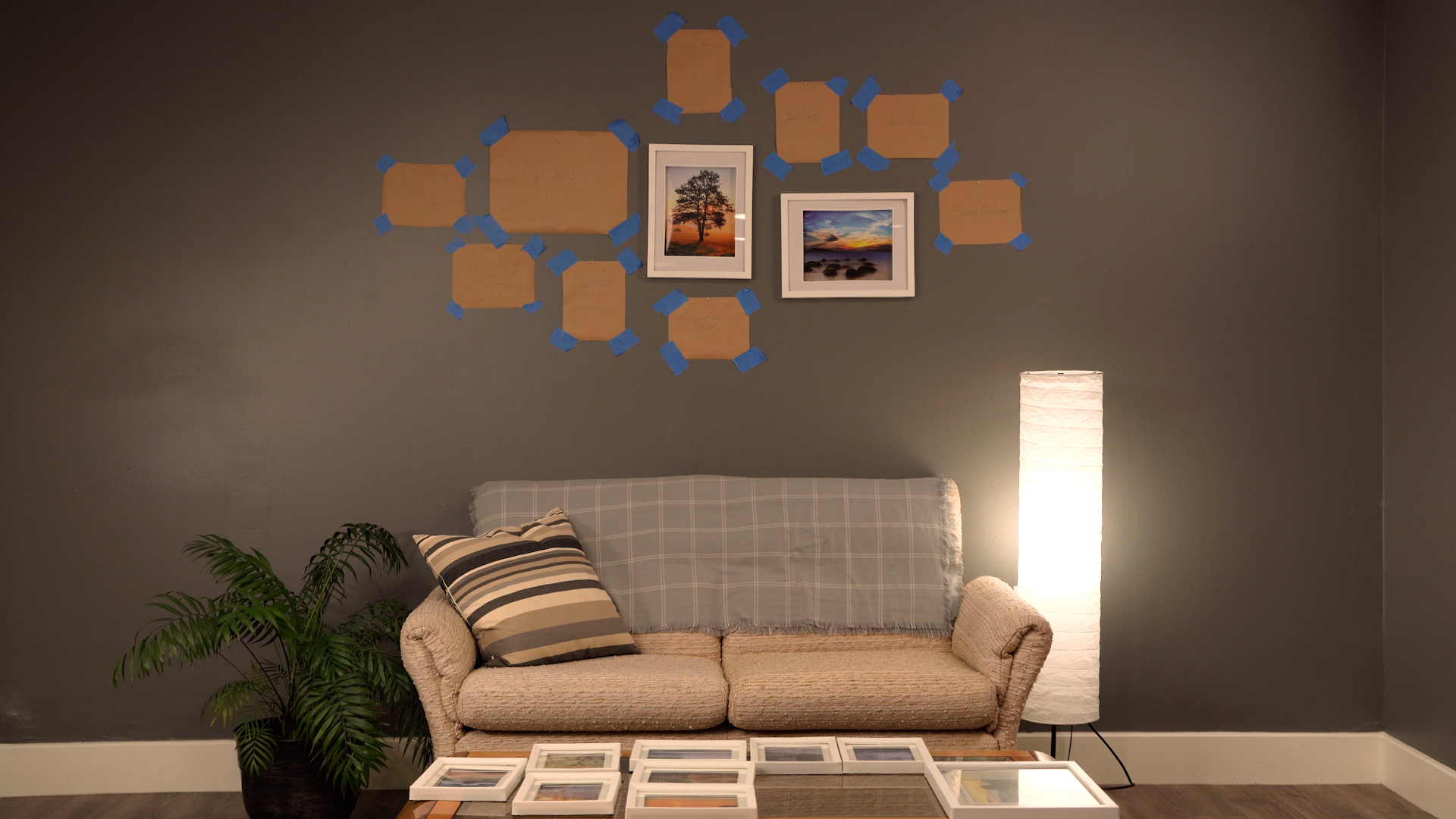
placing pictures over gallery wall templates


Now that you’ve created your DIY gallery wall, your true final step is to share your new home decor with us! Show us the final layout for your photo wall by connecting with us on Facebook, Instagram, or Pinterest.
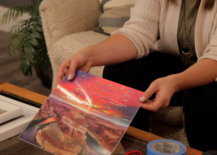
choosing photos for gallery wall
tracing frames onto crafting paper
lining up template with picture frames for hardware
taping up the templates for gallery wall
placing pictures over gallery wall templates
nearly finished gallery wall with templates
using level for gallery wall photos
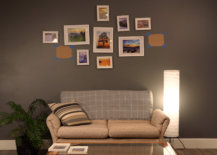
the finished DIY gallery wall display

We know that photos can be an amazing source of design inspiration, so this article may contain affiliate links that will direct you to a particular decor item. Clicking on a link may result in a portion of proceeds being paid to www.decoist.com

You’re reading How To Make The Perfect DIY Gallery Wall For Any Home, originally posted on Decoist. If you enjoyed this post, be sure to follow Decoist on Twitter, Facebook and Pinterest.

Similar Posts

  • 30 Small Kitchen Lighting Ideas that Blend Form with functionality

    The kitchen is a place where you need an even layer of functional and aesthetic lighting that combines the best of both aspects. This becomes even more essential in the small kitchen where lighting can make or break the overall look of the space. In the tiny kitchen every inch of space matters. Saving space […]

    You’re reading 30 Small Kitchen Lighting Ideas that Blend Form with functionality, originally posted on Decoist. If you enjoyed this post, be sure to follow Decoist on Twitter, Facebook and Pinterest.

  • Hillside Sanctuary

    The owner of this property came to Hoedemaker Pfeiffer looking for a personal retreat inspired by a home lost to fire decades earlier in the hills of Appalachia. The firm’s task was not to recreate that home but rather to give its spirit new form in the Pacific Northwest. Taking inspiration from its remote site in the San Juan Islands, our team envisioned a series of simple stone volumes. From that concept emerged the main house and a guest house, each responding to its own unique location on the site. Together they provide friends and family with comfortable accommodation while offering a sanctuary for the owner at the main home. Taking full advantage of sweeping views of Puget Sound, the main home is sited on a small plateau high on top of a steeply-sloping hillside. With a view on one side and a road on the other, the site suggested a stone plinth and stone wall to form the base and rear of the house. A pair of stone fireplace volumes support the concept, rising together to form the boundaries of a central stone staircase that separates the main level into public and private realms. Atop the low stone base then perches a light-filled wood structure. Its simple shed roof tips low in front to protect from the summer sun while offering space for a photovoltaic array above. Winter light in turn penetrates deep into the main living spaces through a wall of glass running continuously across building’s south elevation. The relative height difference between this wood pavilion and that of the adjacent stone volume also allows consistent north light to flood into the primary living spaces via a series of clerestory windows, which release warm air high on the leeward side of the structure. The site for the guest house came with more significant technical challenges. The concept begins with a stone tower set near the center of the small circular parcel. Rising high above steeply-sloping grade, it acts as a three-dimensional datum through which feature program elements are allowed to puncture. The main entry offers ease of access to the project’s public spaces through a simple, full-height opening cut into the stone volume’s north elevation. The stair, comprised of a concrete base below large casement windows, allows natural light to fill the main stairway as it leads guests toward the bedrooms located at the home’s lower level. Opposite the entry, the view deck extends from the great room, cantilevering far above grade. The dining room, finally, was conceived as a three-sided glass object floating in a forest of trees. Two steel beams carry its entire weight and extend deep into the floor system. To enhance the concept, our team preserved trees only a few feet from the dining room by developing custom retaining walls capable of avoiding critical root zones. Project Team: Hoedemaker Pfeiffer (Architecture) ​Schuchart Dow​ (Contractor ​Randy Allworth, Allworth Design​ (Landscape Architect) ​Malsam Tsang​ (Structural Engineer) ​LPD Engineering​ (Civil Engineer) Nelson Geotechnical Associates, Inc. (Geotechnical Engineer) Island Tree Doctor (Arborist) ​Kevin Scott​ (Photographer)